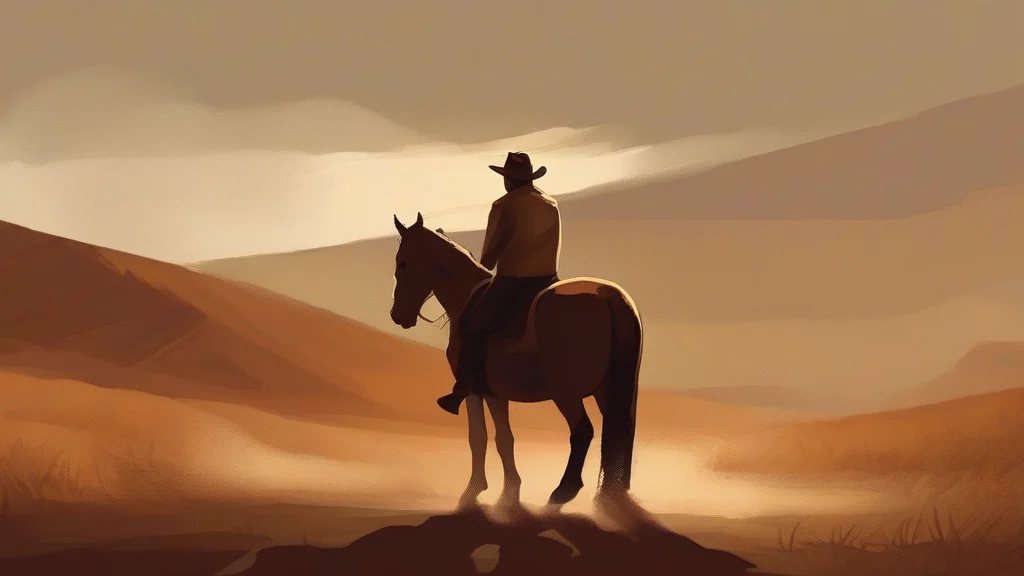
What does bareback mean?
"Bareback" describes riding a horse without a saddle, whether as an adverb ("she rode bareback") or, by extension, as an adjective describing such activity ("bareback riding"). The word dates back centuries and reflects a time when saddles were not universal, so its core image is one of directness — nothing between rider and animal. Beyond the stable, it has developed informal extended senses in which something is done without the usual protection, equipment, or safeguards, though several of these figurative uses carry connotations that make them inappropriate in formal contexts. In equestrian sport, bareback riding is a recognized discipline demanding balance, grip, and skill, since the saddle normally provides both security and support. The term remains firmly established in everyday English wherever horses are discussed, from riding schools and circuses to Western films, and its vivid literal imagery makes it instantly understood even by those who have never ridden.
On horseback without a saddle.
"The children rode bareback through the summer meadows."
This is the primary and most common grammatical form.
Performed or done without a saddle, or (by extension) without the usual protective equipment.
"She won the bareback riding competition at the rodeo."
Before saddles reached Europe, every rider was a bareback rider — the word preserves the memory of humanity's original way of sitting a horse.
Reviewed by Deb Chak, Editor. AI-assisted content curated by RJS Tech Solutions LLP.
Etymology of bareback
"Bareback" is a straightforward English compound formed from "bare" (Old English "bær," meaning naked or uncovered) and "back" (Old English "bæc"), literally describing a horse's uncovered back. It has been used in English since roughly the sixteenth century, when it appeared in descriptions of riding without a saddle. Because it is a native English compound rather than a borrowing, it shares its roots with other "bare-" compounds such as "barefoot," "barehanded," "barefaced," and "bareknuckle," all of which pair "bare" with a body part to signal the absence of covering or equipment.
How bareback is actually used
The equestrian sense is neutral and standard in both British and American English. Extended figurative uses are informal and may carry strong connotations depending on context; writers should be aware that one common figurative usage has explicit sexual meaning. In formal writing about horses, "without a saddle" or "unsaddled" may be preferred.
Easily confused with bareback
"Barebacked" is simply an alternative adjectival form of the same word, while "bareback" is the standard adverbial form used before verbs such as "ride".