
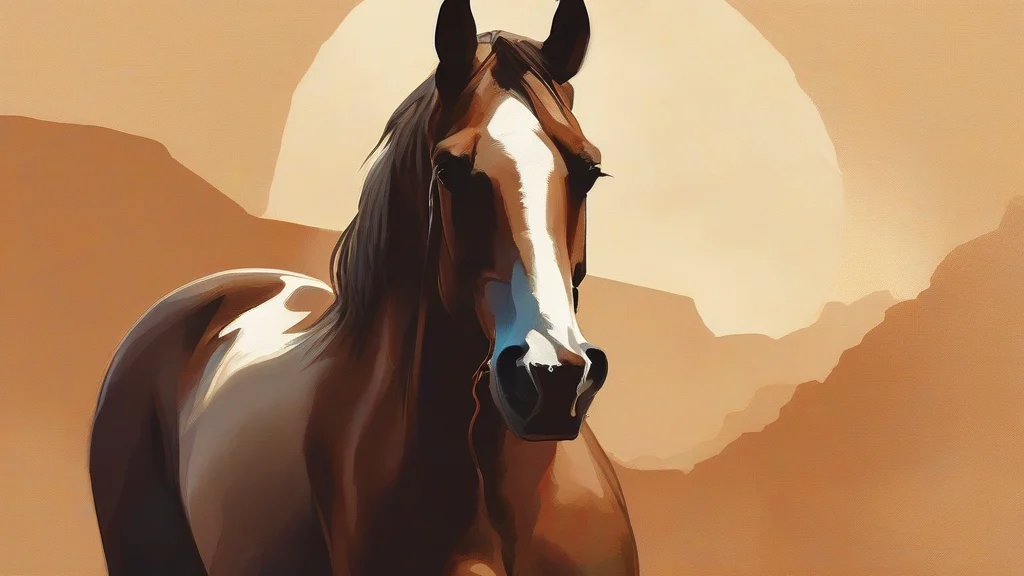
What does unsaddled mean?
Unsaddled means not fitted with a saddle, especially in the case of a horse. In literal use, it describes an animal whose back is free of a saddle and associated equipment, often suggesting that it has just been ridden, untacked, or released to graze. The word can also be used figuratively for a person who feels freed from a heavy responsibility, constraint, or demanding situation. This extension is natural because a saddle is both a practical piece of riding equipment and a visible burden carried by the animal. “Unsaddled” is consequently more evocative than a neutral expression such as “not saddled”: it evokes both physical release and the sudden removal of an obligation. In contemporary English, the literal equestrian sense remains the most common, while the figurative sense appears chiefly in literary, reflective, or informal writing.
adjectiveNot fitted with a saddle, especially a horse that is not carrying a saddle. Figuratively, it means freed from a burden, restraint, or troublesome responsibility.
- Not fitted with a saddle, especially a horse that is not carrying a saddle.
- Freed from a burden, restraint, or troublesome responsibility.
"The rider left the unsaddled horse grazing quietly beside the path."
"The stablehand led the unsaddled horse out of the barn."
"With the deadline finally behind her, she felt lighter and almost unsaddled."
An unsaddled horse is ready for a different journey—and, figuratively, so is someone suddenly free of a burden.
Reviewed by Deb Chak, Editor. AI-assisted content curated by RJS Tech Solutions LLP.
Where does unsaddled come from?
Unsaddled was formed in English by combining the negative prefix un-, the noun saddle, and the participial ending -ed. It therefore literally means “not saddled.” The noun saddle descends from Old English and belongs to a wider Germanic vocabulary represented by cognates in related languages. Later derivatives such as saddlery, saddlebag, and saddleback continue to develop from the same English root.
How unsaddled is actually used
The literal sense is chiefly associated with horses and riding, although it can also describe other saddled animals. Its figurative sense is less common and literary in tone.