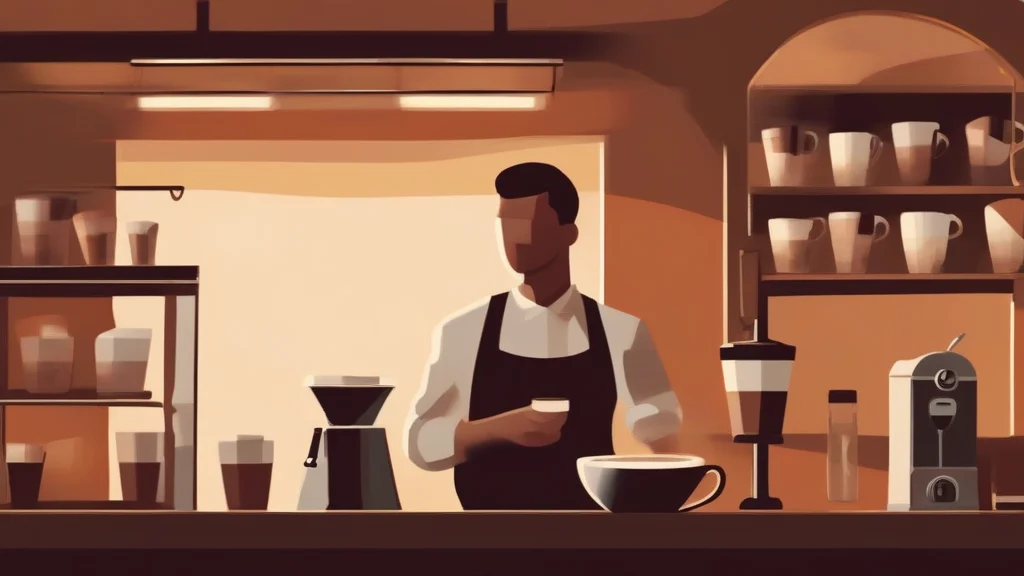
What does barista mean?
A barista is a person whose job is to prepare and serve coffee, with particular emphasis on espresso-based drinks such as lattes, cappuccinos, and macchiatos. The term comes directly from Italian, where it simply means a person who works behind the counter of a bar or café, and it entered widespread English use during the specialty-coffee boom of the 1990s. Today the word suggests more than a job title: skilled baristas are associated with craftsmanship, from dialing in grind settings and pulling precise shots to steaming milk for latte art. International competitions, most notably the World Barista Championship, have further professionalized the role. In everyday usage, 'barista' appears most often in contexts involving cafés, hiring, and coffee culture, as in 'the barista recommended a single-origin pour-over.' It is a neutral, modern noun with no strong regional restrictions, understood throughout the English-speaking world, and it has become one of the defining occupational terms of contemporary coffee culture.
nounA person whose job is to prepare and serve coffee, especially espresso-based drinks such as lattes and cappuccinos, typically in a café or coffee bar.
- A person employed to prepare and serve coffee drinks, especially espresso-based beverages, at a café or coffee bar.
"The barista steamed the milk to a perfect microfoam before pouring a rosetta onto the latte."
"She worked as a barista through college, learning to pull flawless espresso shots."
"The café is hiring an experienced barista who can master latte art."
The standard English plural adds -s. The Italian plural 'baristi' is sometimes seen but is not standard in English usage.
"Two baristas were working the morning rush."
The word 'barista' is borrowed straight from Italian — the land of espresso — yet it only became common in English after the 1990s coffeehouse boom turned coffee-making into a craft.
Reviewed by Deb Chak, Editor. AI-assisted content curated by RJS Tech Solutions LLP.
Etymology of barista
Barista comes from Italian, where it denotes someone who works behind the counter of a bar, serving drinks — originally including alcohol as well as coffee. It was adopted into English in the late twentieth century, gaining currency alongside the spread of espresso culture and specialty coffeehouses in the 1990s. Because English speakers encountered the word directly from Italian rather than through Latin, its closest relatives are other counter-service terms built on 'bar,' such as bartender and barman.
How barista is actually used
The word carries connotations of skill and craftsmanship; competitions such as the World Barista Championship have elevated it from a casual job title to a recognized profession. Pluralization varies: some treat it like an ordinary noun (baristas), while others preserve the Italian-style plural (baristi), though the former is standard in English.
Easily confused with barista
A bartender serves alcoholic drinks at a bar, while a barista specializes in preparing coffee drinks at a café.