What does barnacle mean?
A barnacle is a small marine crustacean that fastens itself permanently to hard underwater surfaces — rocks, piers, ship hulls, even the skin of whales — sealing itself inside a protective cone of calcareous plates. Once attached, it filters food from passing water using feathery appendages. Barnacles are famous among sailors and biologists alike: dense colonies create drag on vessels, a problem known as fouling, and Charles Darwin devoted years of study to classifying them. Beyond its literal meaning, the word carries a vivid figurative use in everyday English, describing a person who clings stubbornly to someone else — a houseguest who never leaves, or a friend who attaches themselves for advantage. This figurative sense is informal and gently mocking, which gives the word a memorable, slightly comic character. Few words bridge marine biology and human behaviour so neatly, making 'barnacle' both scientifically precise and delightfully expressive.
nounA barnacle is a small marine crustacean with a hard calcareous shell that attaches itself permanently to surfaces such as rocks, ship hulls, and the skin of whales. Figuratively, it refers to a person who clings persistently to another, especially in a burdensome or freeloading way.
- A small marine crustacean that cements itself permanently to rocks, ships' hulls, and other underwater surfaces, enclosed in a hard calcareous shell.
- Figuratively, a person who attaches themselves clingingly and often parasitically to another person or group.
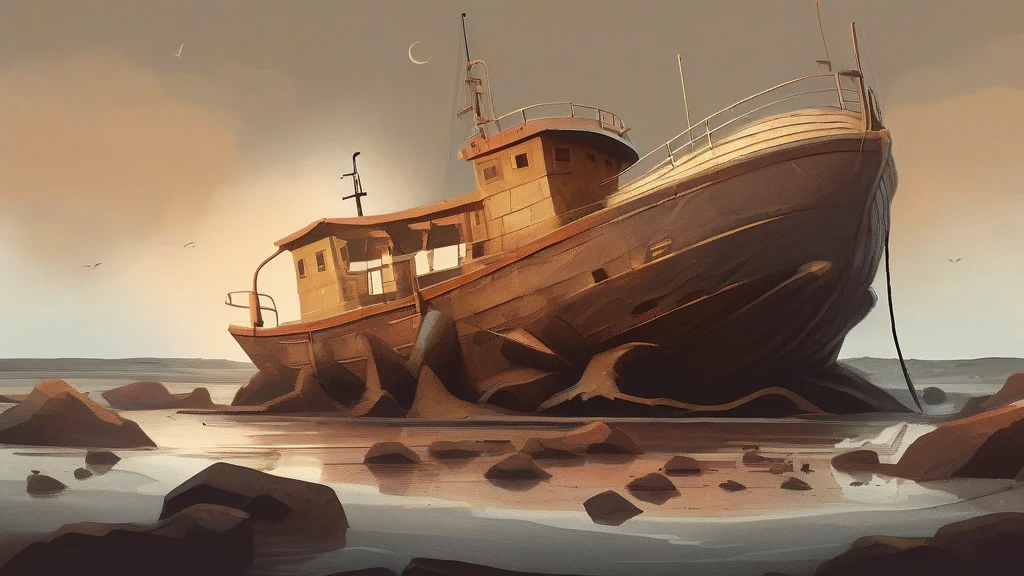
"The hull of the abandoned boat was so encrusted with barnacles that it barely floated."
"Whales carry whole colonies of barnacles on their skin for years at a time."
"He's such a barnacle — he's been crashing on my sofa for three months and shows no sign of leaving."
Standard plural; commonly used when describing colonies or encrusted growth on a surface.
"The rocks at low tide were studded with hundreds of barnacles."
Medieval naturalists genuinely believed barnacle geese hatched from barnacles — a myth that let them be eaten on Fridays as 'fish.'
Reviewed by Deb Chak, Editor. AI-assisted content curated by RJS Tech Solutions LLP.
Etymology of barnacle
The word 'barnacle' entered English from Old French 'bernacle', likely tracing back through medieval Latin 'bernica' or 'bernicla'. Its early history is entangled with a remarkable legend: because the crustacean's feathery appendages resembled plumage, people in the Middle Ages believed the barnacle goose was born from barnacles growing on driftwood, and the two names became linked. The crustacean sense and the goose name share this common linguistic root, though they refer to entirely different creatures.
How barnacle is actually used
The figurative sense is informal and mildly derogatory, implying unwanted persistence or dependency. The literal sense is standard scientific and everyday usage; in marine contexts, heavy barnacle growth ('fouling') is a well-known practical problem for shipping.
Easily confused with barnacle
The barnacle goose is a species of Arctic-breeding bird whose name shares an origin with the crustacean, but it is a bird, not a shellfish.