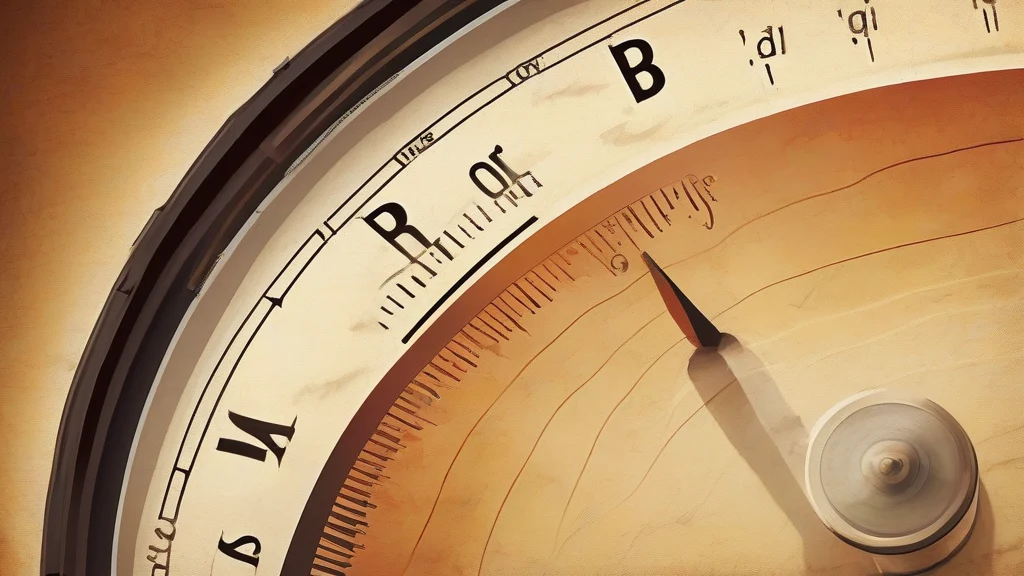
What does barometer mean?
A barometer is an instrument used to measure atmospheric pressure, most familiarly in weather forecasting, where a falling reading traditionally signals approaching storms and a rising one suggests fair weather. The classic mercury barometer, invented in the seventeenth century following Evangelista Torricelli's experiments, has largely given way to aneroid and digital versions, but the principle remains central to meteorology. Beyond its literal use, 'barometer' has developed a widely used figurative sense: any phenomenon that reliably reflects shifts in opinion, confidence, or conditions can be called a barometer of them, as in 'housing sales are a barometer of consumer sentiment'. This extended meaning makes the word especially common in journalism, economics, and political commentary. Whether describing a physical device on a ship's bridge or a metaphorical gauge of the public mood, 'barometer' conveys the idea of sensitive, early indication of change.
nounAn instrument for measuring atmospheric pressure, used especially in forecasting the weather. By extension, something that indicates or reflects changes in a situation or trend.
- An instrument that measures atmospheric pressure, used in weather forecasting.
- Figuratively, anything that serves as an indicator of change or trends in a situation (e.g. 'the stock market is a barometer of economic confidence').
"The falling barometer warned of an approaching storm."
"Before setting sail, the captain checked the barometer for signs of deteriorating weather."
"Consumer spending is often seen as a reliable barometer of the nation's economic mood."
Standard regular plural; used both for multiple instruments and for multiple figurative indicators.
"Old ships' logs often recorded readings from several barometers to guard against faulty instruments."
The word 'barometer' literally means 'weight-measurer' in Greek — and when it falls, sailors have trusted it to mean a storm is coming for over 350 years.
Reviewed by Deb Chak, Editor. AI-assisted content curated by RJS Tech Solutions LLP.
Etymology of barometer
The word 'barometer' comes from the Greek roots 'baros', meaning weight or pressure, and 'metron', meaning measure, so it literally signifies a 'weight measurer'. It was formed in the seventeenth century, shortly after Evangelista Torricelli's experiments demonstrated that air has weight and could support a column of mercury. Related terms from the same Greek root include 'barometric', 'barometry', and 'isobar', all connected with measuring or mapping pressure.
Related word forms
How barometer is actually used
In its literal sense, 'barometer' belongs chiefly to meteorological and nautical contexts. The figurative sense — as a measure of opinion, confidence, or mood — is very common in journalism and everyday speech and usually appears with 'of' (a barometer of something). The plural is 'barometers'.
Easily confused with barometer
A thermometer measures temperature, while a barometer measures atmospheric pressure.
A baritone is a male singing voice or instrument range between bass and tenor, unrelated to pressure measurement despite a vaguely similar sound.