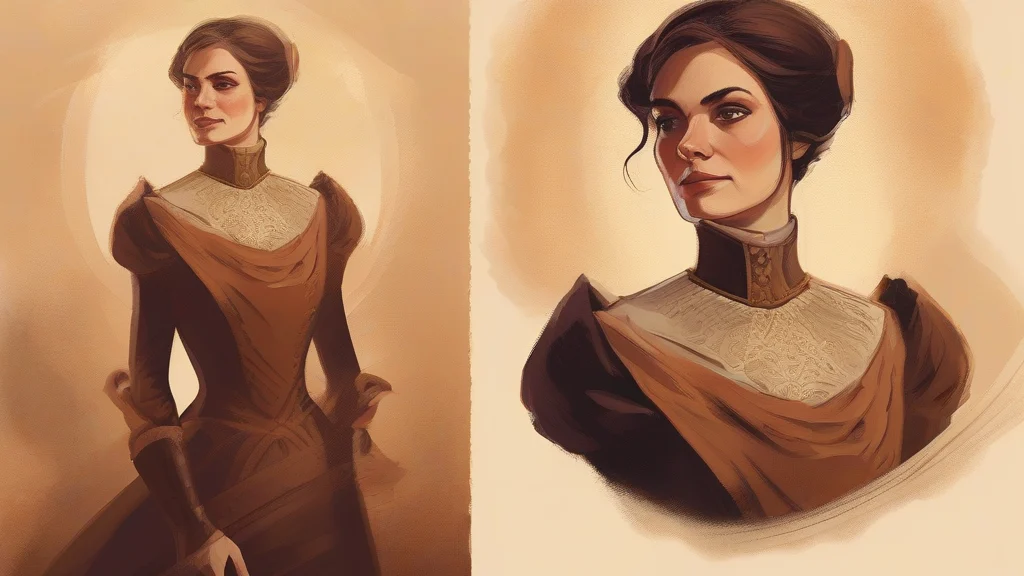
What does baroness mean?
A baroness is a woman of the rank of baron — either holding that title in her own right or being the wife or widow of a baron. In the British peerage, barons occupy the lowest rank of the nobility, and since the late twentieth century many women have been created baronesses as life peers, entitling them to sit in the House of Lords. Prominent examples include Baroness Thatcher and Baroness Benjamin. A woman who is a baroness by marriage is traditionally styled 'Lady', while one who holds the title in her own right uses 'Baroness' directly. The word evokes aristocratic heritage, formal ceremony, and social distinction, appearing frequently in historical fiction, period drama, and coverage of British public life. Its feminine ending marks it clearly against the masculine 'baron', making it a precise and useful term in any discussion of titled nobility.
nounA baroness is a woman who holds the rank of baron in her own right, or the wife or widow of a baron.
- A woman who holds the rank of baron in her own right (a peeress in her own right).
- The wife or widow of a baron.
"The baroness welcomed her guests to the estate with characteristic warmth."
"The baroness presided over the charity gala with effortless grace."
"As a life peer, Baroness Benjamin has served in the House of Lords for decades."
The plural adds '-es' because the singular already ends in '-s'.
"Several baronesses attended the state banquet at Windsor Castle."
Margaret Thatcher became a baroness after leaving office — which is why she's known to history as 'Lady Thatcher' rather than 'Prime Minister Thatcher'.
Reviewed by Deb Chak, Editor. AI-assisted content curated by RJS Tech Solutions LLP.
Etymology of baroness
The word 'baroness' derives from 'baron', a title that entered English from Old French, ultimately rooted in the medieval Latin 'baro', meaning a man or warrior. As the feudal system developed across Europe, 'baron' came to denote a specific rank of nobility, and the feminine form 'baroness' emerged in English during the medieval period to describe women of that rank, whether by inheritance or marriage. Related terms such as 'barony' (the lands held under the title) and 'baronial' (relating to barons) share this same linguistic lineage.
How baroness is actually used
In the British honours system, women appointed as life peers are formally titled 'Baroness' and may sit in the House of Lords. The wife of a baron is conventionally addressed as 'Lady [Surname]', while a baroness in her own right is addressed as 'Baroness [Name]'. The term carries connotations of aristocracy, formality, and high social standing.
Easily confused with baroness
A baron is a male holder of the lowest rank of the British peerage (or a European nobleman of equivalent rank), while a baroness is either a woman holding that rank in her own right or the wife of a baron.
A baronet is a hereditary British title ranking below a baron that is not a peerage position, whereas a baroness holds or is married to an actual peerage rank.