
What does barratry mean?
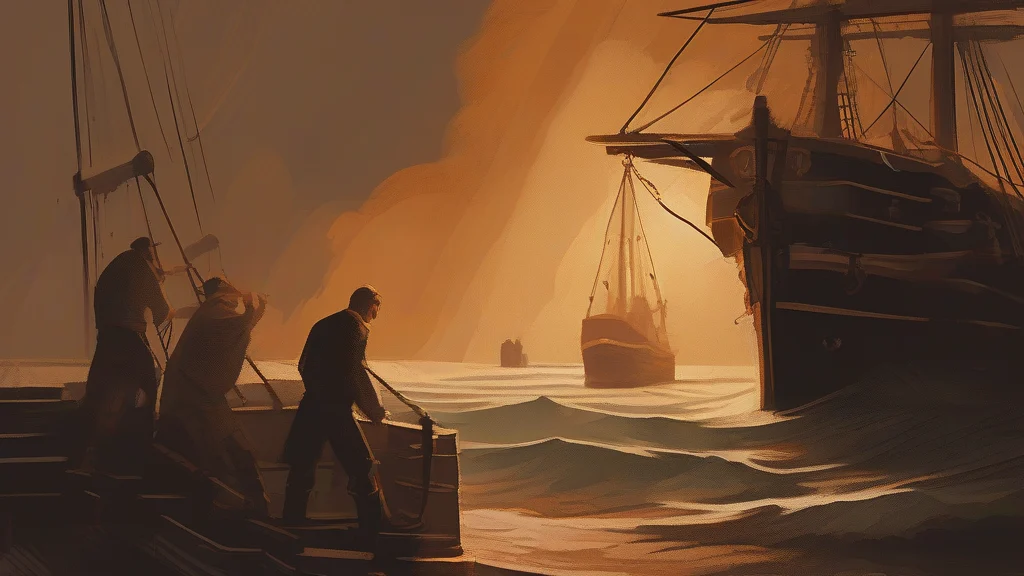
Barratry is a formal legal term with two distinct meanings. Historically, it denoted the offense of habitually stirring up quarrels, lawsuits, or other disputes for profit or spite — a crime once punishable by fine or imprisonment in England and colonial America, though now obsolete in most jurisdictions. In modern maritime law, barratry refers instead to fraud or deliberate misconduct committed against a shipowner or cargo interests by the vessel's own master or crew, as when a captain scuttles his ship or diverts its cargo. The word carries a strongly archaic, courtroom flavor and appears today chiefly in legal writing, insurance disputes, and literary references — most famously in Dante's Inferno, where barrators are punished among the fraudulent. Its rarity makes it a distinctive addition to any vocabulary, especially for readers interested in law or nautical history.
nounThe offense of habitually stirring up quarrels, lawsuits, or other disputes for personal gain or mischief; in maritime law, fraud or misconduct committed by a ship's master or crew against the owner or cargo interests.
- The vexatious incitement of quarrels, lawsuits, or discord, historically treated as a criminal offense in common-law jurisdictions.
- In maritime law, fraud, gross negligence, or willful misconduct by a ship's master or crew against the shipowner or insurers, such as scuttling or misappropriating the vessel or cargo.
"The medieval court fined him heavily for barratry after he repeatedly provoked lawsuits among his neighbors."
"Under the old statutes, anyone convicted of barratry could face fines, imprisonment, or banishment from the county."
"The insurer denied the claim, arguing that the vessel's loss resulted from barratry by its own captain rather than perils of the sea."
Rarely pluralized; the uncountable singular is standard even when referring to multiple acts, which are usually described individually.
"The court records catalogued decades of barratries committed by professional litigants."
Dante was so fed up with barrators that he condemned them to the eighth circle of Hell, where they are dunked in boiling pitch by demons armed with grappling hooks.
Reviewed by Deb Chak, Editor. AI-assisted content curated by RJS Tech Solutions LLP.
Etymology of barratry
Barratry derives from the Old French 'barat', meaning trickery, deceit, or contentious dealing, which entered English legal usage in the medieval period. The noun 'barrator' denoted one who commits the offense, and the adjective 'barratrous' describes conduct amounting to it. The term spread through common-law systems and was later adopted into maritime law, where it took on its specialized sense of misconduct by a ship's officers or crew.
Related word forms
How barratry is actually used
A formal, largely historical term. The first sense survives mainly in legal history and literature about medieval and early modern law; the second remains current in marine insurance contexts. In everyday speech the word is rare and may strike listeners as archaic.