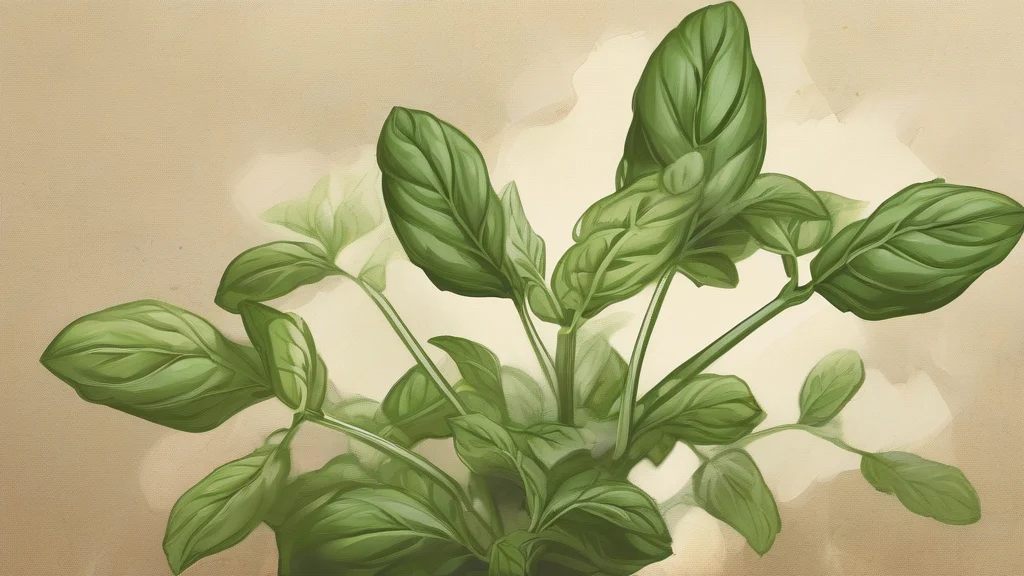
What does basil mean?
Basil is a fragrant annual herb belonging to the mint family, Lamiaceae, best known for the sweet, slightly peppery flavour of its leaves. Native to tropical regions of Asia, it has become indispensable to several of the world's great cuisines: sweet basil is central to Italian cooking, where it stars in pesto and pairs classically with tomatoes, while varieties such as Thai and holy basil lend their distinct aromas to Southeast Asian dishes. The word entered English in the fifteenth century from Latin basilicum, itself borrowed from Greek basilikon, meaning "royal" or "kingly," a nod to the high esteem in which the plant was once held. Today basil is grown easily in gardens and on windowsills, and it appears constantly in everyday speech about food and gardening, making it one of the most familiar herb names in English.
nounAn aromatic herb of the mint family, with sweet-smelling leaves used fresh or dried as a culinary seasoning, especially in Italian and Southeast Asian cooking. Also, a cultivated plant of the genus Ocymum/Ocimum.
- An aromatic herb (Ocimum basilicum) of the mint family whose leaves are widely used as a culinary seasoning, especially in Italian, Thai, and other cuisines.
- The leaves of this plant used fresh or dried as an ingredient in cooking.
"She torn fresh basil leaves over the caprese salad just before serving."
"Pound the basil with garlic, pine nuts, and olive oil to make a classic pesto."
"A pot of sweet basil sat on the sunny kitchen windowsill all summer."
The plural typically refers to different varieties or plants rather than individual leaves; when referring to the leaves themselves, basil is usually treated as uncountable.
"She grows three basils in her herb garden: Genovese, Thai, and lemon."
The ancient Greeks called it the "royal herb" — its very name comes from the Greek word for king, making basil literally fit for royalty on your pizza.
Reviewed by Deb Chak, Editor. AI-assisted content curated by RJS Tech Solutions LLP.
Etymology of basil
Basil derives from the Latin basilicum, meaning "royal" or "kingly," which was itself taken from the Greek basilikon (phuton), literally "royal plant." The Greek root relates to basileus, meaning "king," and shares that origin with related English borrowings such as basilica and basilisk. The word entered English around the fifteenth century, having passed through Old French basile.
How basil is actually used
Basil is a common, unmarked word in both British and American English, though the pronunciation differs noticeably between them. It carries warm, domestic connotations of home cooking and Mediterranean gardens. In botanical contexts it may be referred to by its scientific name, Ocimum basilicum.
Easily confused with basil
"Basal" means relating to or forming a base or foundation, whereas "basil" is an aromatic herb used in cooking.