
What does basque mean?
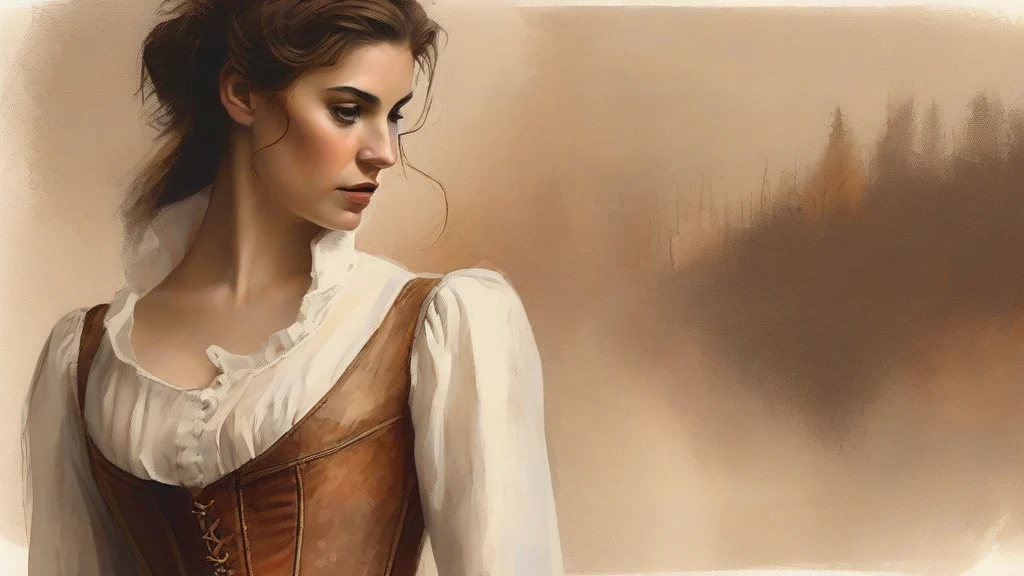
A basque is a closely fitted bodice or garment for women that extends from the chest down over the hips, typically shaped with seams, boning, or lacing to emphasize a narrow waist. Popular in the nineteenth and twentieth centuries both as visible outerwear on dresses and as foundation wear beneath them, the basque survives today chiefly in lingerie, bridalwear, and historical costume design, where it connotes elegance, structure, and old-fashioned femininity. The word's sartorial meaning was borrowed from French, where it originally referred to styles associated with the Basque people of the western Pyrenees. In its other life, the capitalized form 'Basque' names that ancient people and their remarkable language, Euskara — a linguistic isolate unrelated to any other known living tongue. Distinguishing the garment from the ethnonym is simply a matter of capitalization and context.
nounA basque is a tightly fitted bodice or waist-length garment for women, historically laced like a corset and often extending into a peplum over the hips. The word also denotes a member of a people inhabiting the western Pyrenees region of Spain and France, or their language.
- A close-fitting bodice or waist-length undergarment or outer garment for women, often boned or laced and extending over the hips.
- (usually capitalized) A member of a people of the western Pyrenees, or their language isolate.
"She laced herself into an elegant black basque before the evening gala."
"The vintage gown featured a boned basque that nipped in sharply at the waist."
"Her grandmother wore a satin basque beneath her Sunday best, as women did in the 1950s."
The plural applies to multiple garments or, when capitalized, to members of the Basque people.
"The costume department stocked several satin basques for the period drama."
The word for this corset-style garment comes straight from the name of one of Europe's oldest peoples — whose language predates Latin and has no known living relatives.
Reviewed by Deb Chak, Editor. AI-assisted content curated by RJS Tech Solutions LLP.
Etymology of basque
The English word derives from French 'basque', which denoted things associated with the Basques — the ancient people of the western Pyrenees whose self-designation is 'Euskaldunak' and whose language, Euskara, is a pre-Indo-European isolate. French adopted the name from Latin 'Vascones', the Roman term for the inhabitants of Vasconia; the related name 'Gascon' descends from the same Latin root via Occitan. English borrowed the garment term 'basque' in the nineteenth century, when fashions modeled on Basque regional dress became popular, applying the ethnic name to a style of fitted bodice.
How basque is actually used
In fashion contexts 'basque' is lowercase and refers to the garment; in ethnographic, linguistic, and political contexts it appears capitalized as 'Basque'. The garment sense is somewhat dated but persists in lingerie and historical costume terminology.
Easily confused with basque
The capitalized 'Basque' refers to the people, language, and culture of the western Pyrenees, while the lowercase 'basque' in fashion denotes a close-fitting bodice or woman's garment.
A bustier is a strapless, corset-like top ending at the waist or bustline, whereas a basque extends below the waist, typically to the hips with a fitted, often pointed outline.