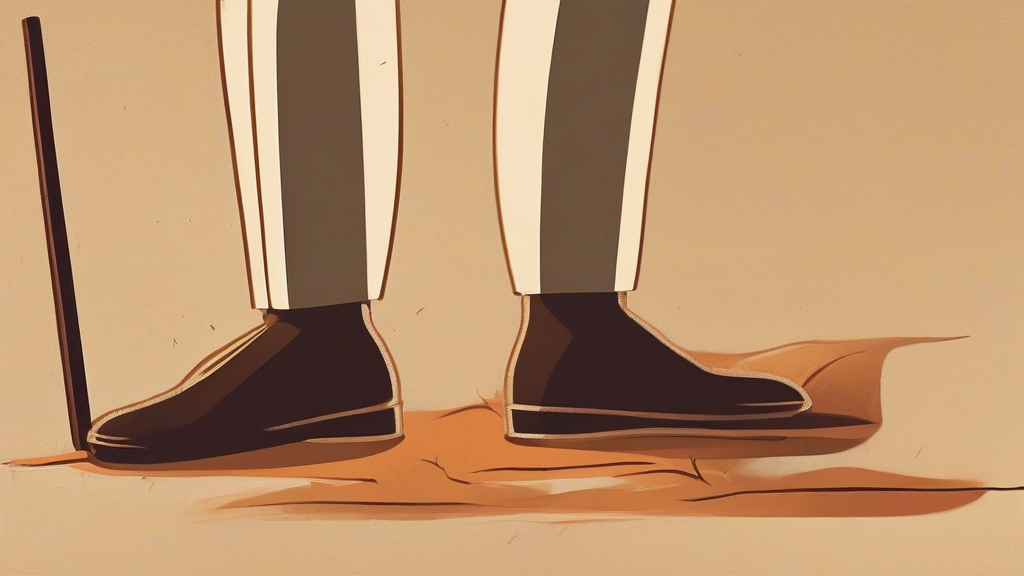
What does bastinade mean?
A bastinade is a blow delivered with a stick or cudgel, most notoriously one struck against the soles of a victim's bare feet. The term entered English in the early seventeenth century from Spanish bastonada, itself derived from bastón, meaning a stick or staff, and it became associated above all with a form of corporal punishment practiced in the Ottoman Empire and parts of Asia, in which offenders were beaten on the feet until they confessed or submitted. As a noun, bastinade can refer either to a single blow or to the punishment as a whole, and it has occasionally been used as a verb meaning to administer such blows. Today the word is essentially historical, appearing chiefly in older literature, travel writing, and accounts of penal practices rather than in everyday speech. Its enduring interest lies in what it reveals about the history of punishment and about how languages absorb words for foreign customs.
A blow with a stick or cudgel, especially one applied to the soles of the feet as a punishment.
"Each bastinade drew a cry of pain from the bound prisoner."
Most often found in historical or literary contexts describing Ottoman-era punishments.
To beat with a stick or cudgel, especially on the soles of the feet.
"The guards threatened to bastinade anyone who refused to confess."
Rarely used today; the verb sense appears mainly in older texts.
Used when referring to multiple blows or multiple instances of the punishment.
"The chronicle records that the offender received two hundred bastinades over the course of his interrogation."
This brutal word for a cudgel blow on the soles of the feet traveled into English from Spanish by way of the Ottoman Empire's notorious foot-whipping punishments.
Reviewed by Deb Chak, Editor. AI-assisted content curated by RJS Tech Solutions LLP.
Etymology of bastinade
Bastinade derives from the Spanish bastonada, meaning a blow with a stick, formed from bastón (a cudgel or staff), which ultimately traces back through Romance languages to a Germanic root for a club or staff. The word entered English in the early seventeenth century, at a time when European travelers and merchants were describing the judicial punishments they observed in the Ottoman Empire, where beating the soles of the feet was a well-known penalty. It is closely related to bastinado, a near-synonymous term that came into English around the same period, and it shares its ultimate ancestry with words such as baton.
How bastinade is actually used
A historical and largely archaic term, encountered mainly in accounts of Ottoman-era punishments, older literature, and histories of corporal punishment. It carries strongly negative connotations of cruelty and state-sanctioned violence.
Easily confused with bastinade
Bastinado refers to the punishment of beating the soles of the feet (and can be a noun or verb), while bastinade more broadly denotes a blow with a stick or cudgel, though the two terms overlap heavily and are often used interchangeably.