
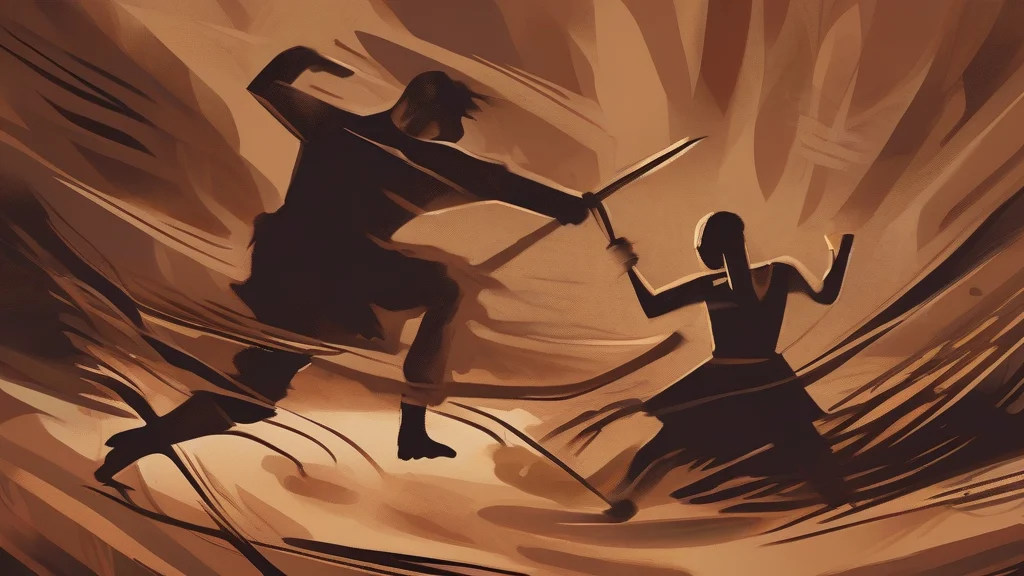
What does thrashing mean?
Thrashing describes either a vigorous beating or a similarly emphatic failure. In physical contexts, it suggests repeated blows or a person moving forcefully and uncontrollably; in sports and competition, “a thrashing” means a decisive defeat, usually one in which the winner is much stronger. The expression is familiar in both British and American English and is somewhat dramatic, but it can remain lighthearted when the defeat is exaggerated or playful. “Thrashing” also appears in phrasal verbs such as “thrash out,” meaning to discuss or work through a difficult problem, and “thrash around,” meaning to move about energetically without a clear result. These uses show how the word’s basic image of vigorous repeated action extends from literal force to figurative effort, failure, and disorder. Its long history and blunt force make it especially vivid in reporting contests, describing confrontations, and narrating unsuccessful attempts to find a solution.
A beating, or a decisive and usually humiliating defeat.
"The defending champion gave her opponent a severe thrashing."
The noun is commonly used figuratively for sporting and competitive defeats.
To beat repeatedly, or to move or struggle violently.
"The horse thrashed against the fence as the storm intensified."
This is the present participle of thrash and is commonly used in progressive constructions.
The plural is uncommon because a thrashing is normally treated as a single event or outcome.
"The team suffered two thrashings during the tournament."
Its Old English ancestor could mean beating grain from the stalk, so a thrashing originally described vigorous repeated action.
Reviewed by Deb Chak, Editor. AI-assisted content curated by RJS Tech Solutions LLP.
Where does thrashing come from?
Thrashing is an -ing form of thrash and descends through Middle English from Old English þerscan, meaning “to beat” or “to beat out grain.” Over time, the word developed figurative senses involving forceful movement, vigorous effort, and complete defeat. It is closely related to thresh, although modern thresh generally refers to separating grain from its stalk or husk.
Related word forms
How thrashing is actually used
The word is familiar in both British and American English. A thrashing used for a sporting or competitive defeat is emphatic and often implies a large margin; the figurative use can range from serious criticism to humorous exaggeration.
Easily confused with thrashing
Thrashing involves beating, struggling, or a decisive defeat, whereas threshing usually means separating grain from its stalk or husk.