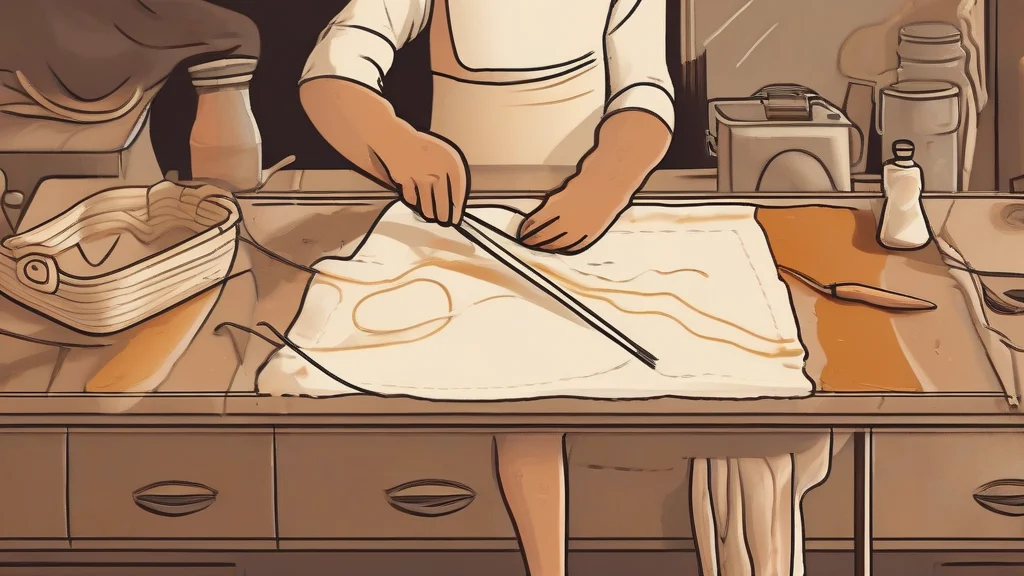
What does basting mean?
Basting names two distinct actions that share a single form. In the kitchen, it means spooning, brushing, or ladling liquid — melted fat, butter, wine, or the meat's own juices — over food as it roasts, a technique valued because it keeps the surface from drying out, encourages even browning, and layers on flavour. Cooks reach for a basting brush or bulb baster, and the term features prominently in recipes for turkey, chicken, and other roasted meats. In sewing, basting refers to running long, loose temporary stitches through fabric to hold pieces together while fitting or before permanent machine stitching; these stitches are later removed, which is why the technique is also called tacking. Both senses are ordinary, practical vocabulary — domestic rather than literary — yet their coexistence in one word is a quirk of history, since they descend from different French roots. For anyone reading recipes or sewing patterns, basting is an essential, unambiguous term once its context makes clear which craft it belongs to.
The action or process of sewing with long, loose temporary stitches, or of moistening food with liquid during roasting.
"A careful basting at half-hour intervals kept the joint succulent throughout its time in the oven."
Often used in phrases like 'give the meat a good basting'.
Present participle of baste: to sew with loose temporary stitches, or to spoon or brush liquid over food while it cooks.
"She was basting the chicken when the timer went off."
Rarely used; 'basting' is normally treated as an uncountable activity noun, though plural 'bastings' can appear in sewing contexts referring to individual rows of temporary stitches.
"She removed all the bastings once the final seam was sewn."
One word, two unrelated jobs: in the kitchen 'basting' keeps your roast juicy, but in the tailor's shop it holds seams together only until the real stitching arrives — the word even comes from two different French roots.
Reviewed by Deb Chak, Editor. AI-assisted content curated by RJS Tech Solutions LLP.
Etymology of basting
The word descends from two separate verbs in Old French. The sewing sense comes from 'bastir', meaning to build or construct (of Germanic origin), which gave the tailoring sense of joining fabric with loose stitches. The culinary sense is usually traced to Old French 'baster', possibly connected to the same Germanic base via a notion of moistening or soaking. English adopted both senses by the late medieval and early modern periods, and they remain distinct in meaning despite sharing a spelling.
Related word forms
How basting is actually used
Both senses are everyday words rather than formal ones, common in cookery writing and needlework instructions alike. The cooking sense dominates modern usage by far, especially around holiday roasting; the sewing sense survives mainly among people who sew, where 'basting' or 'tacking' refers specifically to temporary stitches meant to be removed later. The two senses come from different etymological sources and are essentially homonymous.
Easily confused with basting
'Basting' means stitching loosely or moistening food during roasting, while 'bashing' means striking something heavily.