What does beano mean?
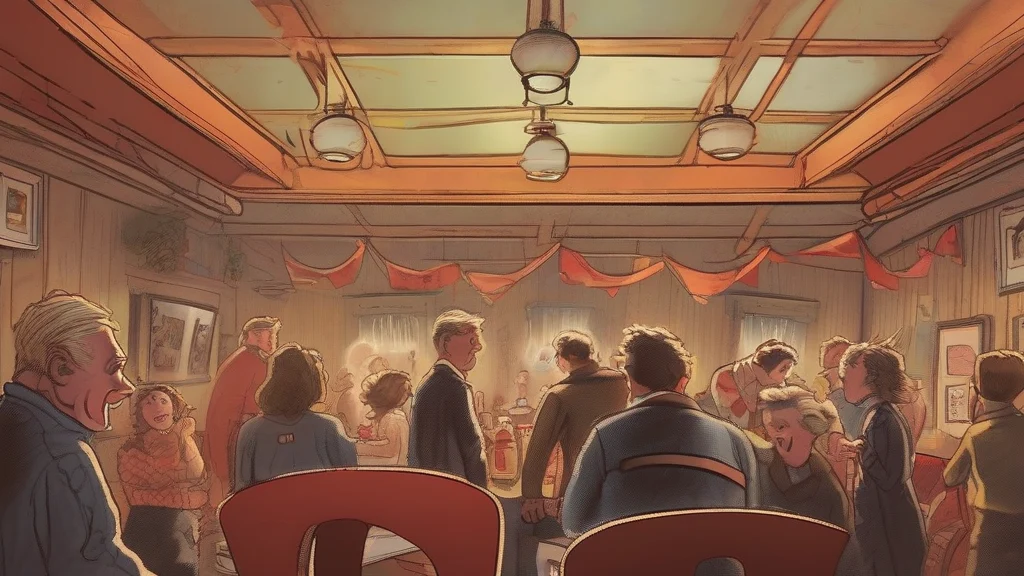
Beano is an informal British noun meaning a lively celebration, party, or festive outing, especially one laid on for workers or a group. The word originated in the nineteenth century as a shortened form of 'bean-feast', an annual dinner given by employers to their staff, traditionally featuring beans as a dish. Over time it broadened to describe any exuberant social occasion, and today it carries cheerful connotations of excess and fun — a 'right beano' suggests plenty of food, drink, and merriment. The word is firmly rooted in colloquial British English and sounds somewhat old-fashioned or affectionately nostalgic to modern ears. Separately, 'The Beano' is the name of Britain's best-known children's comic, launched in 1938 and home to characters such as Dennis the Menace, a naming choice that deliberately tapped into the word's association with unruly enjoyment.
nounAn informal British term for a lively celebration, party, or festive gathering, originally referring to an annual workers' dinner or outing. It is also the name of a long-running British children's comic.
- A lively celebration, party, or festive treat, especially one held for workers or a group (British informal).
- Short for The Beano, a long-running British children's comic first published in 1938.
"The office threw a proper beano to celebrate the end of the financial year."
"The firm laid on a real beano for its centenary, complete with a brass band and free beer."
"Dennis the Menace has been causing chaos on the pages of The Beano for decades."
Standard plural, used informally when referring to multiple celebrations.
"The company has thrown three beanos this year alone."
Britain's most famous comic takes its name from a Victorian workers' dinner — 'The Beano' was chosen because a 'beano' meant a riotous good time.
Reviewed by Deb Chak, Editor. AI-assisted content curated by RJS Tech Solutions LLP.
Etymology of beano
Beano arose in nineteenth-century Britain as a contraction of 'bean-feast', the annual celebratory dinner traditionally provided by employers for their workers, at which beans were a customary dish. By extension it came to mean any festive occasion or blow-out. Its most famous cultural offshoot is 'The Beano', the British children's comic founded in 1938, whose title playfully invokes the word's sense of high spirits. The underlying word 'bean' traces back through Old English 'bēan' to Germanic roots shared with other European languages.
How beano is actually used
Beano is distinctly informal and chiefly British; it carries a cheerful, slightly old-fashioned, working-class connotation of a blow-out or knees-up. In modern usage it often appears in phrases like 'a right beano'. The comic sense is always written as part of the title 'The Beano' and is a proper noun.
Easily confused with beano
A beanie is a close-fitting knitted cap worn on the head, whereas a beano is a festive celebration or party.
Benign means gentle, harmless, or non-cancerous, while a beano is a rowdy celebration.