What does bearcat mean?
A bearcat is the popular name for the binturong (Arctictis binturong), a stocky, tree-dwelling mammal native to the rainforests of South and Southeast Asia. Covered in coarse black fur, equipped with a fully prehensile tail — a rarity among carnivores — and famous for a scent often likened to buttered popcorn, the binturong earned the nickname because observers felt it combined a bear's bulk with a cat's agility and face, though it belongs to neither family: it is actually a member of the Viverridae, the civet family. The name arose as a simple compound of 'bear' and 'cat', coined in the nineteenth century by English-speaking naturalists and traders. Beyond zoology, 'bearcat' has served since the late nineteenth century as American slang for a fierce, spirited fighter or an energetic woman, a sense now largely dated. The word remains widely recognized today chiefly through university athletics, most prominently the University of Cincinnati Bearcats.
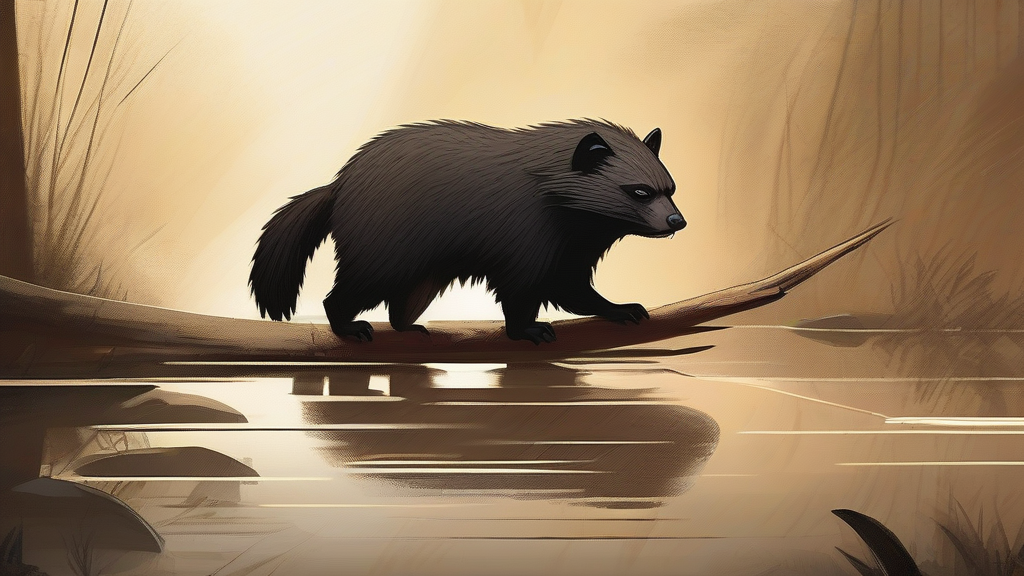
The binturong (Arctictis binturong), a large arboreal mammal of Southeast Asian forests, with long shaggy black fur, a prehensile tail, and musk glands that produce a popcorn-like scent.
"The bearcat used its prehensile tail like a fifth limb as it descended the trunk."
Informally, a fiercely energetic or combative person; a spirited fighter.
"Watch out for her in negotiations — she's a bearcat when she smells a bad deal."
This figurative sense is dated American slang, most at home in writing from the late nineteenth and early twentieth centuries.
Regular plural; frequently capitalized in team and mascot names such as the Cincinnati Bearcats.
"Beircats spend nearly all their lives in the forest canopy."
Despite the name, the bearcat is neither a bear nor a cat — it's a binturong, a civet relative that smells uncannily like hot buttered popcorn.
Reviewed by Deb Chak, Editor. AI-assisted content curated by RJS Tech Solutions LLP.
Etymology of bearcat
The word 'bearcat' is a straightforward English compound of 'bear' and 'cat', first applied in the nineteenth century to the binturong, whose bulky build and feline face suggested a blend of the two animals even though it is neither. It emerged through Anglo-Indian and colonial trade contexts, when European naturalists were cataloguing Southeast Asian wildlife. By the late nineteenth century, Americans had extended the word figuratively to mean a tough, aggressive person, and in the twentieth century it became a popular mascot name. Its only true etymological relatives are its own components, 'bear' (from Old English bera) and 'cat' (from Old English catt, of Germanic origin).
How bearcat is actually used
The animal sense dominates modern usage, especially since several American universities (notably Cincinnati and Binghamton) adopted 'Bearcats' as their athletic nickname, which has kept the word familiar to sports fans. As a term for a feisty person, 'bearcat' sounds distinctly old-fashioned and informal — early-20th-century American slang rather than current idiom.
Easily confused with bearcat
A bear is a large heavy mammal of the family Ursidae, whereas bearcat names an entirely different animal — the binturong — despite the misleading first element.
A wildcat is a small wild feline, while a bearcat is not a cat at all but a viverrid (civet relative) known as the binturong.