
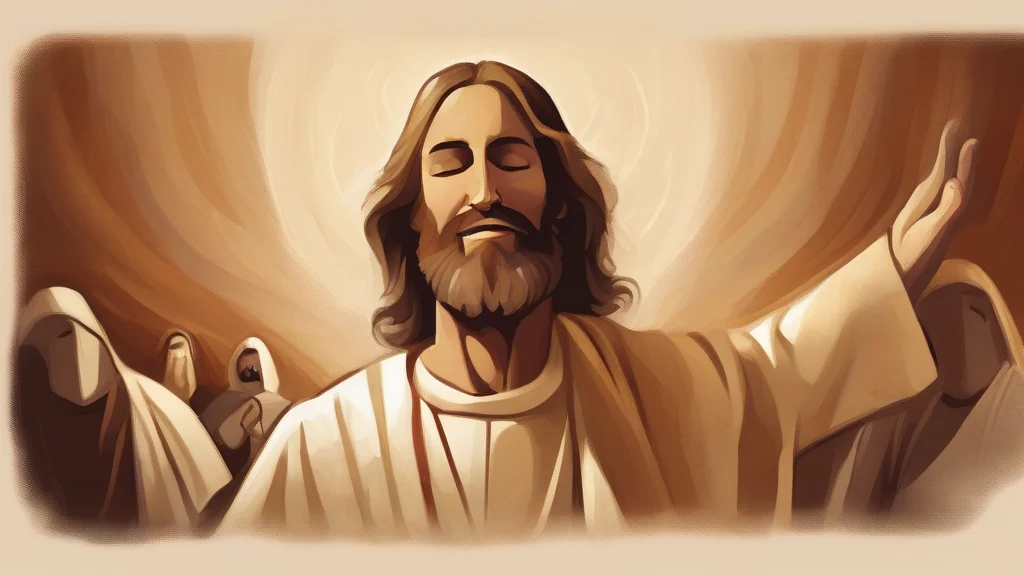
What does beatitude mean?
Beatitude denotes supreme, perfect happiness — a blessedness so complete that it transcends ordinary joy. The word is rooted in Christian thought, where it refers above all to the eternal blessedness of the righteous in heaven, and it is also the term for the Beatitudes, the series of sayings in the Sermon on the Mount that each open with 'Blessed are…' (for example, 'Blessed are the poor in spirit'). Beyond its theological core, beatitude appears in literary and elevated prose to describe any state of profound contentment or bliss, whether spiritual or worldly. It is a formal word, rarely heard in casual conversation, and it carries connotations of serenity, sanctity, and fulfillment rather than mere pleasure. Its adjective form, beatific — as in 'a beatific smile' — is more familiar in modern usage and points back to the same Latin root meaning 'happy' or 'blessed.'
nounSupreme or perfect blessedness and happiness, especially the blessedness promised to the righteous in the afterlife in Christian theology; also, one of the sayings of Jesus in the Sermon on the Mount beginning 'Blessed are…', traditionally called the Beatitudes.
- Supreme blessedness or happiness, especially the perfect felicity of heaven promised to the righteous in Christian theology.
- (usually plural, often capitalized) Any of the declarations of blessedness made by Jesus in the Sermon on the Mount, each beginning with 'Blessed are…'.
- (rare, extended use) A state of great or complete happiness in ordinary life.
"The monk described a state of beatitude that transcended any earthly pleasure."
"Medieval theologians wrote at length about the beatitude enjoyed by souls in heaven."
"Reading by the fire with her grandchildren around her, she felt something close to pure beatitude."
The plural is most commonly encountered in the fixed phrase 'the Beatitudes', referring to the individual sayings of Jesus in the Sermon on the Mount; otherwise the noun is typically singular.
"The Gospel of Matthew contains eight Beatitudes."
Every 'Blessed are…' line from the Sermon on the Mount — eight of them — is technically called a Beatitude, which is why the word is capitalized when referring to those verses.
Reviewed by Deb Chak, Editor. AI-assisted content curated by RJS Tech Solutions LLP.
Etymology of beatitude
Beatitude derives from the Latin beatus, meaning 'happy' or 'blessed,' via the Late Latin term beatitudo, 'blessedness' or 'felicity.' The word entered English through ecclesiastical Latin in late Middle English, in the fourteenth or fifteenth century, initially in theological contexts describing heavenly bliss. It shares its root with beatific, beatify, and beatification, all of which concern blessedness or holiness, and more distantly with words borrowed via French such as beauty-related forms of beatus like beau and belle.
Related word forms
How beatitude is actually used
Beatitude is formal and literary in register. In everyday use it carries a religious or elevated connotation; when used of ordinary happiness it is usually somewhat ironic, poetic, or self-consciously grand. When referring specifically to the verses in Matthew 5:3–12 (and Luke's parallel), the word is conventionally plural and capitalized as 'the Beatitudes.'
Easily confused with beatitude
Beatific is an adjective describing an expression of serene happiness (as in 'a beatific smile'), while beatitude is a noun denoting the happiness itself.