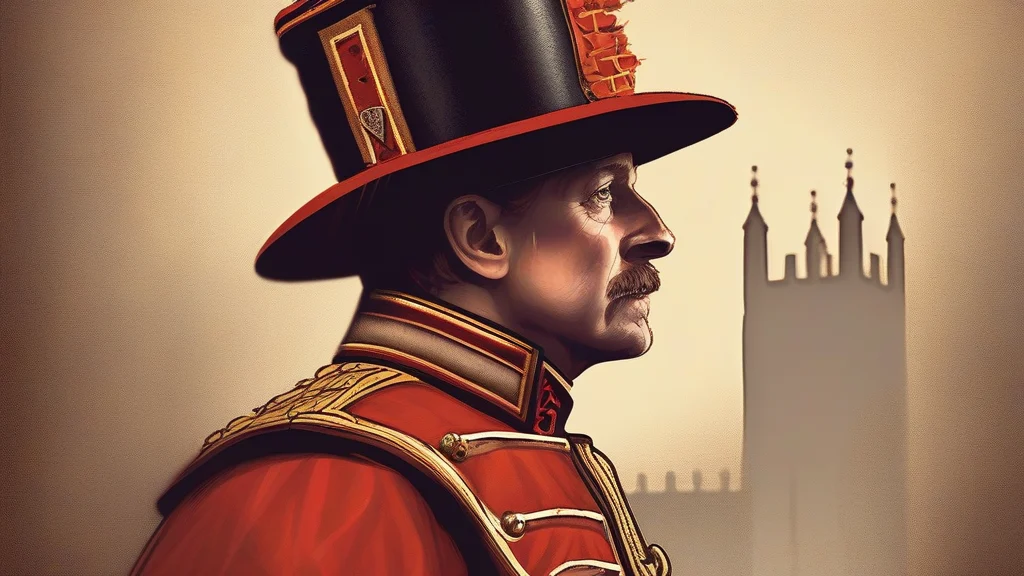
What does beefeater mean?
A beefeater is best known today as a Yeoman Warder of the Tower of London — one of the ceremonial guardians who, in striking red-and-gold Tudor uniforms, conduct tours, guard the Crown Jewels, and take part in centuries-old rituals such as the Ceremony of the Keys. The nickname is popularly traced to the warders' historic payment in beef, or more generally to their reputation for hearty eating; an older sense of the word referred to any well-fed servant or attendant who consumed beef generously. Although 'beefeater' is informal rather than official, it has become so firmly attached to the Tower's guardians that it appears on souvenirs, in guidebooks, and even as the name of a British gin. The word carries a colorful, distinctly British connotation, evoking pageantry, royal history, and tradition. For anyone reading about London landmarks or English ceremonial life, understanding this term is essential, since the guards themselves are rarely called by their formal title outside official contexts.
nounA Yeoman Warder of the Tower of London, a ceremonial guardian of the Tower dressed in a distinctive red-and-gold Tudor uniform. More broadly and historically, it can refer to a well-fed person, especially one who eats heartily.
- A Yeoman Warder of the Tower of London, one of the ceremonial guardians in traditional Tudor dress.
- (Historical) A well-fed servant or attendant, especially one who eats beef generously.
"The beefeater regaled the tourists with grisly tales of executions at the Tower of London."
"Visitors to the Tower were delighted when a beefeater paused his tour to pose for photographs in his scarlet uniform."
"In earlier centuries, the term 'beefeater' was applied mockingly to servants known for their hearty appetites."
Standard plural; used both for multiple Tower guards and, historically, for hearty eaters.
"Two beefeaters stood at attention as the last visitors left the Tower."
London's famous 'beefeaters' got the nickname because they were once paid partly in beef — a perk so prized it became their identity.
Reviewed by Deb Chak, Editor. AI-assisted content curated by RJS Tech Solutions LLP.
Etymology of beefeater
The word 'beefeater' arose in England in the early modern period, combining 'beef' — which came into English through Old French from Latin — with 'eater.' Its earliest uses referred to well-fed servants or attendants, often with a mocking tone about their appetites, and the name was later applied to the Yeomen Warders of the Tower of London, popularly said to have been paid in beef among other allowances. The underlying root of 'beef' traces back to Latin bōs ('ox' or 'cow'), making 'bovine' a distant relative.
How beefeater is actually used
Today the word almost always refers to the Yeoman Warders of the Tower of London, whose official title differs from their popular nickname. The older sense of a hearty eater of beef is now largely historical and appears mainly in discussions of the nickname's origin. The capitalized form 'Beefeater' also names a British gin brand, which is unrelated to the guards themselves.
Easily confused with beefeater
Beefeater is also a well-known brand of London dry gin; the word in this entry refers to a Tower of London guard or a historical hearty eater, not the spirit.