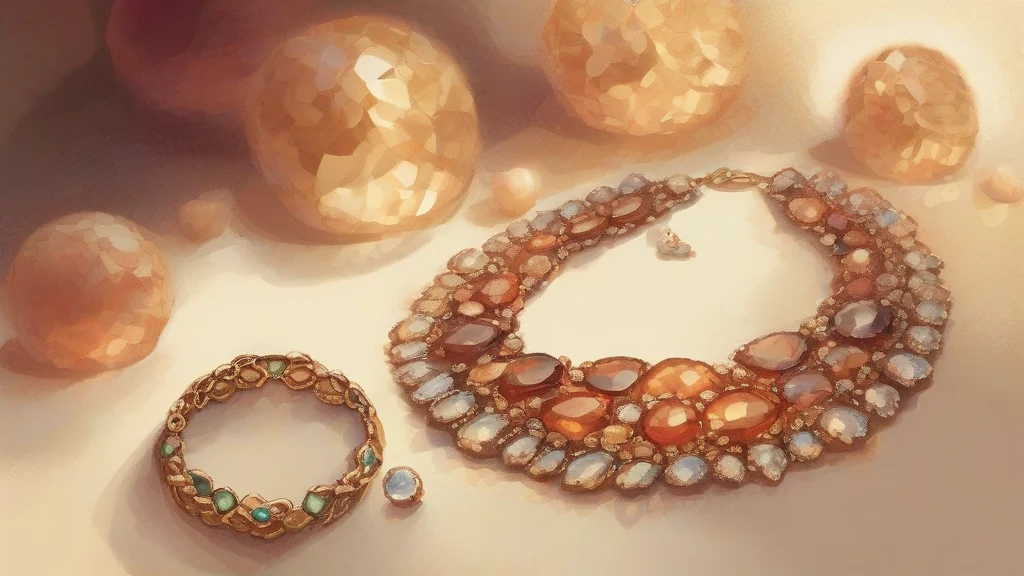
What does bejewel mean?
Bejewel is a transitive verb meaning to adorn or decorate something with jewels or other glittering ornaments. It is formed from the prefix 'be-' combined with 'jewel', following an old English pattern in which 'be-' signals covering or decorating a surface, as in 'bedeck' or 'bespangle'. In modern usage the word appears most often in its past participle form, 'bejeweled' (or British 'bejewelled'), where it functions as an adjective describing gowns, crowns, boxes, and other objects richly set with gems. The word also lends itself readily to figurative use: writers describe dew-bejeweled cobwebs, star-bejeweled skies, or city lights that bejewel a skyline at night. Because it evokes luxury, brilliance, and craftsmanship, 'bejeweled' carries a glamorous, slightly ornate connotation, making it a favorite in fashion writing, historical fiction, and poetic description alike.
verbTo adorn or decorate something with jewels or glittering ornaments; often used figuratively to describe things that sparkle as if studded with gems.
- To decorate or adorn with jewels or sparkling ornaments.
- (Figurative) To cover or dot something with things that glitter or sparkle like jewels.
"The queen's ceremonial gown was bejeweled with rubies and emeralds."
"Her evening clutch was bejeweled with tiny sapphires that caught the candlelight."
"Dew bejeweled the spider webs across the hedge at dawn."
When fireflies light up a summer meadow, writers reach for 'bejeweled' — the night itself becomes a necklace.
Reviewed by Deb Chak, Editor. AI-assisted content curated by RJS Tech Solutions LLP.
Etymology of bejewel
Bejewel was formed in English from the prefix 'be-', indicating adornment or covering, attached to the noun 'jewel'. The word 'jewel' itself entered Middle English from Old French 'jouel', of medieval Latin origin. The verb arose in the early modern period, when many 'be-' verbs of decoration such as 'bedeck' and 'bespangle' were likewise current, and its derivatives 'bejeweled' and 'bejewelling' remain the most common forms seen today.
Related word forms
How bejewel is actually used
Most frequently encountered in its past participle form 'bejeweled' (British spelling 'bejewelled') functioning adjectivally. The verb carries a literary, slightly ornate register and is common in descriptive prose about clothing, architecture, and nature.
Easily confused with bejewel
Bedew means to moisten with drops of dew or water, whereas bejewel means to adorn with jewels.