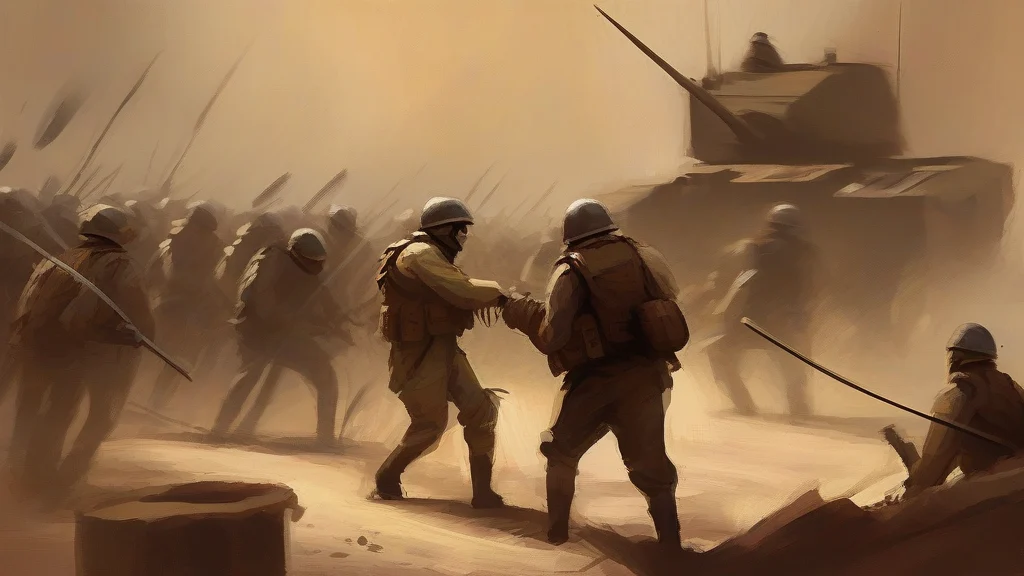
What does beleaguering mean?
To beleaguer is to surround and besiege, whether with armies or with adversity; its present participle, beleaguering, describes that relentless act of encirclement. The word entered English in the sixteenth century from the Dutch beleggen, literally "to lay about," and originally referred strictly to the military blockade of a fortified town — cutting it off from supplies until surrender became inevitable. Over time the term broadened dramatically: today one is more likely to read of a company beleaguered by lawsuits, a government beleaguered by scandal, or a family beleaguered by debt than of an actual siege. The verb retains a formal, slightly literary tone and carries an unmistakable connotation of sustained pressure rather than a single blow — trouble that closes in from every side and does not let go. Though the passive form beleaguered has become by far the most familiar shape of the word, the active beleaguering preserves its original image: forces massing around a target, patient and unyielding, until resistance wears away.
An instance of the action of beleaguering; the act or process of besieging or persistently harassing.
"The city's long beleaguering left its population starving."
Used chiefly in historical or literary contexts for the military sense.
Present participle of beleaguer: besieging a place, or persistently harassing or besetting a person or institution.
"Creditors were beleaguering him with calls at all hours."
"Believer" comes from the same ancient root as "beleaguer" — both trace back to a word meaning simply to lie or bind together.
Reviewed by Deb Chak, Editor. AI-assisted content curated by RJS Tech Solutions LLP.
Etymology of beleaguering
Beleaguer derives from Dutch beleggen, formed from be- (about) plus leggen (to lay), so its underlying sense is "to lay around" or encircle. It was borrowed into English in the late sixteenth century during the Dutch wars, when English soldiers served alongside Dutch forces against Spain. The root leggen itself goes back to Proto-Germanic *lagjan, meaning to lay, which also yields the English words lie and lay, as well as related borrowings such as league and leaguer.
Related word forms
How beleaguering is actually used
Formal to literary in register. The literal military sense is now rare; the figurative sense — being beleaguered by problems, debts, or hostile press — dominates modern usage. The past participle "beleaguered" is far more common than any active form.
Easily confused with beleaguering
"Belaboring" means arguing or discussing something at excessive length, while "beleaguering" means besieging or persistently harassing.