What does bellowing mean?
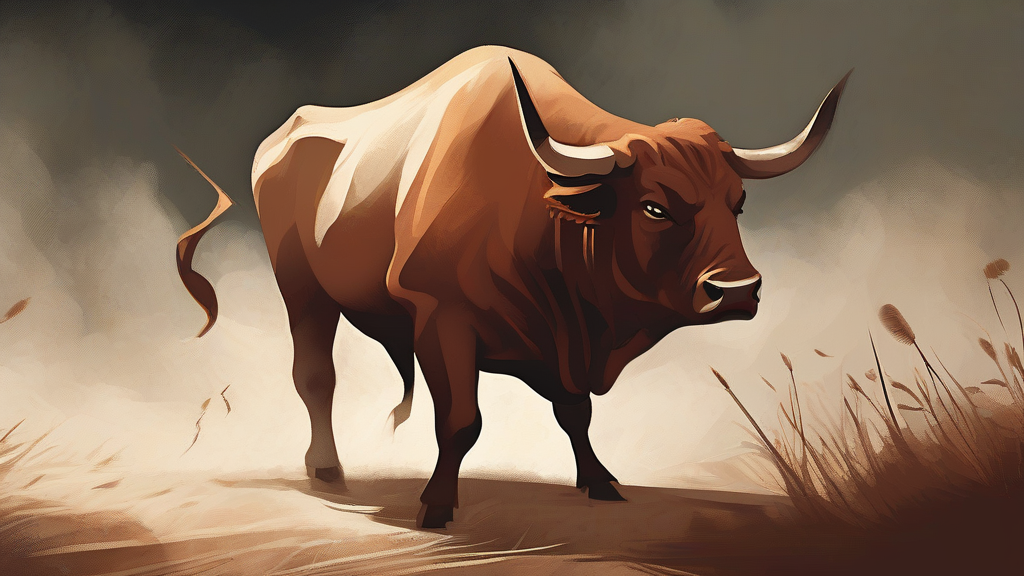
Bellowing describes the production of a loud, deep, sustained roar — the characteristic cry of an angry bull, the trumpeting-adjent call of a stag, or the furious shouting of a human voice pushed to its limits. It appears most naturally as a verb in its -ing form ('the ox was bellowing in pain') and as a noun denoting the sound itself ('we heard the bellowing from across the field'). The word carries strong connotations of power, aggression, and animal vigour; people described as bellowing are typically angry, commanding attention through sheer volume rather than eloquence. It sits above ordinary shouting on a scale of intensity and implies a chest-deep resonance rather than the sharpness of screaming. Derived from Old English roots shared with other words for animal cries, bellowing remains vivid, concrete vocabulary, equally at home describing livestock, storms of temper, and theatrical displays of rage.
Present participle of "bellow": to utter a loud, deep, roaring cry, as an enraged bull or an angry person does.
"The wounded stag lay bellowing in the bracken."
Frequently used in progressive tenses and as a modifier ('a bellowing crowd').
A loud, deep roaring sound, especially one made by an animal or an angry person.
"Above the wind we heard the bellowing of the bulls."
Usually uncountable or in the singular; the plural "bellowings" is rare.
Rare; the noun is normally uncountable or used in the singular when referring to repeated sounds.
"The bellowings of the herd echoed through the canyon."
A bellowing bull can be heard over a kilometre away — which is why 'bellow' has been English's go-to word for animal-sized anger since before the Norman Conquest.
Reviewed by Deb Chak, Editor. AI-assisted content curated by RJS Tech Solutions LLP.
Etymology of bellowing
The verb "bellow" descends from Old English "bylgan" or "belgan", meaning to roar or bellow, a word of West Germanic origin. It has been part of the language since before the Norman Conquest and has always referred primarily to the cries of large animals, later extending to loud human shouting. The -ing form functions both as the present participle of the verb and as a noun denoting the sound.
Related word forms
How bellowing is actually used
Most often used of large animals (bulls, stags, elephants) and of people shouting angrily or forcefully; it carries connotations of volume, depth, and loss of composure. More forceful than mere shouting, less shrill than screaming.
Easily confused with bellowing
"Billowing" means swelling or surging outward like smoke or sails, while "bellowing" means making a loud, deep roaring sound.
"Below" means underneath or at a lower level, whereas "bellowing" refers to loud roaring or shouting.