
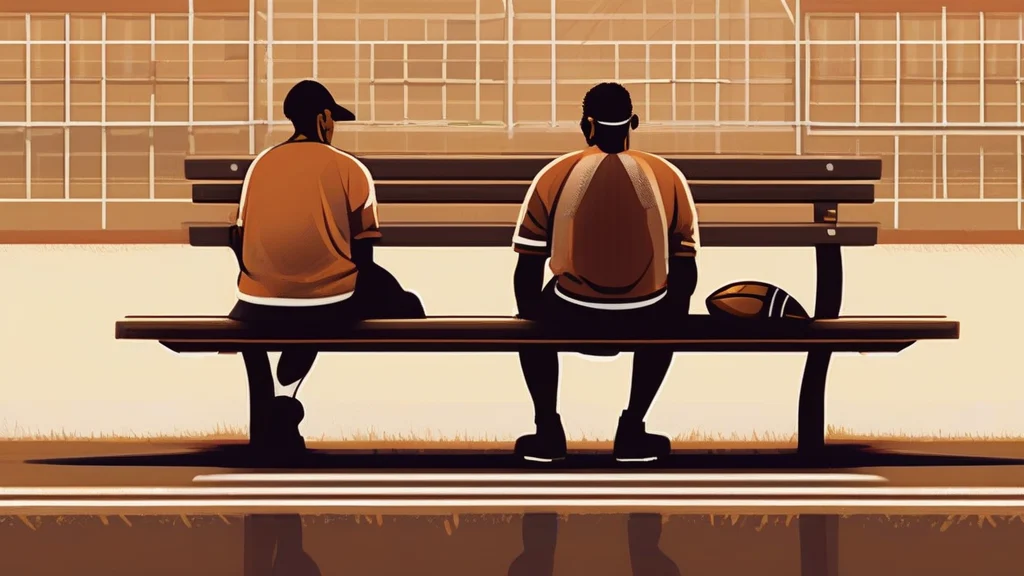
What does benched mean?
"Benched" is the past tense and past participle of the verb "to bench," and its dominant modern sense comes straight from the world of sport: to remove a player from active play, usually at a coach's discretion. A benched athlete sits out the game on the substitutes' bench rather than on the field or court, and the word frequently carries a whiff of disappointment or discipline — a player might be benched for poor form, an injury, or a tactical decision. Beyond athletics, "benched" has spread into everyday and professional language as a vivid way of saying that a person, plan, or project has been set aside temporarily: a company may bench a product launch, or an employee may be benched while awaiting reassignment. The word's figurative force lies in this image of capable people or things sitting idle, ready but not called upon. Informal in tone, it pairs naturally with phrases like "got benched" or "benched indefinitely."
verb (past simple and past participle)Past tense and past participle of "bench"; most commonly meaning to remove a player from active participation in a sports game, or more generally to set someone or something aside from action, use, or consideration.
- (Sports) Removed a player from active participation in a game or match, typically by the coach's decision.
- Set aside a person, plan, project, or thing from action, service, or consideration temporarily.
- (Law, historical) Placed before a court or bench; also, seated on a bench.
"The coach benched the star striker for the second half after a string of missed chances."
"After two fumbles, the quarterback was benched for the rest of the quarter."
"The city benched the renovation plan until funding could be secured."
In sports, being benched isn't a punishment you serve in detention — it's the coach's loudest silence, delivered from the sideline without saying a word.
Reviewed by Deb Chak, Editor. AI-assisted content curated by RJS Tech Solutions LLP.
Etymology of benched
The verb "bench" derives from the noun "bench," which comes from Old English "benc," meaning a long seat — a word of Germanic origin related to Old High German "bank." The sporting sense arose from players literally sitting on benches at the side of the field, and by extension "to bench" came to mean removing a player to that seat. A broader figurative sense of setting things aside developed from the same idea. Cognates include "bank" (originally a moneylender's bench) and "banquet" (via French, from a bench on which meals were served).
Related word forms
How benched is actually used
"Benched" is informal to neutral in register. In sports contexts it often carries a negative connotation, implying poor performance or a coach's disapproval, though it can be tactical or injury-related. Outside sport, it is common in business and politics to describe shelving plans or sidelining people temporarily. The passive construction "was benched" or "got benched" is especially frequent.
Easily confused with benched
"Wrenched" means twisted violently or pulled forcibly, while "benched" means removed from play or set aside.