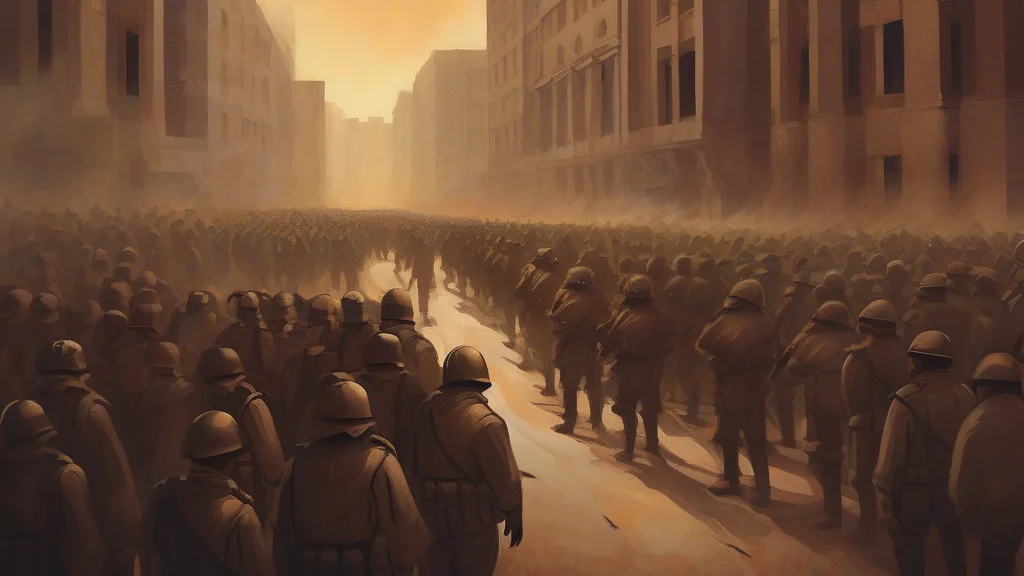
What does besieged mean?
"Besieged" is the past tense and past participle of the verb "besiege," meaning to surround a place with armed forces in order to capture it or starve it into surrender. In modern usage, however, the word has expanded well beyond the battlefield: a person may be besieged by reporters, a customer-service desk besieged with complaints, or a government besieged by crises. In these figurative senses, it conveys relentless pressure from all sides — not merely being busy, but feeling hemmed in and overwhelmed by competing demands. Journalists frequently use it adjectivally, as in "the besieged minister," to suggest someone whose position is under sustained attack. The word derives ultimately from the Latin sedēre, "to sit," via Old French, reflecting the idea of an army sitting down around a city until it yields. Its blend of vivid military imagery and everyday usefulness makes it a powerful word for describing any situation of intense, unrelenting pressure.
Surrounded (a place) with armed forces so as to capture it or force surrender; overwhelmed or pressed hard by crowds, requests, or difficulties.
"Enemy troops had besieged the city for six weeks."
Almost always used in passive constructions in the figurative sense: "was besieged by/with."
Under siege; subjected to constant pressure, criticism, or overwhelming demand.
"The besieged manager defended his team's poor results."
Common in journalistic writing as a premodifier.
The word "siege" and the word "sit" share the same ancient root — to besiege a city was, literally, to make it sit under your control.
Reviewed by Deb Chak, Editor. AI-assisted content curated by RJS Tech Solutions LLP.
Etymology of besieged
"Besieged" comes from "besiege," borrowed in the late Middle Ages from Old French assiegier, formed on "siege," meaning a seat or the act of sitting down before a fortified place. "Siege" itself traces back through Vulgar Latin *sedicare to Latin sedēre, "to sit." English thus shares this root with words such as "session," "preside," "reside," and "sediment," all descendants of the same Latin verb. The military sense of surrounding a town dates to medieval warfare, and the extended sense of being overwhelmed by crowds or demands developed later.
Related word forms
How besieged is actually used
The literal military sense is now largely historical or figurative in everyday English; today the word most often describes being overwhelmed by people, attention, or demands. It carries a connotation of pressure and hardship rather than simple busyness. The adjectival use ("the besieged prime minister") is common in journalism.
Easily confused with besieged
"Seized" means grabbed or taken hold of suddenly, while "besieged" means surrounded and pressed by attackers, crowds, or overwhelming demands.