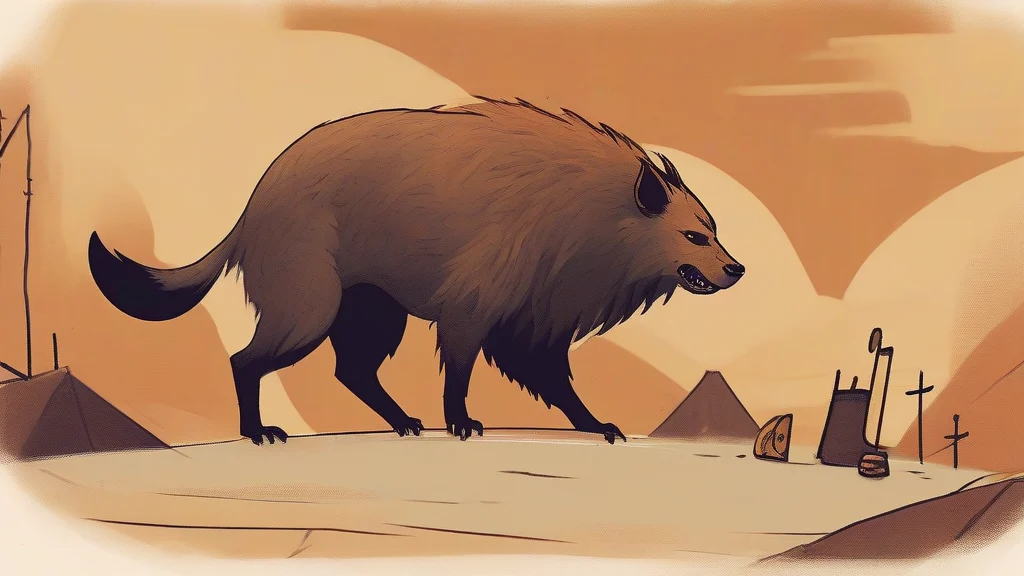
What does bete mean?
Bete, usually written with its French circumflex as bête, is a noun meaning an animal or beast, and by extension a person regarded as stupid or brutish. It entered English through French, whose bête derives from the same Latin root, bestia, that produced the native English word beast — the circumflex simply marks where an older "s" sound was dropped. Standalone uses are now rare and carry a distinctly literary or Gallic flavor, but the word thrives inside well-known French phrases adopted into English, above all bête noire, literally a "black beast," meaning something or someone one particularly dreads or dislikes, and bête humaine, the human animal. Writers reach for these expressions to lend a touch of continental elegance or ironic precision. Because it looks identical to the common verb bet plus a final e, and nearly so to beet, the vegetable, spelling matters: the accent grave over the first e is the surest sign you're dealing with a beast rather than a wager or a salad ingredient.
nounAn animal or beast, especially in older or French-influenced usage; by extension, a stupid or brutish person.
- An animal, beast, or brute creature (archaic or French-influenced).
- A stupid, insensitive, or brutish person.
"In her letters she dismissed the man as nothing more than a bete, all appetite and no intellect."
"The old naturalist's manuscript described every bete of the forest in loving detail."
"He behaved like a complete bete at the dinner party, talking with his mouth full and ignoring everyone."
The plural is uncommon in standalone English use; when the word appears in borrowed French phrases, the French plural form bêtes is retained.
"The essayist catalogued the betes noires of political life with evident relish."
Every time you say "bête noire" — your worst nightmare — you're actually calling it a beast, straight out of Latin via French.
Reviewed by Deb Chak, Editor. AI-assisted content curated by RJS Tech Solutions LLP.
Etymology of bete
Bete comes from Old French beste or bete, itself descended from the Latin noun bestia, meaning a wild animal or brute creature. English acquired the same Latin root twice: directly, yielding the everyday word beast, and again via French in learned derivatives such as bestial and bestiary. The French circumflex accent in bête preserves the memory of a lost "s" — Latin bestia became Old French beste, then bête once the consonant was dropped in pronunciation. Its strongest presence in modern English is within borrowed French phrases such as bête noire.
How bete is actually used
"Bete" appears in English almost exclusively through French borrowings, most famously in the fixed phrase "bête noire." On its own it reads as literary, archaic, or affected, and modern writers normally prefer "beast" or "brute." The circumflex on the French form (bête) marks a lost "s" before the consonant — compare French "bête" with English "beast," which retains it.
Easily confused with bete
"Bet" is a wager or an act of risking money on an outcome, while "bete" refers to an animal or a brutish person.
"Beet" is an edible root vegetable, whereas "bete" denotes a beast or, figuratively, an unintelligent person.