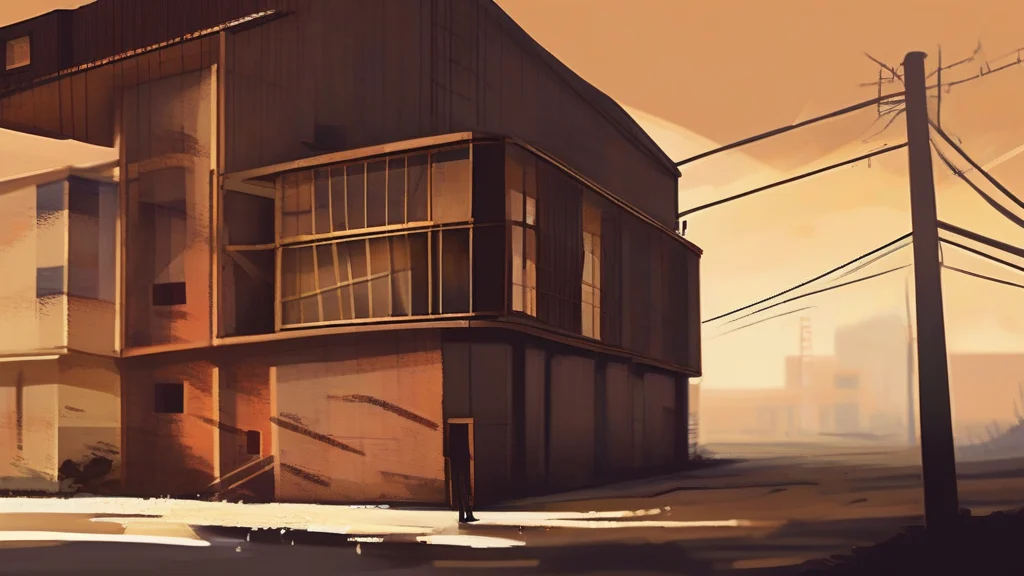
What does bigging mean?
"Bigging" is a noun denoting a building — any constructed dwelling, outbuilding, or edifice. It belongs chiefly to Scots and Northern English dialect and is now rare elsewhere, surviving mostly in older literature, local histories, and place-name studies. The word descends from the obsolete verb "big," meaning "to build," which came into Middle English from Old Norse "byggja" (to build or dwell); it is thus a Germanic cousin of "build." In use, "bigging" carries a rustic, historical flavor: one might read of a "ruinous bigging" on a Highland hillside or a "steading and its biggings" in a nineteenth-century account of rural life. Because the word is unfamiliar to most contemporary English speakers, writers who employ it usually do so deliberately, for regional color or antiquarian precision. For readers, encountering "bigging" is a reminder that English vocabulary once drew far more heavily on its Scandinavian inheritance, particularly in the north, where Norse settlement left deep linguistic traces that persist in words like this one.
nounA building or edifice; a constructed dwelling or other structure. The word survives chiefly in Scots and Northern English dialect.
- A building or constructed structure (Scots and Northern English dialect)
"The crofter pointed to the ruined bigging on the hillside, all that remained of his grandfather's farmstead."
"The last standing bigging in the glen now serves as a barn for the tenant farmer's sheep."
"Place-names such as Biggar preserve echoes of a time when every bigging on the moor was raised by hand."
The plural is used when referring to multiple buildings, often in descriptions of farm steadings or rural complexes.
"The estate map marked several biggings scattered across the lower pasture."
Long before 'big' described size, the verb "big" meant to build — so a "bigging" was literally a thing that had been bigged.
Reviewed by Deb Chak, Editor. AI-assisted content curated by RJS Tech Solutions LLP.
Etymology of bigging
"Bigging" comes from the obsolete verb "big" (to build), which entered Middle English from Old Norse "byggja," meaning "to build" or "to dwell." That Norse verb traces back to the Germanic root *bū-, expressing dwelling or inhabiting, which also underlies English "build," "booth," and "bower." The noun form developed naturally as a verbal derivative, and it took firmest root in Scots and Northern English — regions where Norse influence on vocabulary was strongest. The spelling "biggin" appears as a common variant in older texts.
How bigging is actually used
"Bigging" is archaic outside Scotland and Northern England and will strike most modern readers as unfamiliar; it belongs to literary, historical, or regional registers. It derives from the verb "big" (to build), itself largely obsolete except in dialect, so the noun should be glossed when used for a general audience.
Easily confused with bigging
"Bigging" is a dialectal noun meaning a building, while "begin" is a common verb meaning to start something.
"Biggin" is simply a variant spelling of the same word and carries the same meaning.