
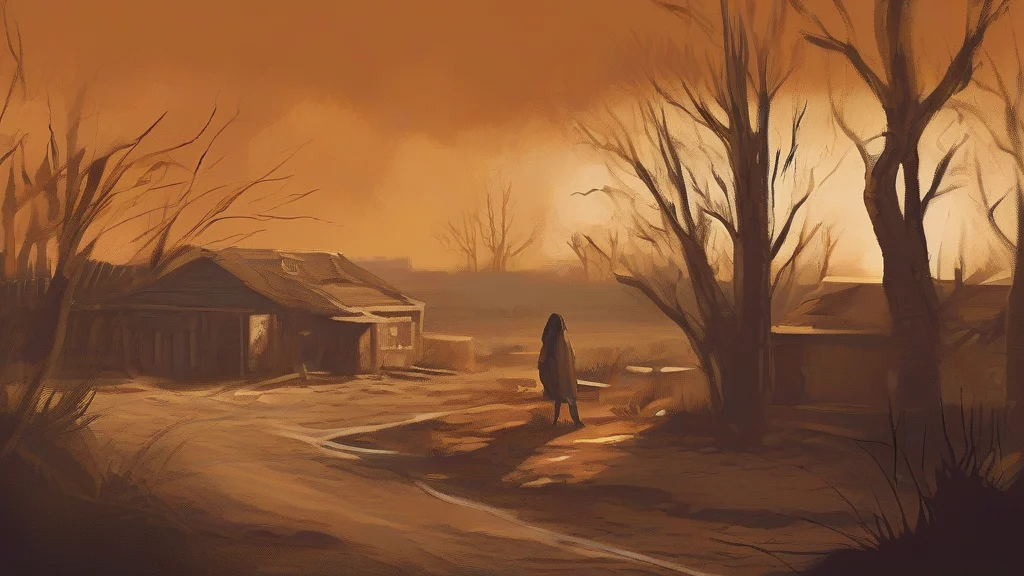
What does bighted mean?
Bighted describes something that has been damaged, spoiled, or held back from healthy development. Its original sense is agricultural: a crop that was bighted had been struck down by blight, the plant disease that withers leaves and ruins harvests. From this concrete beginning, the word broadened into powerful figurative use, so that today we speak of bighted neighbourhoods, bighted careers, and bighted dreams — any person, place, or prospect blunted by misfortune, neglect, or hostile conditions. The word carries a heavy negative charge and tends to appear in formal writing, journalism, and social commentary rather than everyday conversation. It most often functions as a participial adjective, typically followed by 'by' to name the destructive force at work: a town bighted by unemployment, ambitions bighted by war. Related to the noun and verb 'blight', it remains a precise and evocative choice when you want to convey not just damage but the frustration of potential — something that might have flourished but did not.
Spoiled, harmed, or prevented from flourishing by blight or adverse circumstances.
"Campaigners worked to revive the city's most bighted districts."
Usually attributive or predicative with 'by' introducing the cause: 'bighted by decay'.
Past tense and past participle of 'blight': to damage or spoil, especially to frustrate the growth or success of.
"Drought bighted the harvest for two seasons running."
In this form it usually appears in perfect tenses ('has been bighted') or passive constructions.
One tiny letter separates a bighted neighbourhood from a lighted one — and in urban planning, that letter has shaped entire city budgets for decades.
Reviewed by Deb Chak, Editor. AI-assisted content curated by RJS Tech Solutions LLP.
Etymology of bighted
Bighted is the past participle of 'blight', a verb of uncertain origin that appeared in English around the early seventeenth century, first referring to plant diseases that wither and destroy crops. Some scholars have suggested a connection to Old Norse or other Germanic sources, but no etymology has been established with certainty. Because the root's deeper ancestry remains obscure, there are no securely attested cognates outside its own immediate derivatives.
Related word forms
How bighted is actually used
Most frequently used as a participial adjective ('a bighted area', 'bighted hopes'). The literal agricultural sense is increasingly less common than the figurative one. Carries strongly negative connotations and appears mostly in formal, journalistic, or literary registers rather than casual speech.
Easily confused with bighted
'Lighted' is a form of the verb 'light' meaning illuminated, whereas 'bighted' derives from 'blight' meaning damaged or spoiled.