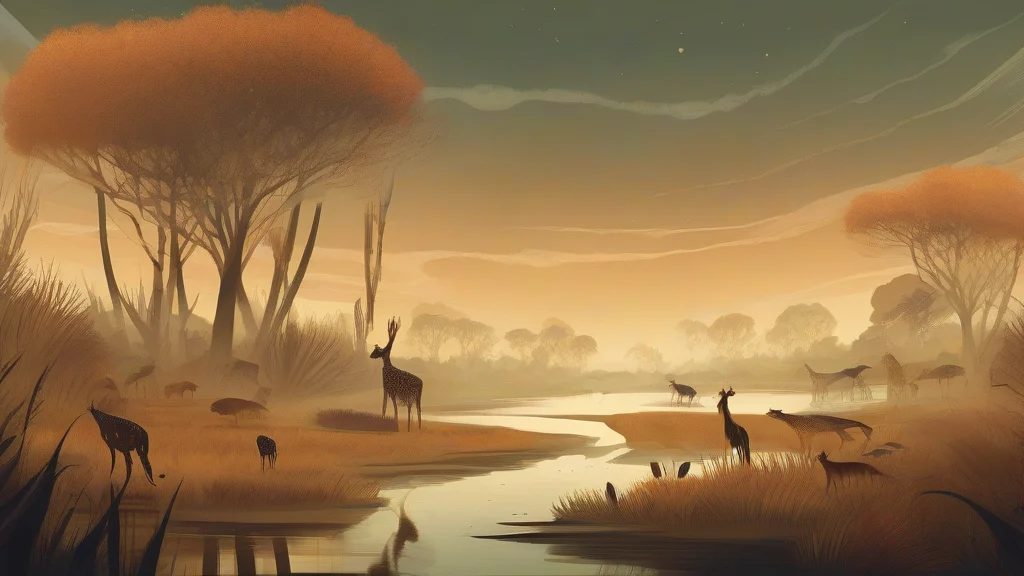
What does biodiversity mean?
Biodiversity refers to the variety of living things found in a particular place or on Earth overall — not just the number of different species present, but also the genetic differences within each species and the range of distinct ecosystems they inhabit. A coral reef teeming with hundreds of fish species has high biodiversity, while a wheat field planted with a single crop has very little. The word is uncountable and appears almost exclusively in scientific, journalistic, and policy writing, where it often serves as shorthand for ecological health: high biodiversity signals a thriving environment, while 'biodiversity loss' signals decline caused by habitat destruction, pollution, climate change, or overexploitation. Coined only in the mid-1980s from the Greek-derived prefix 'bio-' (life) and 'diversity', the term rose to prominence with the 1992 Rio Earth Summit and the Convention on Biological Diversity. Today it underpins conservation science and international environmental agreements.
nounThe variety of plant and animal life in a particular habitat, ecosystem, or on Earth as a whole, encompassing the diversity of species, genetic variation within species, and the variety of ecosystems themselves.
- The variety of life — including species diversity, genetic variation, and ecosystem variety — within a given habitat, region, or on Earth as a whole.
"The wetland's remarkable biodiversity supports hundreds of migratory bird species."
"Coral reefs are among the ecosystems with the greatest biodiversity on the planet."
"The report warned that biodiversity in tropical forests was declining faster than scientists had predicted."
Rarely used; the plural form occasionally appears in technical literature referring to multiple distinct regional varieties of life, but biodiversity is overwhelmingly treated as uncountable.
"The atlas compared the marine biodiversities of the Atlantic and Pacific coasts."
The word 'biodiversity' is surprisingly young — it was coined only in the mid-1980s, yet it now anchors global treaties and environmental policy worldwide.
Reviewed by Deb Chak, Editor. AI-assisted content curated by RJS Tech Solutions LLP.
Etymology of biodiversity
Biodiversity combines the Greek-derived prefix 'bio-', meaning life, with 'diversity', which traces back through Old French and Latin 'diversitas', meaning difference or variety — ultimately from Latin 'divertere', to turn aside. The term is a contraction of the earlier phrase 'biological diversity' and was popularised in the mid-1980s, notably through the work of biologist Walter G. Rosen and the 1986 National Forum on BioDiversity in Washington, D.C. It gained international currency following the 1992 Rio Earth Summit and the Convention on Biological Diversity. Cognate terms sharing these roots include biology, biosphere, and ecology.
How biodiversity is actually used
Biodiversity is an uncountable noun used almost exclusively in formal, scientific, and environmental contexts. It carries strongly positive connotations when describing rich ecosystems and negative connotations when paired with words like 'loss' or 'decline'. The term became widespread following its coinage by biologists such as Walter G. Rosen in the mid-1980s and entered common usage after the 1992 Rio Earth Summit.
Easily confused with biodiversity
Biosecurity refers to measures protecting against harmful biological agents or invasive species, whereas biodiversity refers to the natural variety of life in an ecosystem.