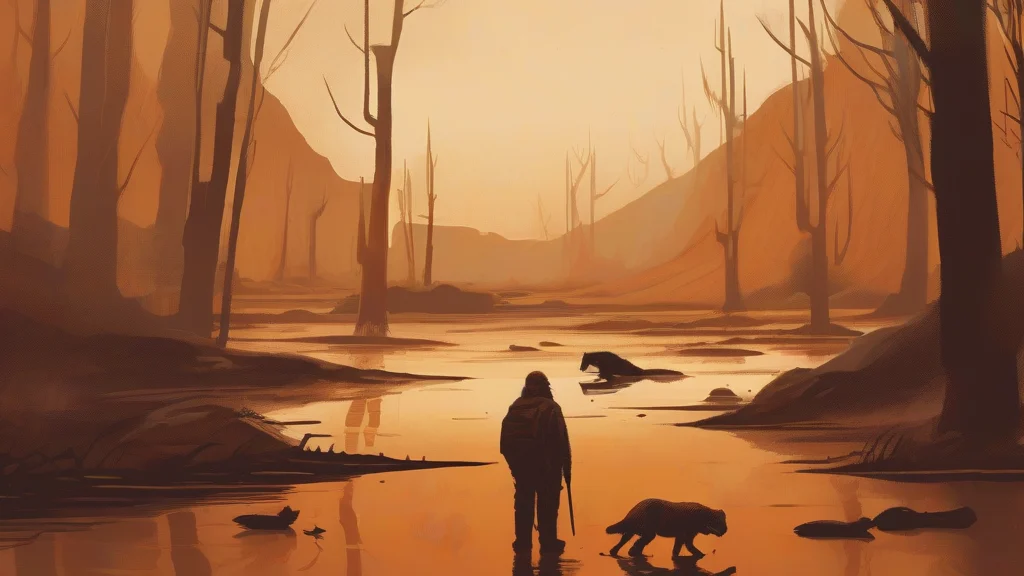
What does extinction mean?
Extinction is the process by which something ceases to exist. Its most familiar and dominant sense is biological: the permanent disappearance of a species or other group of organisms, as when the last individual dies and no descendants remain. Scientists use it to describe both natural losses over deep time and human-driven losses happening today, making it one of the most charged words in environmental discourse. A second, older sense covers the extinguishing of anything non-living — a fire being put out, a custom dying out, or a debt or legal right being formally terminated. The word comes from Latin exstinguere, meaning to quench or put out, and this image of a flame being snuffed out underlies all its uses. Extinction appears most often in scientific writing, journalism about biodiversity, and legal or financial contexts. It is a serious, weighty noun: nobody uses it lightly, because whatever undergoes extinction does not come back.
The state or process of ceasing to exist; especially the permanent disappearance of a species.
"Many experts believe we are entering a period of accelerated extinction."
In biology, often used with modifiers like 'mass', 'local', or 'functional' to describe scope.
The act of extinguishing or terminating something, such as a fire, a debt, or a legal right.
"The court ruled in favour of the claim's extinction after the statute of limitations expired."
Common in legal, financial, and insurance contexts where a right or obligation is formally ended.
Usually uncountable when referring to the general phenomenon ('the threat of extinction'); countable when referring to specific events, especially geological mass extinctions.
"The fossil record preserves evidence of five major mass extinctions."
Five mass extinctions have reshaped life on Earth — and scientists say we are living through the sixth.
Reviewed by Deb Chak, Editor. AI-assisted content curated by RJS Tech Solutions LLP.
Etymology of extinction
Extinction comes from Latin exstinctio, derived from exstinguere ('to quench, put out'), formed from ex- ('out') plus stinguere, related to a root meaning 'to prick or brand', which also gave English words like sting and distinct via different routes. It entered English in the early 17th century, first applied literally to fires and lights, then extended figuratively to the end of lineages, rights, and debts. Its use for species disappearing was established by the late 18th century, notably as naturalists confronted fossil evidence that some animals had vanished entirely. Related forms include extinguish, extinct, and extinction's Latin cognates across Romance languages such as French extinction and Spanish extinción.
How extinction is actually used
Predominantly formal and scientific register. The biological sense dominates modern usage and carries strong environmental connotations. In law and finance, 'extinction' refers to the termination of rights, claims, or debts.
Easily confused with extinction
Extinction means the end of existence or the extinguishing of something, while distinction means a difference between things or recognition of merit.