
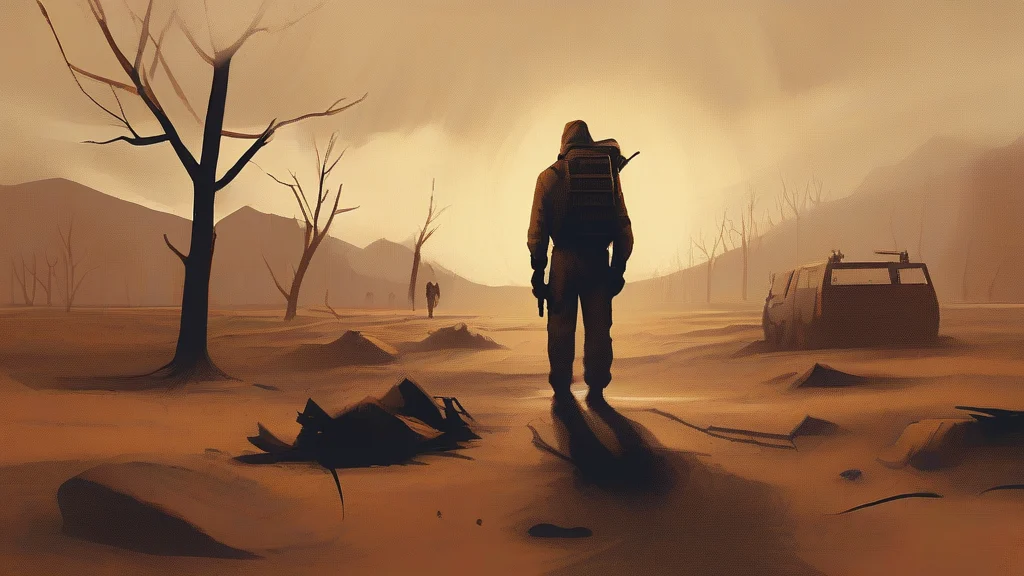
What does survival mean?
Survival is the condition or process of continuing to live or existing despite danger, illness, hardship, or other threats. It commonly describes a person or creature remaining alive after a serious ordeal, as in “the survival of the survivors,” and can also refer to the persistence of a species, tradition, institution, or object through difficult circumstances. The word often conveys resilience, endurance, and the practical or instinctive struggle to preserve life. In broader contexts, “survival” may describe anything that continues to exist or resists elimination. Its familiar expression “survival of the fittest” is associated with the idea that organisms best adapted to their environment are most likely to survive and reproduce, although the phrase is also used figuratively in discussions of competition.
nounThe state or fact of continuing to live, especially after facing danger, illness, hardship, or other serious threats. It can also refer to something that persists despite difficulties.
- The state or fact of continuing to live, especially after danger, illness, or hardship.
- The act or fact of enduring or persisting.
- The remaining existence of a person, creature, group, or thing after a dangerous or destructive event.
- The act of preserving something from destruction or elimination.
"The survival of the species depended on finding a safer habitat."
"Their survival through the winter depended on careful planning and cooperation."
"The report examined the survival of traditional crafts in a rapidly changing economy."
The plural is used when referring to separate instances of continuing to live, enduring, or persisting, although it is much less common than the singular.
"The accounts described the survivors' separate survivals in the years after the accident."
From “survive,” a word that originally meant to remain alive after a battle or danger, “survival” became a symbol of resilience in every sense.
Reviewed by Deb Chak, Editor. AI-assisted content curated by RJS Tech Solutions LLP.
Etymology of survival
“Survival” was formed in the early 19th century from “survive” plus the suffix “-al,” meaning the state or condition of surviving. “Survive” comes through Old French from the Latin “supervivere,” formed from the prefix “super-,” meaning “over” or “beyond,” and “vivere,” meaning “to live.” Related forms include “survivor” and “survivable,” all reflecting the same Latin foundation.
Related word forms
How survival is actually used
The word is common in both formal and informal English. In the phrase “survival of the fittest,” it often carries the broader sense of the strongest or best-adapted organisms prevailing, and the expression is sometimes used metaphorically for competition.
Easily confused with survival
Survival is the state or process of continuing to live, whereas a survivor is the person or thing that does so.
Survival emphasizes continuing to live, while sacrifice means giving up something, often for another person or a greater purpose.