What does birch mean?
A birch is any of a group of slender, graceful deciduous trees belonging to the genus Betula, native to temperate and boreal regions of the Northern Hemisphere. Birches are instantly recognizable by their thin bark, which peels away in papery layers and ranges from brilliant white and silver to yellow or reddish tones. The word also denotes the tree's fine-grained pale wood, prized for furniture, flooring, and plywood, and — historically — a bundle of birch twigs once used as an instrument of punishment, a sense now largely confined to British legal history. Culturally, the birch carries connotations of renewal and resilience: it is among the first trees to colonize cleared ground after fire or glaciation. Its bark served as writing material and canoe sheathing for Indigenous peoples and early cultures alike. Whether evoking northern landscapes, fine woodworking, or old-fashioned discipline, 'birch' remains a vivid, concrete word rooted deep in English.
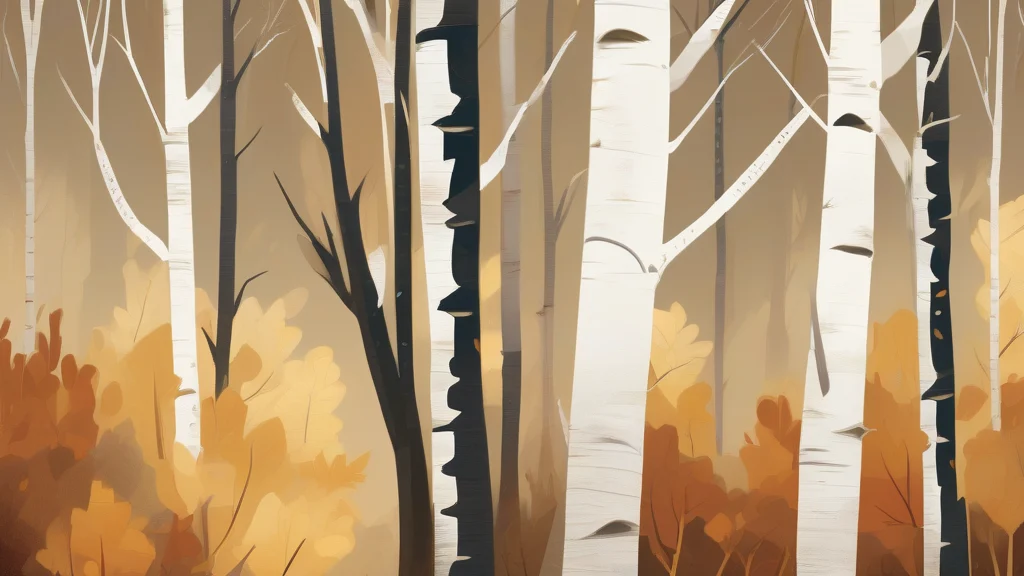
A slender deciduous tree of the genus Betula, characterized by thin peeling bark, growing widely across temperate northern regions.
"We picnicked beneath a grove of white birches by the lake."
Often modified by species terms such as 'silver', 'paper', or 'yellow' birch.
The fine-grained, pale wood of the birch tree, valued in furniture-making and plywood production.
"The cabinetmaker chose birch for its smooth, even grain."
(Historical) A rod or bundle of birch twigs formerly used to inflict corporal punishment.
"Under the old penal code, serious offenders could still be sentenced to 'the birch'."
Almost always used with the definite article ('the birch'); chiefly British and now obsolete in practice.
Standard plural; note the -es ending because the word ends in a sibilant sound.
"The wind moved softly through the birches along the riverbank."
Birch bark was used as a writing surface centuries before paper — ancient Buddhist manuscripts survive written on it.
Reviewed by Deb Chak, Editor. AI-assisted content curated by RJS Tech Solutions LLP.
Etymology of birch
'Birch' derives from Old English 'birce', from Proto-Germanic *birkijōn, reflecting the tree's importance across early Germanic-speaking Europe. Cognates include German 'Birke', Dutch 'berk', and Swedish 'björk'. The Proto-Germanic root may ultimately trace back further, possibly connected to a PIE root meaning bright or shining, fitting the tree's luminous bark. The punitive sense arose later, from the practice of making flogging rods from birch twigs.
Related word forms
How birch is actually used
As a punishment term, 'the birch' is now largely historical and chiefly British; it survives mainly in historical writing and legal history. In North American usage, the tree sense dominates entirely, especially 'paper birch' and 'yellow birch' species names.
Easily confused with birch
Beech is a different tree (genus Fagus) with smooth grey bark and edible nuts, whereas birch has distinctive peeling white or silvery bark.
Aspen is a poplar (genus Populus) whose leaves tremble on long flattened stalks; birch belongs to the unrelated genus Betula with papery peeling bark.