
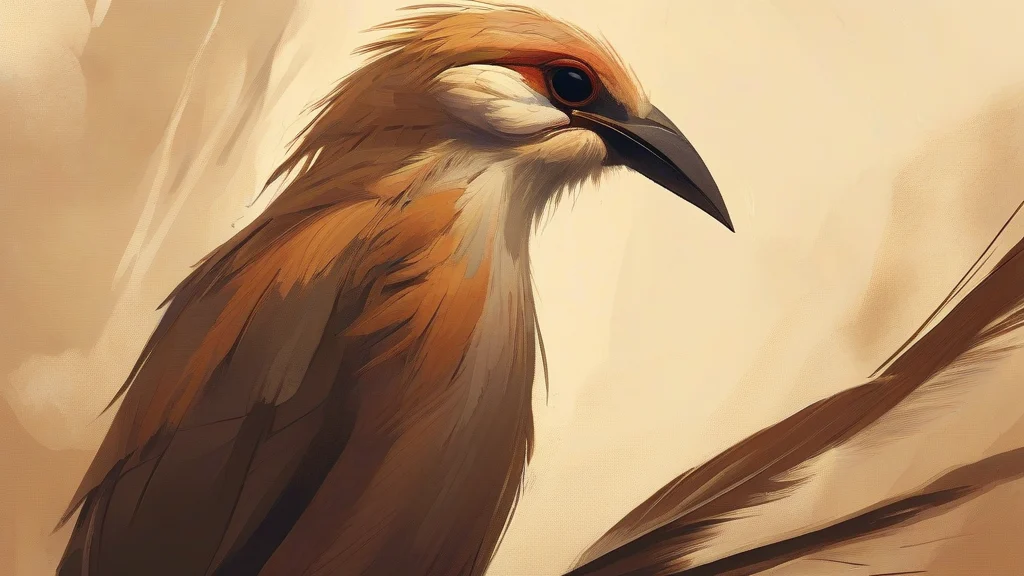
What does bird mean?
A bird is a warm-blooded vertebrate belonging to the class Aves, defined above all by its feathers, along with a toothless beak, hard-shelled eggs, and — in most species — the power of flight. Birds are among the most visible and familiar animals on Earth, appearing everywhere from back gardens to open ocean, and English is rich with expressions built around them: the early riser is an "early bird," close companions are "birds of a feather," and worthless things are "for the birds." The word carries broadly positive connotations, evoking freedom, song, and lightness. Its Old English ancestor was spelled "brid," with the letters later transposed in a linguistic reshuffling known as metathesis. Derived forms such as "birdie," "birder," and "birdwatcher" reflect how deeply the word is embedded both in everyday speech and in hobbies like ornithology. One dated sense — chiefly British informal use for a young woman — survives but is widely regarded as sexist today.
A warm-blooded vertebrate of the class Aves, having feathers, wings, a beak, and typically the ability to fly.
"The lark rose into the morning sky, its song carrying over the fields."
(Informal, chiefly British, dated) A young woman.
"That usage of the word is dated and generally avoided in contemporary writing."
Considered offensive or sexist by many speakers today; avoid in formal contexts.
Regular plural; simply add -s. When speaking generically about the whole class, either "birds" or the singular "the bird" can be used depending on emphasis.
"Thousands of birds migrate south each autumn."
"Bird" was once spelled "brid" in Old English — the r and i swapped places over centuries in a process linguists call metathesis, making it a rare everyday word whose letters literally changed seats.
Reviewed by Deb Chak, Editor. AI-assisted content curated by RJS Tech Solutions LLP.
Etymology of bird
The word "bird" comes from the Old English "bridd," meaning a young bird or chick, which itself derives from a Proto-Germanic root that also gave rise to "breed" and "brood." During the Middle English period the consonants shifted positions — a process called metathesis — producing the modern form "bird." Cognates within English include the closely linked words "breed" and "brood," all tracing back to the same Germanic root associated with young creatures and hatching.
Related word forms
How bird is actually used
In modern standard usage, "bird" is neutral and common across registers. The informal sense meaning a young woman is dated, chiefly British, and now often considered sexist — best avoided. In American English slang, "bird" can also mean an obscene gesture, though context makes this clear. The golf sense is usually spelled and said "birdie."
Easily confused with bird
A bard is a poet or storyteller, especially one from Celtic tradition, whereas a bird is a feathered vertebrate; the two differ by only one vowel in spelling but share no meaning.