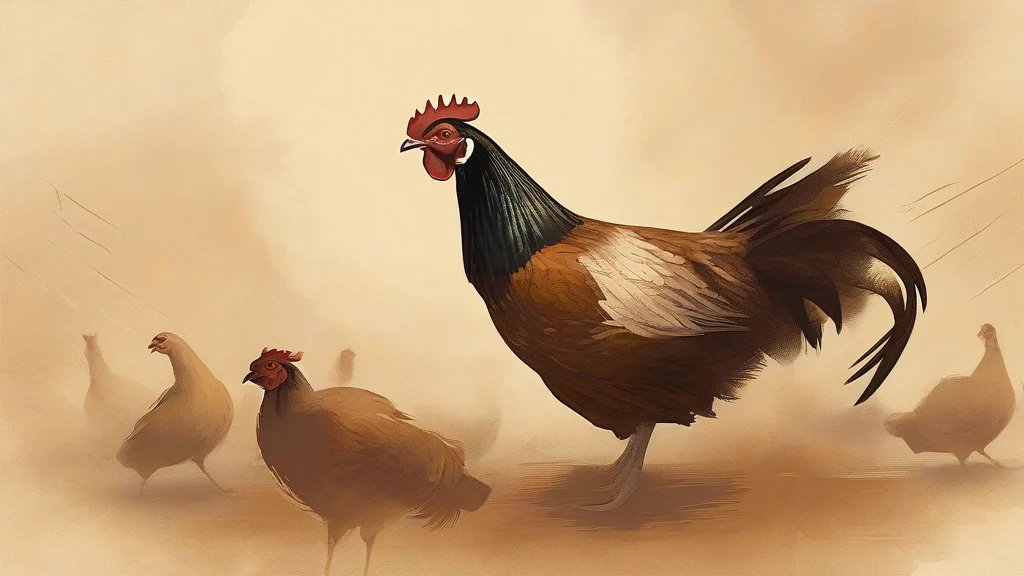
What does fowl mean?
Fowl refers to birds kept or hunted for human use, most commonly domesticated species such as chickens, ducks, geese, and turkeys, and by extension game birds taken for the table. Historically the word was far broader: in Old English a fowl was simply a bird, so robins and eagles were as much fowl as hens. Over time its meaning narrowed until today it evokes the farmyard and the kitchen rather than the treetop. The term carries a rustic, practical connotation — it appears in farming reports, recipes, hunting regulations, and traditional idioms such as "neither fish nor fowl," which describes something that fits no clear category. Related forms like waterfowl and wildfowl carve the category along habitat and habit. Understanding "fowl" offers a window into how language tracks humanity's changing relationship with animals.
A bird, especially a domesticated chicken, duck, goose, or turkey raised for meat and eggs, or a game bird hunted for food.
"Guinea fowl were introduced to the farm to control insects and provide eggs."
Often used collectively without a plural marker for domestic birds, though "fowls" is standard when referring to individual birds.
To hunt or catch wild birds, especially for food or sport.
"In earlier centuries tenants were permitted to fowl on the estate's marshes."
This sense is now uncommon and largely confined to older texts and hunting terminology; the derived nouns "fowler" and "fowling" are better known.
Both "fowls" and the unchanged collective form "fowl" are accepted; the collective form is common when speaking of domestic birds as a group.
"The yard was full of fowls scratching in the dirt."
"Fowl" once meant every bird that flies — including songbirds — before narrowing down to the chickens and ducks on our plates.
Reviewed by Deb Chak, Editor. AI-assisted content curated by RJS Tech Solutions LLP.
Etymology of fowl
The word descends from Old English "fugol," meaning simply a bird, which itself comes from Proto-Germanic *fuglaz. Its Germanic cognates include German "Vogel" and Dutch "vogel." Traced further back, the Germanic root is commonly linked to the Proto-Indo-European root underlying "fly" and "flow" (*plew-), reflecting an ancient association with flight. As English evolved, the meaning contracted from all birds to those used for food and sport.
Related word forms
How fowl is actually used
In everyday modern usage "fowl" leans toward domestic poultry and culinary contexts; ornithologists and hunters more often use "wildfowl" or "game bird" for hunted species. The broad historical sense — any bird at all — survives mainly in older texts and in phrases like "neither fish nor fowl." The plural can be "fowls" or, especially for domestic birds collectively, the unchanged "fowl."
Easily confused with fowl
"Foul" means offensive, dirty, or an infraction in sport, while "fowl" is a bird; the two are near-homophones but entirely unrelated in meaning.