What does biretta mean?
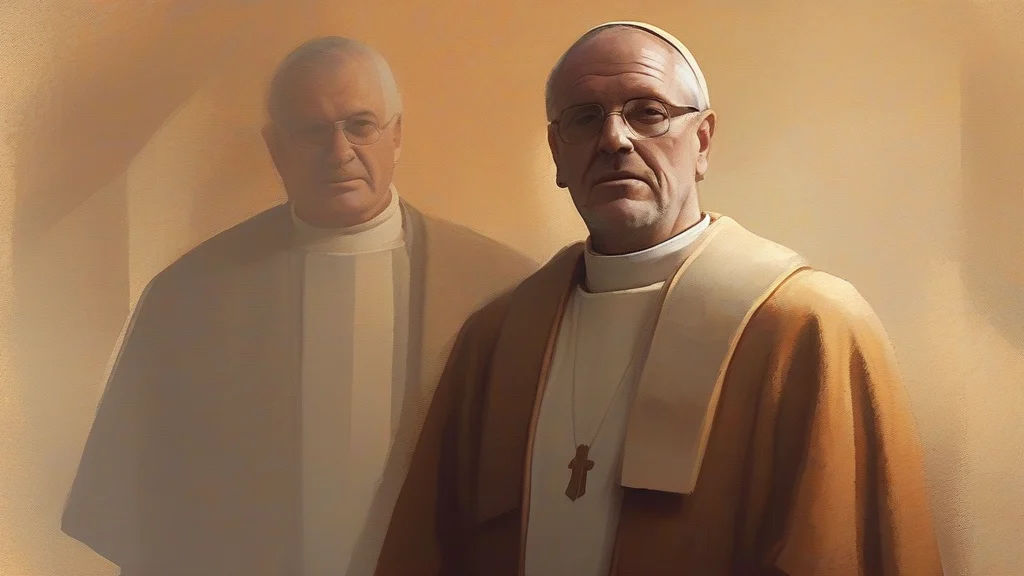
A biretta is a stiff, square-shaped cap with three or four ridges or tufts across the top, worn by clergy of the Roman Catholic Church and, in some contexts, by Anglican and Lutheran clergy. It is put on for liturgical ceremonies, academic occasions in seminaries, and formal processions, and it is traditionally doffed at appropriate moments as a gesture of reverence. The color of a biretta signals the wearer's rank within the church hierarchy: black is worn by priests and seminarians, violet by bishops, and scarlet red by cardinals. The word entered English from Italian, reflecting the garment's strong association with Rome and continental Catholic practice. Because it is a specialized vestment rather than everyday attire, 'biretta' appears chiefly in formal, religious, and historical writing, where it carries connotations of tradition, ceremony, and clerical identity.
nounA stiff, square cap with three or four ridges or tufts on top, worn by clergy of the Roman Catholic Church and by some Anglican and Lutheran clergy.
- The square, stiff ceremonial cap with three or four peaks worn by clergy of the Roman Catholic, Anglican, and some Lutheran traditions.
"The bishop removed his biretta as he entered the cathedral."
"As the procession began, each priest adjusted his biretta before falling into line."
"In traditional seminaries, students were expected to wear the black biretta during lectures."
Standard English plural; the Italian-style plural 'birette' is occasionally seen but uncommon.
"The seminarians hung their birettas on pegs outside the chapel."
That three-ridged cap you see bishops wearing isn't just decoration — its tufts were once said to symbolize the three degrees of holy orders.
Reviewed by Deb Chak, Editor. AI-assisted content curated by RJS Tech Solutions LLP.
Etymology of biretta
The English word 'biretta' was borrowed from Italian 'berretta', meaning a cap, in the late 16th or early 17th century as contact between England and Rome brought descriptions of Catholic vestments into English texts. Italian 'berretta' traces back through medieval Latin forms to Late Latin 'birrus', a term for a hooded cloak or hood, making the word a cousin of 'beret', which arrived in English by way of French from the same Romance family. Its Spanish cognate is 'birrete'. The garment itself developed into the distinctive three-ridged form familiar in Catholic liturgical dress.
How biretta is actually used
The word belongs to formal and ecclesiastical registers, appearing mainly in religious writing, journalism about church affairs, and historical description. The color of the biretta traditionally indicates rank: black for priests and seminarians, purple/violet for bishops, red for cardinals.
Easily confused with biretta
A zucchetto is the small, round skullcap worn on the crown of the head, whereas the biretta is the larger, square cap with ridges worn atop it.
A beret is a soft, flat civilian hat, while a biretta is a stiff, structured ecclesiastical cap.