What does bitted mean?
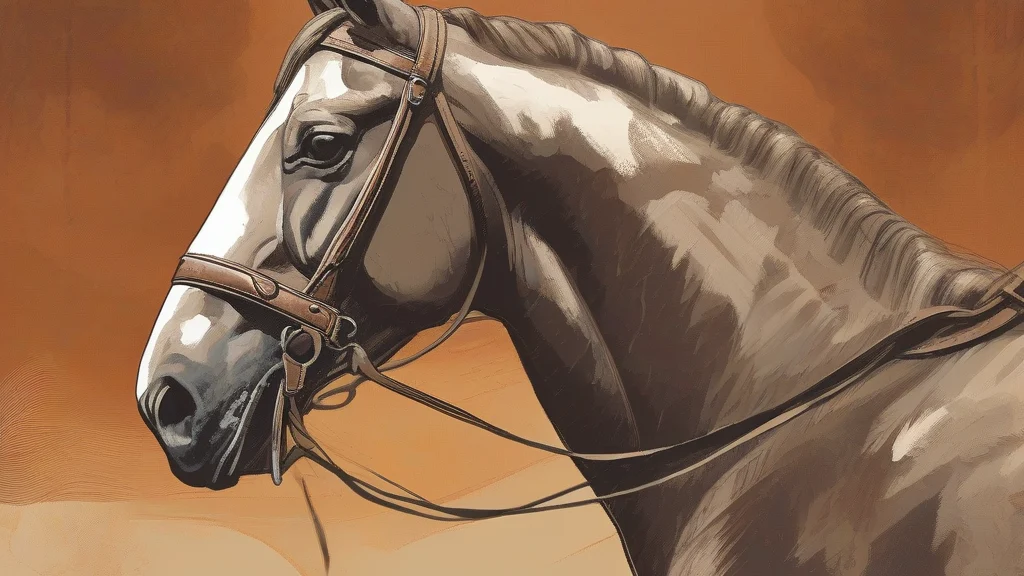
'Bitted' is the past tense and past participle of the verb 'bit', which means to place a bit — a metal mouthpiece attached to reins — into a horse's mouth. It is a technical term rooted in the world of horses: farriers, trainers, and drivers speak of a colt being 'bitted' for the first time, or a carriage team being 'bitted and bridled' before work. Because the word looks so close to 'bitten', the past participle of 'bite', it is easily misread, yet the two are unrelated in meaning; 'bitted' concerns equipment for an animal's mouth, not the act of biting with teeth. The word is uncommon outside equestrian and historical writing, giving it a distinctly old-fashioned, rural flavour. It derives from the noun 'bit', itself from Old English, making it part of a small family of horse-related terms — bit, bridle, rein, harness — that preserve centuries of working-horse vocabulary. For anyone reading classic literature about farming or cavalry, recognising 'bitted' prevents confusion with its more common lookalike.
verbPast tense and past participle of the verb 'bit' — to put a bit (a metal mouthpiece) into a horse's mouth and attach the reins, as part of harnessing or training the animal.
- To have fitted a horse with a bit and attached the reins, especially during breaking-in or harnessing.
"The young colt was bitted for the first time before he was ever saddled."
"The trainer bitted the filly gently, letting her mouth adjust to the new steel."
"Once the team of four was bitted and bridled, they were led out to the wagon."
A horse isn't 'bitten' when you put a bit in its mouth — it's 'bitted', one of the rare English verbs that changes meaning entirely just by swapping two vowels.
Reviewed by Deb Chak, Editor. AI-assisted content curated by RJS Tech Solutions LLP.
Etymology of bitted
'Bitted' comes from the verb formed directly from the noun 'bit', the metal mouthpiece of a horse's bridle. That noun descends from Old English 'bita', meaning a piece bitten off, from the Germanic root behind the verb 'bite'. The practice of fitting horses with bits is ancient — dating back well over four thousand years in the Near East — and English has used 'bit'-related terms for tack since the medieval period. Cognates include the German 'Beißer' family of words from the same 'bite' root, though 'bitted' as a horsemanship term is specific to English usage.
Related word forms
How bitted is actually used
'Bitted' belongs almost exclusively to the specialised vocabulary of horsemanship, equestrianism, and historical rural life. It is rare in general modern prose and appears chiefly in contexts dealing with horses, carriage driving, or traditional farming. The related adjective 'unbitted' describes a horse without a bit.
Easily confused with bitted
'Bitten' is the past participle of 'bite' (the action of cutting with teeth), whereas 'bitted' is the past tense of 'bit', meaning to fit a horse with a bit.