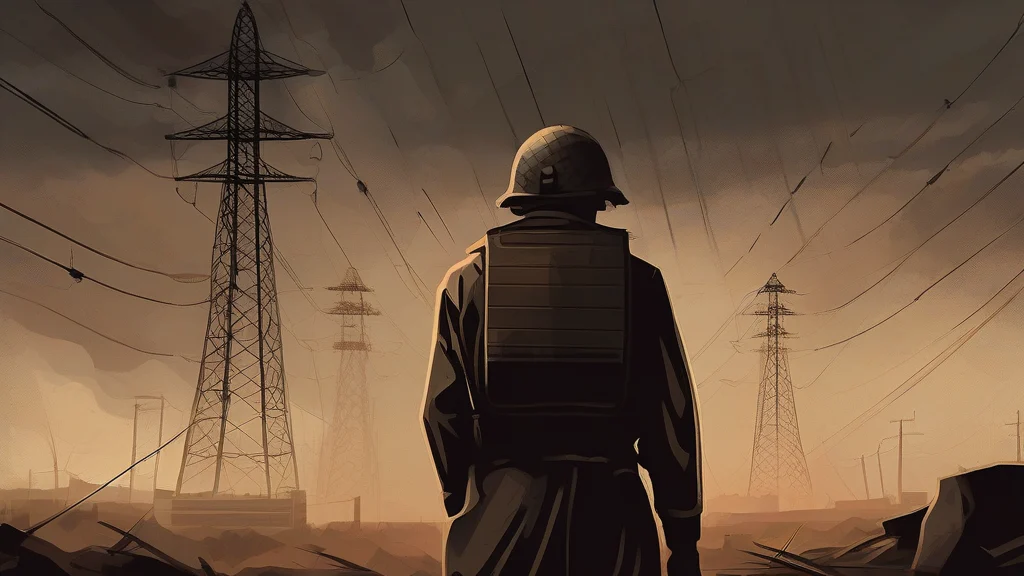
What does blackout mean?
A blackout is a complete loss of something normally present — most commonly electrical power across a region, but also light, information, broadcast access, or even memory. The term originated in wartime, when cities were required to extinguish all visible lights so enemy aircraft could not identify targets by sight. Today it most frequently describes large-scale power outages caused by storms, grid failures, or infrastructure problems, and it also applies to deliberate media restrictions, such as when news coverage of an event is suppressed, or when a sporting event cannot be televised in its home market. A further sense refers to a temporary lapse in memory or consciousness, particularly after heavy alcohol consumption. The word carries connotations of disruption and helplessness, since blackouts are typically sudden and beyond individual control. Its flexibility across physical, informational, and physiological contexts makes it a vivid and widely useful English word.
A complete loss of electrical power over a wide area.
"The blackout affected nearly four million homes across the state."
A period when all lights are turned off as a precaution, especially against air raids.
"Air-raid wardens patrolled the streets enforcing the nightly blackout."
The deliberate withholding of information or prohibition on broadcasting an event.
"The network imposed a local blackout on the sold-out game."
A temporary loss of memory or consciousness.
"She had no recollection of the evening — it was a total blackout."
Standard plural; used freely for multiple instances, e.g., repeated power failures.
"Rolling blackouts continued throughout the summer months."
During World War II, coastal cities like London went dark every night — not because of power failure, but to hide from enemy bombers.
Reviewed by Deb Chak, Editor. AI-assisted content curated by RJS Tech Solutions LLP.
Etymology of blackout
Blackout is a compound formed from the adjective 'black' and the adverb 'out', following a productive pattern of English phrasal compounds like 'knockout' and 'lockout'. It entered common usage during the early twentieth century, becoming especially prominent during World War I and World War II when authorities ordered the extinguishing of lights as protection against aerial bombardment. The word's senses then expanded metaphorically into electrical supply failures, media suppression, and memory loss, reflecting its core notion of darkness or absence imposed on a system.
Related word forms
How blackout is actually used
Register is neutral; the word appears in both formal journalism and casual conversation. The specific meaning (power loss vs. memory loss vs. censorship) is usually clear from context but worth noting for precision. In British English, 'power cut' is more common than 'blackout' for electricity loss.
Easily confused with blackout
A brownout is a partial, temporary drop in voltage causing dimmed lights, whereas a blackout is a complete loss of electrical power.