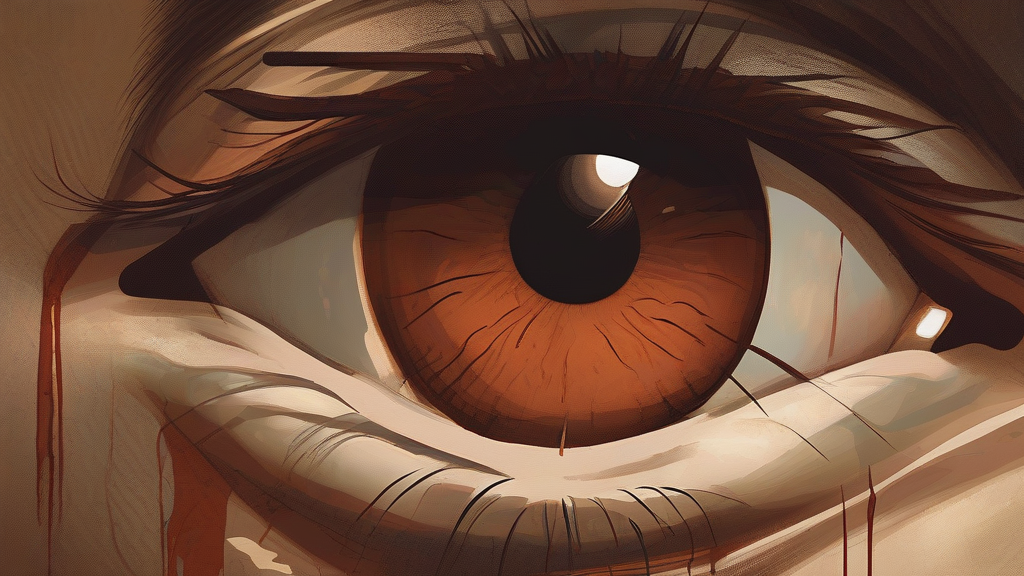
What does bleareyed mean?
Bleareyed is an adjective describing eyes that are dim, watery, or reddened, most often as the result of tiredness, weeping, illness, or irritation. A person described as bleareyed may have spent a sleepless night, worked a long shift, or been crying; the word evokes the physical look of eyes that are rimmed with red and struggling to focus. It can also be used figuratively for someone whose judgment or perception has grown dull, though this extended sense is less common than the literal one. The adjective derives from the older verb "blear," meaning to blur or make watery, which gives English such related forms as "bleary" and "bleary-eyed." In register, bleareyed leans literary or slightly old-fashioned; modern speech more often uses "bleary" alone. Its opposite in spirit is clear-eyed—someone whose sight, and often whose thinking, remains sharp.
adjectiveHaving eyes that are dim, watery, or reddened with soreness; by extension, dull-sighted or lacking clear perception, whether literal or figurative.
- (Of eyes) red-rimmed, watery, or dimmed, typically from fatigue, illness, weeping, or irritation.
- (Figurative) Lacking clear insight or discernment; seeing things indistinctly.
"He rose from the long night shift bleareyed and squinting against the morning light."
"After the all-night drive she stumbled into the house, bleareyed and unshaven."
"The critic dismissed the report as the work of officials too bleareyed by habit to notice the obvious."
Bleareyed preserves the old verb "blear"—to make eyes watery and dim—a word old enough to appear in Shakespeare's writing.
Reviewed by Deb Chak, Editor. AI-assisted content curated by RJS Tech Solutions LLP.
Etymology of bleareyed
The word combines "blear," a verb recorded in Middle English meaning to make the eyes watery or blurred, with "eyed." Blear itself likely came from a Germanic source, with parallels in Middle Dutch and related continental forms, though the exact borrowing path is uncertain. The compound bleareyed developed in early modern English alongside variants such as blear-eyed and bleary, which remain its closest relatives today.
Related word forms
How bleareyed is actually used
Somewhat literary or dated in tone compared with its everyday synonym "bleary"; the closed form "bleareyed" alternates with the hyphenated "blear-eyed." It carries no strong connotation beyond suggesting exhaustion or impaired sight.
Easily confused with bleareyed
Bleary describes the eyes themselves (or vision) as dim and tired, while bleareyed specifically attributes that condition to the eyes of a person.