What does blewit mean?
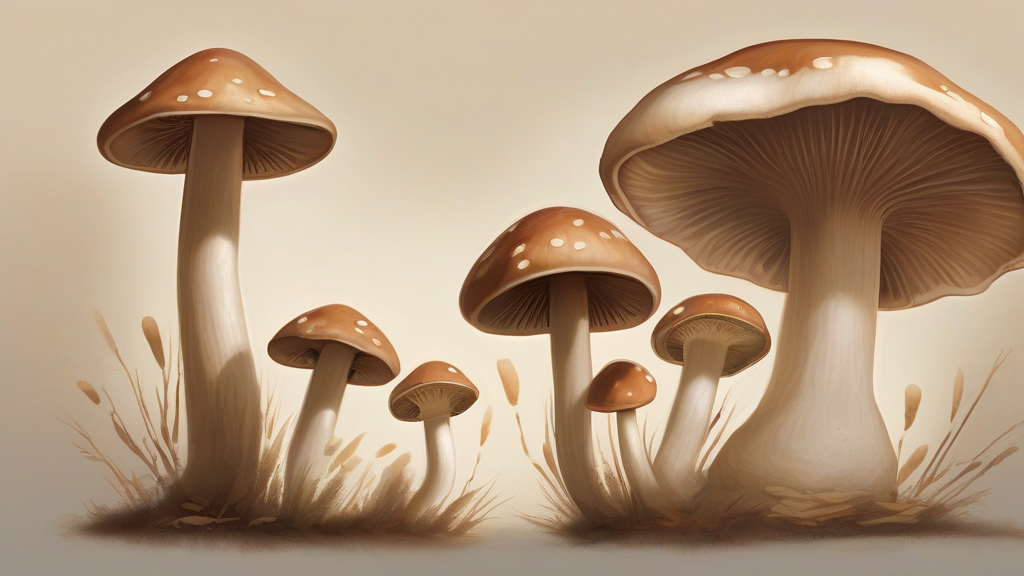
A blewit is an edible wild mushroom celebrated among foragers for its striking blue-lilac coloration and its willingness to appear late in the year, often after frost when few other fungi remain. Two kinds are most familiar: the wood blewit (Clitocybe nuda), found in leaf litter beneath trees, and the field blewit, which favors grassland and heath. Both have a mild, slightly perfumed flesh that suits simple sautéing and rich autumn dishes. The name itself carries a linguistic curiosity: like 'newt,' it arose through a historical misdivision in which an old form beginning with a vowel was rebracketed with its preceding article. Because some poisonous species resemble blewits, careful identification matters, but for those who know them, blewits are one of the most reliable and rewarding finds of the cold-season foraging calendar.
nounA noun referring to an edible wild mushroom (chiefly Clitocybe nuda, also called Lepista nuda), known for its distinctive blue-lilac cap and stem, commonly found in leaf litter in autumn and winter.
- The edible wood blewit mushroom (Clitocybe nuda / Lepista nuda), prized by foragers for its mild flavor and blue-lavender coloration.
"Foragers filled their baskets with wood blewits along the hedgerow after the first frost."
"She sliced the wood blewits and added them to the pan with garlic and butter."
"In Britain, the field blewit appears on chalk grassland well into the colder months."
The plural 'blewits' is the standard and far more common form in everyday and culinary use; the singular 'blewit' appears mainly in formal mycological contexts.
"The market stall had a tray of fresh blewits from Kentish woods."
The word 'blewit' shares its odd '-wit' ending with 'newt' — both were formed by mistakenly splitting off the article 'an' ('a newte', 'a blewit') into the name itself.
Reviewed by Deb Chak, Editor. AI-assisted content curated by RJS Tech Solutions LLP.
Etymology of blewit
The word 'blewit' derives from the adjective 'blue' — ultimately via Old French 'bleu' from a Germanic root — combined with an archaic diminutive or noun-forming element, giving the mushroom's name its distinctive shape. Like 'newt' (from Old English 'efete' reshaped through misdivision of 'an ewte'), 'blewit' reflects a historical rebracketing in which the indefinite article merged with the following word. The term has been established in English mycological and country usage for centuries, and its plural 'blewits' remains the customary form among foragers today.
Related word forms
How blewit is actually used
'Blewit' is almost always used as a plural ('blewits') when referring to gathered mushrooms, since foragers rarely speak of a single specimen. The singular form exists but is uncommon in everyday use. The term belongs chiefly to foraging, mycological, and cookery contexts rather than general conversation. Foragers should note that several toxic lookalike species can be mistaken for blewits.
Easily confused with blewit
A bleat is the cry of a sheep or goat, whereas a blewit is an edible woodland mushroom.
A bluet is a small four-petaled wildflower of the gentian family, not the lilac-capped edible mushroom called the blewit.