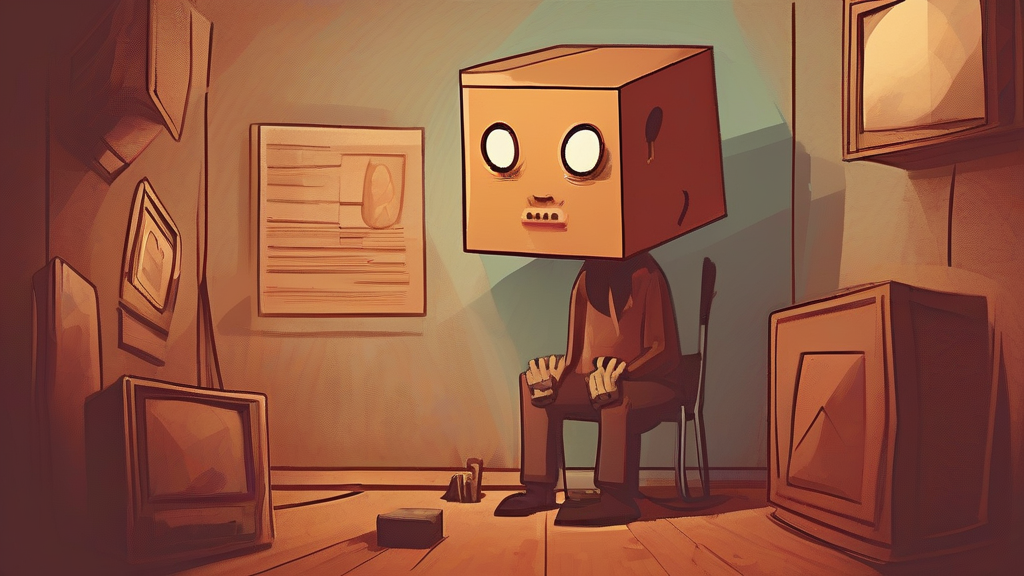
What does blockhead mean?
A blockhead is a stupid or foolish person — someone considered slow to understand, obtuse, or stubbornly lacking in sense. The word functions exclusively as a noun and is firmly informal in register: it is an insult, but usually a mild or even affectionate one, closer to "dummy" or "ninny" than to harsher terms of abuse. Speakers use it both to tease friends playfully and to express genuine exasperation at someone's foolish behavior, so tone and context determine whether it lands as banter or criticism. First recorded in English in the early seventeenth century, blockhead combines "block" — evoking the wooden block as an image of dullness and insensibility — with "head," and its longevity reflects how neatly the metaphor captures mental sluggishness. Though somewhat old-fashioned alongside modern slang, it remains current on both sides of the Atlantic and instantly understood. For writers, it offers a colorful, slightly literary way to describe foolishness without resorting to profanity, and its vivid imagery gives it enduring comic appeal.
nounA stupid person; a fool or dolt, especially one regarded as slow-witted or stubbornly dense.
- A stupid or foolish person; someone regarded as slow-witted or obstinately dense.
"Only a blockhead would try to fix the wiring without switching off the power first."
"Don't be such a blockhead — read the instructions before you start."
"He called me a blockhead for forgetting our anniversary, though he laughed as he said it."
Regular plural; commonly used when referring to several foolish people, often in a dismissive or humorous tone.
"The two blockheads left the campfire burning overnight."
"Blockhead" has been insulting people since the early 1600s — and it was once applied, mockingly, to King Charles I's round-haired supporters versus the long-haired Roundheads' rivals.
Reviewed by Deb Chak, Editor. AI-assisted content curated by RJS Tech Solutions LLP.
Etymology of blockhead
Blockhead is an English compound formed from "block" plus "head," first attested in the early seventeenth century. The image behind it draws on the wooden block — associated with dullness, heaviness, and insensibility — to suggest a head that is solid, empty, and unresponsive. It arose during a period when English coined many vivid compound insults, and it has retained its meaning essentially unchanged for four centuries. There are no significant cognates in other languages, as the word is a distinctly English formation.
Related word forms
How blockhead is actually used
Informal and mildly derogatory; it suggests good-natured mockery more than venomous insult, making it usable even in light banter. It is dated in flavor compared with newer slang but remains widely understood in both British and American English.
Easily confused with blockhead
A blockade is the act of sealing off a place to prevent goods or people from entering or leaving, whereas a blockhead is a stupid person.