What does bloodstone mean?
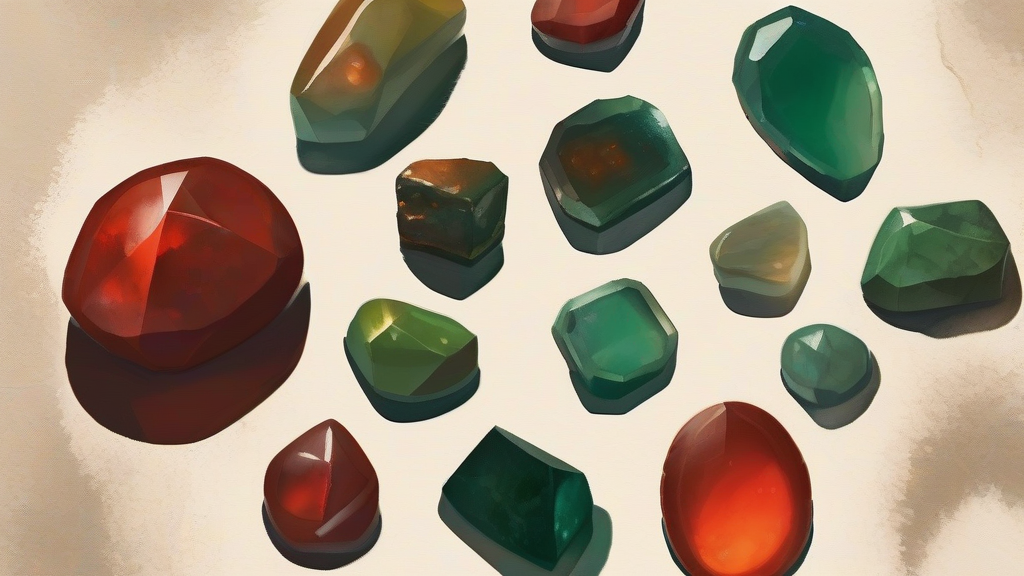
Bloodstone is a dark green variety of chalcedony, often classified as a form of jasper, distinguished by vivid red spots or streaks of iron oxide that resemble drops of blood — hence the name. Mineralogists traditionally call the same material heliotrope, a name derived from an ancient belief that the stone could turn the sun's reflection red when held in water. Prized since antiquity, bloodstone has been carved into seals, signet rings, cameos, and religious objects; medieval Christians associated it with the Crucifixion, and folk tradition credited it with the power to staunch bleeding. Today the word appears chiefly in discussions of gemstones, jewelry, and lapidary craft, where it denotes a durable, moderately priced semiprecious stone valued for its striking color contrast rather than rarity. Though largely absent from figurative language, bloodstone remains a familiar term among collectors and anyone drawn to stones with rich historical lore.
nounA dark green variety of chalcedony (heliotrope) flecked with red spots resembling drops of blood, used as a semiprecious gemstone and in seals and carvings.
- A dark green chalcedony or jasper spotted with red, prized as a semiprecious gemstone and historically believed to have healing powers.
"The antique signet ring was set with a finely polished bloodstone."
"She wore a Victorian brooch set with a deep green bloodstone flecked with crimson."
"Ancient engravers favored bloodstone for carving seals because it took a fine polish and held intricate detail."
Regular plural; used when referring to multiple specimens of the stone or several pieces made from it.
"The dealer laid out a tray of polished bloodstones for inspection."
In the Middle Ages, people believed bloodstone could stop hemorrhages — and some carved it with scenes of the Crucifixion, calling it the 'martyr's stone'.
Reviewed by Deb Chak, Editor. AI-assisted content curated by RJS Tech Solutions LLP.
Etymology of bloodstone
Bloodstone is a transparent English compound of 'blood' (from Old English blōd) and 'stone' (from Old English stān), formed to describe the gem's distinctive red markings on green ground. The word has been part of English vocabulary since at least the early modern period, though the material itself was known much earlier under the Greek-derived name heliotrope, meaning 'sun-turning.' Its cognates are simply other compounds built from the same Germanic roots, such as bloodhound and bloodshed.
How bloodstone is actually used
Bloodstone is primarily encountered in contexts relating to jewelry, gem collecting, lapidary work, and folklore about healing stones. The term carries no figurative or idiomatic usage in everyday speech, so it reads as slightly specialized or antique outside those domains. The name 'heliotrope' is the older mineralogical term and appears frequently alongside 'bloodstone' in reference works.
Easily confused with bloodstone
Heliotrope is the traditional mineralogical name for the very same green jasper with red flecks that is sold as bloodstone, though 'heliotrope' can also refer to a flowering plant or a purple color.