What does blowlamp mean?
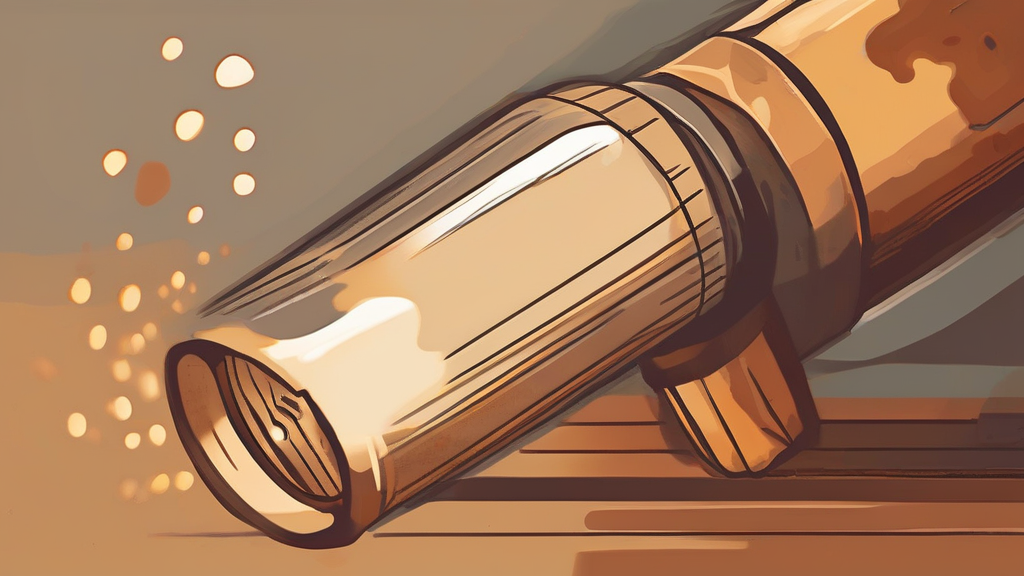
A blowlamp is a handheld device that produces an intense, controllable flame by burning fuel — typically propane, butane, or paraffin — mixed with air. It is a staple of plumbing, metalwork, and DIY, employed for tasks such as soldering copper pipes, brazing joints, loosening seized bolts, and burning old paint off wood before refinishing. The term is distinctly British: American English uses 'blowtorch' for the same implement, so readers should treat the two as regional synonyms rather than different tools. In register, 'blowlamp' belongs firmly to the practical vocabulary of tradespeople and home improvers, appearing more often on building sites and in instruction manuals than in literary prose. Figurative uses are rare, though the intense heat of its flame occasionally lends the word vivid descriptive force in journalism and fiction.
nounA blowlamp is a portable device that burns fuel gas mixed with air to produce an intense flame, used especially for heating, soldering, and stripping paint.
- A handheld burner producing an intense directed flame by burning gas or vaporized fuel mixed with air, used for heating, soldering, brazing, and paint removal.
"He stripped the old varnish from the door frame using a blowlamp."
"The plumber lit his blowlamp to solder the copper joint."
"She carefully moved the blowlamp across the window frame to soften the decades-old paint."
Standard pluralization; used when referring to multiple devices, as in workshops or tool inventories.
"The workshop kept three blowlamps on the shelf for the apprentices."
Same tool, two nations: Americans reach for a blowtorch, Britons light a blowlamp — and both trace back to the Old English verb 'blāwan', to blow.
Reviewed by Deb Chak, Editor. AI-assisted content curated by RJS Tech Solutions LLP.
Etymology of blowlamp
The word blowlamp combines 'blow', from Old English 'blāwan' meaning to blow or puff air, with 'lamp'. The Old English verb descends from Proto-Germanic '*blēaną', which also yields English 'blast', and ultimately from the Indo-European root '*bhel-', whose extended forms gave Latin 'flare' — making 'inflate', 'conflate', and 'flatulent' distant cousins of the humble blowlamp. As a compound naming a tool that forces air into a flame, it emerged alongside the development of pressurized-burner technology in the nineteenth century and remains standard in British usage today.
How blowlamp is actually used
'Blowlamp' is essentially a British term; American speakers almost universally say 'blowtorch' instead. The word carries a practical, workshop-and-DIY connotation and appears most often in contexts of plumbing, decorating, and metalwork rather than everyday conversation.
Easily confused with blowlamp
A blowtorch is the same tool as a blowlamp; 'blowlamp' is the usual British name while 'blowtorch' is the standard American one.