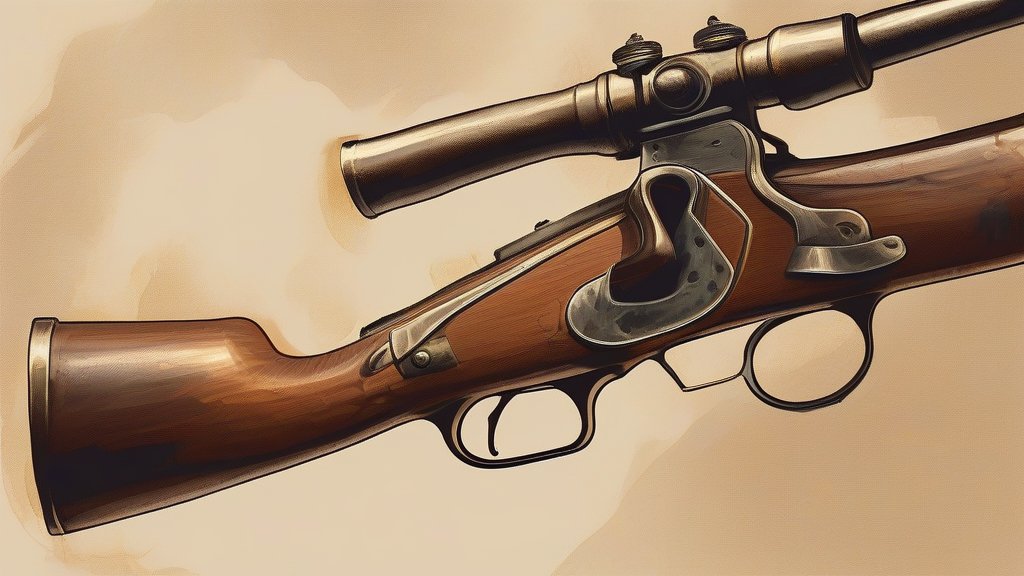
What does blunderbuss mean?
A blunderbuss is a muzzle-loading firearm characterised by its short barrel and distinctive flared muzzle, which allowed it to fire a wide spray of shot, lead pellets, or even scrap metal at close range. Popular from the seventeenth through the nineteenth centuries, it was favoured by coachmen, sailors, and householders for defence, since accuracy was unnecessary when the whole weapon functioned like an early shotgun. The word derives from the Dutch 'donderbus', literally 'thunder box'. Today 'blunderbuss' survives mainly in two settings: historical writing about early firearms, and figurative use to describe any measure or statement that is broad, sweeping, and undiscriminating — as in 'a legal blunderbuss aimed at everyone equally'. In this figurative sense it carries a mildly disapproving tone, implying a lack of finesse. The word remains useful precisely because it vividly evokes force applied without precision.
A short, muzzle-loading gun with a wide, flaring barrel used for scattering shot at close range.
"The night watchman kept a blunderbuss loaded beside the gatehouse door."
Chiefly historical; refers to firearms of roughly the 17th–19th centuries.
Something that affects or targets people broadly and indiscriminately, without precision or discrimination.
"The memo was a blunderbuss of accusations, hitting every department at once."
Almost always pejorative, suggesting clumsy or excessive breadth.
Standard plural; follows the regular -es pattern for nouns ending in -ss.
"The museum's armoury displays several antique blunderbusses."
The blunderbuss was so wide-mouthed it could be loaded with nails, gravel, or whatever came to hand — the 17th century's answer to a shotgun blast.
Reviewed by Deb Chak, Editor. AI-assisted content curated by RJS Tech Solutions LLP.
Etymology of blunderbuss
'Blunderbuss' comes from the Dutch 'donderbus', a compound of 'donder' (thunder) and 'bus' (gun or box), reflecting the weapon's thunderous report. The English form shows folk-influence from 'blunder', even though the Dutch element is unrelated to the English verb 'to blunder'. The word entered English in the mid-seventeenth century, coinciding with the firearm's adoption across Europe. Related forms appear in other Germanic languages borrowed from the same Dutch source.
How blunderbuss is actually used
In modern usage 'blunderbuss' appears most often in historical contexts describing 17th–19th century firearms; its figurative sense usually carries a mildly critical connotation of clumsiness or lack of discrimination. It is a relatively formal or literary word today.
Easily confused with blunderbuss
'Blunder' is a careless mistake or error, while 'blunderbuss' is a firearm (or figuratively a blunt, indiscriminate method) — the words are related historically but mean entirely different things.