What does boab mean?
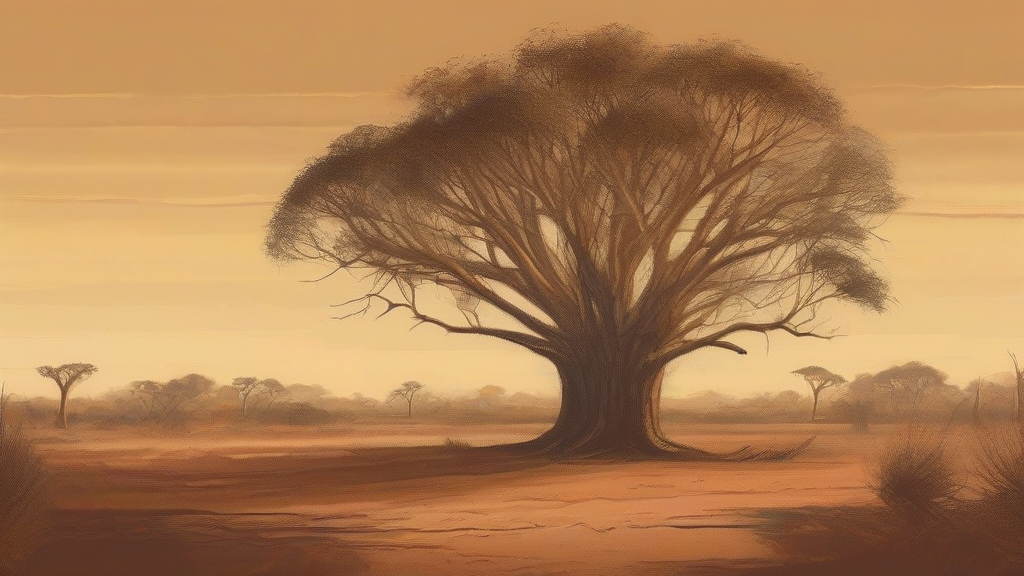
The boab is the Australian baobab, Adansonia gregorii, a remarkable tree found across the Kimberley region of Western Australia and parts of the Northern Territory. Instantly recognisable by its enormously swollen, bottle-shaped trunk and its crown of stubby branches that stand bare through much of the year, the boab is one of Australia's most iconic trees. Its trunk acts as a water store, allowing it to endure long dry seasons in harsh tropical climates, and individual trees are believed to live for many centuries. The word is essentially the Australian counterpart of 'baobab', which describes the wider genus found in Africa and Madagascar; within Australia, however, 'boab' is the standard local name. It appears frequently in travel writing, natural history, and conversation about the Kimberley landscape, where stands of boabs along creeks and roadsides are a celebrated sight. For visitors and readers alike, knowing 'boab' signals familiarity with one of northern Australia's most distinctive natural landmarks.
nounA boab is the Australian baobab tree, Adansonia gregorii, a stout, bottle-shaped tree native to northwestern Australia, known for its swollen trunk and distinctive bare-branch silhouette in the dry season.
- The Australian baobab tree, Adansonia gregorii, a bottle-shaped tree of northwestern Australia.
- Loosely, any large baobab-like tree or its timber.
"The ancient boab standing beside the dry creek bed was said to be hundreds of years old."
"We pulled off the Gibb River Road to photograph a massive boab against the sunset."
"The hollow boab near the station homestead had been used as a shelter by early travellers."
The standard plural simply adds -s, consistent with most count nouns referring to trees.
"The valley floor was dotted with boabs, their silhouettes stark against the evening sky."
The boab can store thousands of litres of water in its swollen trunk, letting it survive Australia's harshest dry seasons — some living trees may be centuries old.
Reviewed by Deb Chak, Editor. AI-assisted content curated by RJS Tech Solutions LLP.
Etymology of boab
The name boab is generally understood as an Australian adaptation of 'baobab', the broader term for trees of the genus Adansonia, though the exact pathway by which it became the standard Australian form is not precisely documented. The tree itself, Adansonia gregorii, was formally described in the nineteenth century and named after the explorer Augustus Charles Gregory. Baobab as a word traces back through European botanical writing to African sources, so boab ultimately shares that lineage while functioning today as a distinctly Australian term for the continent's own baobab species.
How boab is actually used
The term is chiefly used in Australian contexts, especially Western Australia and the Northern Territory, where the tree is an iconic landscape feature. Elsewhere the word 'baobab' is more common, and 'boab' may simply be read as the Australian member of that group. It carries no particular register — it is neutral, descriptive vocabulary used in both everyday and scientific discussion.
Easily confused with boab
Baobab refers broadly to the African genus Adansonia (especially the African species A. digitata), while boab specifically names the single Australian species, Adansonia gregorii.