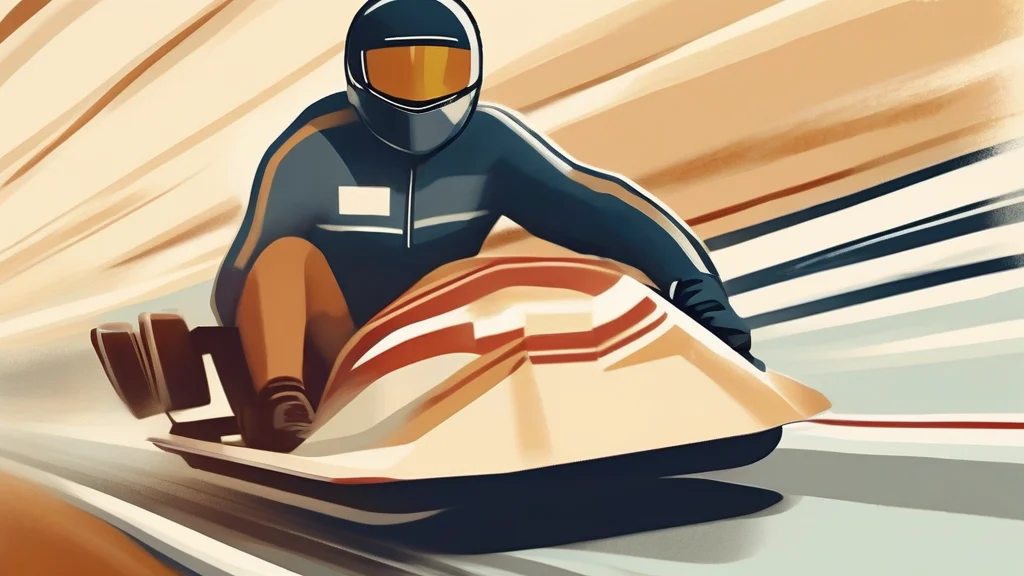
What does bobsledding mean?
Bobsledding is the winter sport of racing specially built sleds, called bobsleds or bobsleighs, down long, steeply banked channels of ice. A team of two or four athletes rides in the streamlined sled, with a pilot who steers and a brakeman who stops the sled after it crosses the finish line; runs are timed to hundredths of a second and speeds regularly approach or exceed 90 miles per hour. The sport has been part of the Winter Olympics since the first Games in 1924 and is governed internationally. The word itself derives from 'bob', a shortening referring to the way early crews rocked back and forth to build momentum, combined with 'sled'. Bobsledding is used almost exclusively in sports contexts and carries connotations of speed, teamwork, precision engineering, and daring; it is especially prominent in Olympic coverage and popular imagination thanks to underdog stories like Jamaica's 1988 debut.
nounThe sport or activity of racing a bobsled, an aerodynamic sled for two or four people, down a steeply banked ice track. It is an Olympic winter event in which teams steer their sled through a twisting course at high speed.
- The competitive winter sport of racing two- or four-person sleds down an icy, banked track, an Olympic event since 1924.
- The recreational activity of riding a bobsled, typically at a commercial track offering passenger rides.
"She took up bobsledding after retiring from track and field."
"Jamaica's debut in Olympic bobsledding in 1988 became one of the Winter Games' most beloved stories."
"Visitors can experience the thrill of bobsledding firsthand on public rides at several former Olympic tracks."
Bobsledding got its name because early riders literally bobbed back and forth to gain speed before someone figured out that sitting still was actually faster.
Reviewed by Deb Chak, Editor. AI-assisted content curated by RJS Tech Solutions LLP.
Etymology of bobsledding
Bobsledding comes from 'bobsled', a compound of 'bob' and 'sled', both Germanic in origin. The name reflects the practice, common when the sport emerged in late nineteenth-century Switzerland among wealthy British tourists in St. Moritz, of crews rocking or 'bobbing' the sled back and forth to gain speed. The related word 'bobsleigh' is the standard British variant, from 'sleigh'. The sport's governing history traces to Swiss resort culture, and it became an Olympic event in 1924.
Related word forms
How bobsledding is actually used
The word is chiefly used as the name of the sport; in British English the equivalent term is 'bobsleigh' or 'bobsleighing', while American English favors 'bobsledding' and 'bobsled'. It carries an energetic, athletic connotation and appears mostly in sports reporting, Olympic coverage, and travel writing. The gerund-like -ing form functions fully as a noun rather than describing an ongoing action.
Easily confused with bobsledding
Luge is raced feet-first on a small one- or two-person sled lying on the back, whereas bobsledding is raced seated in a larger two- or four-person steered sled.
Skeleton involves sliding headfirst and face-down on a single small sled, while bobsledding uses a crewed, enclosed sled steered by its riders.