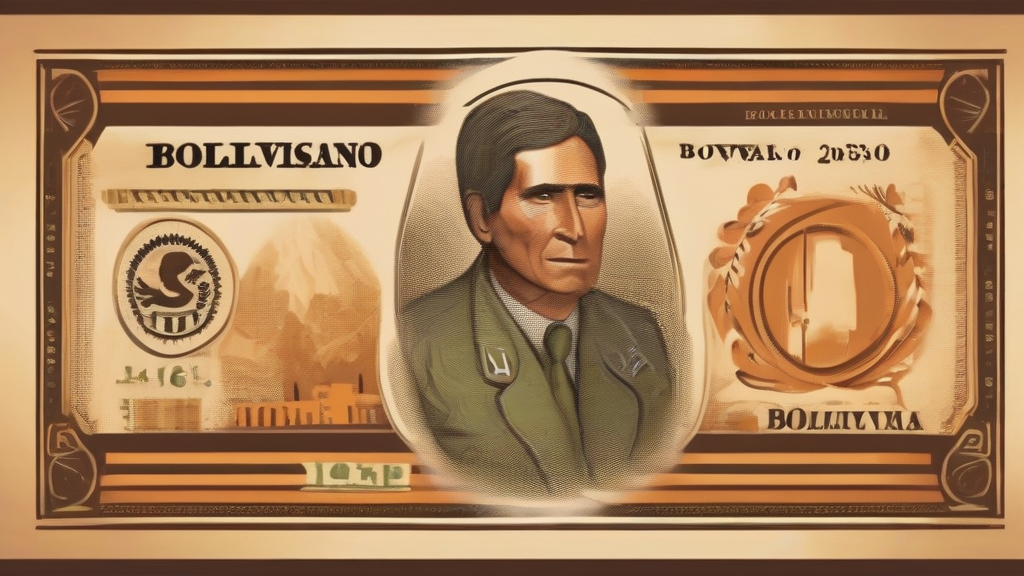
What does boliviano mean?
The boliviano is the official currency of Bolivia, subdivided into 100 centavos. Introduced in its modern form in 1987, when it replaced the inflation-ravaged peso boliviano at a rate of one million to one, it takes its name from Simón Bolívar, the Venezuelan military leader who led much of South America's struggle for independence from Spanish rule. In practice, the word functions like other currency terms: it appears in financial reporting, travel guides, and market transactions, typically in phrases such as the exchange rate for the boliviano or prices quoted in bolivianos. Although unfamiliar to many English speakers, it follows familiar patterns of use — pluralizing as bolivianos and remaining lowercase in ordinary prose. For travelers and students of Latin American affairs alike, knowing the term signals familiarity with Bolivia's economy and its history, since few currencies carry the name of a national liberator so directly.
nounThe boliviano is the basic monetary unit of Bolivia, equal to 100 centavos.
- The standard unit of currency of Bolivia, divided into 100 centavos, in circulation since 1987 and also used as the name of an earlier Bolivian currency (1863–1963).
"A hearty lunch in La Paz costs about twenty bolivianos."
"The street vendor quoted the price in bolivianos rather than US dollars."
"Tourists are often surprised that the exchange rate leaves the boliviano trading at roughly seven to the dollar."
The regular plural is bolivianos; occasionally the word is left unchanged, especially when referring to sums collectively.
"The meal came to eighty bolivianos."
Bolivia's money is literally named after Simón Bolívar — the South American liberator who never actually governed Bolivia himself.
Reviewed by Deb Chak, Editor. AI-assisted content curated by RJS Tech Solutions LLP.
Etymology of boliviano
The word boliviano comes directly from the name of Simón Bolívar (1783–1830), the South American independence leader known as El Libertador, whose surname derives from the Basque place name Bolibar ('mill on the stream'). Bolivia itself was named in his honor after gaining independence, and the country's currency adopted the same eponym when first issued in 1863. A later currency, the peso boliviano, was replaced by the current boliviano in 1987. The Venezuelan bolívar shares the same namesake, making the two currencies linguistic cousins rather than true cognates in the classical sense.
How boliviano is actually used
Invariable in some usage: both 'boliviano' and 'bolivianos' appear as plurals, though the plural form is more common in general English writing. The word is almost always lowercase except when treated as part of a proper name of a currency. It appears mainly in financial, travel, and news contexts rather than everyday conversation outside Bolivia.
Easily confused with boliviano
A boliviano is the currency of Bolivia, while a bolívar is the currency of Venezuela — both are named after Simón Bolívar.