
What does piano mean?
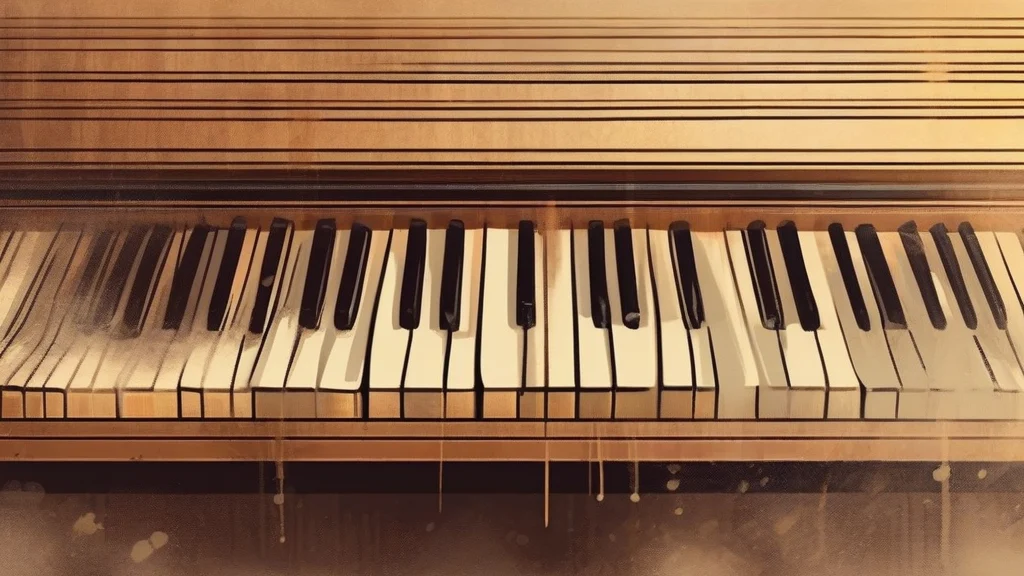
A piano is a large keyboard instrument whose sound is produced by felt-covered hammers striking strings. It is valued for its enormous expressive range: a player can create whispering, forceful, rapid, or lyrical textures, and the instrument is central to classical, jazz, popular, and many other musical traditions. In musical scores, “piano” instructs performers to play softly, usually represented by the marking “p.” The term comes from the Italian “pianoforte,” formed from “piano,” meaning soft, and “forte,” meaning loud. Although “piano” now functions as the ordinary name for the instrument, its history preserves the contrast between gentle and powerful sound that defines the instrument’s expressive character.
A keyboard musical instrument whose strings are struck by hammers controlled by the player’s fingers.
"A piano stood in the corner of the otherwise empty room."
Common modifiers include “grand,” “upright,” “digital,” and “acoustic.”
In a musical direction, softly or quietly.
"Repeat the opening phrase piano, then build gradually to forte."
Usually shortened to the marking “p” in scores.
The plural is formed by adding “-s.”
"The school owns several pianos."
The word “piano” was born from a musical instruction: its Italian name means “soft-loud,” reflecting the instrument’s ability to shift from delicate whispering to thunderous power.
Reviewed by Deb Chak, Editor. AI-assisted content curated by RJS Tech Solutions LLP.
Where does piano come from?
The word entered English from Italian “pianoforte,” an abbreviation of “piano e forte,” meaning “soft and loud.” Italian “piano” comes from Latin “planus,” meaning flat, smooth, or level, while “forte” comes from Latin “fortis,” meaning strong. The instrument was developed in Italy around the beginning of the eighteenth century, and the abbreviated name “piano” became established in English during the nineteenth century.
Related word forms
How piano is actually used
As a musical direction, “piano” is normally written as “p.” The word is standard in both formal and informal contexts; the full name “pianoforte” is chiefly historical or formal.
Easily confused with piano
A pianoforte is the full historical name for the piano, while “piano” is the modern common term for the instrument.