What does bolt mean?
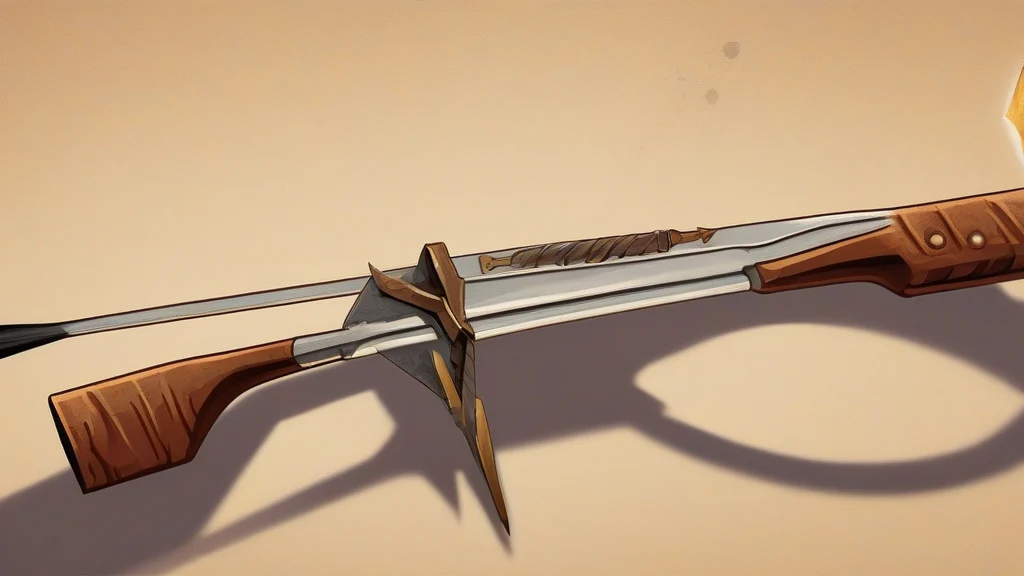
Bolt is one of English's most versatile nouns, spanning hardware, weather, motion, and textiles. Most commonly it names a metal fastener with a threaded shaft, paired with a nut to clamp machinery or structures together. But it also denotes a single discharge of lightning — 'a bolt of lightning' is a staple of both science writing and everyday speech — a sudden, panicked run (as when a startled horse bolts), the short thick arrow fired from a crossbow in medieval warfare, a rolled length of fabric, and the sliding bar that locks a door. The verb form extends these senses: bolting can mean eating hastily or fleeing abruptly. Idiomatically, 'a bolt from the blue' describes a wholly unexpected shock, while 'the nuts and bolts' of something means its practical fundamentals. This range makes bolt useful far beyond the workshop, appearing in engineering, meteorology, history, and idiomatic speech alike.
A metal pin or rod, usually threaded, used with a nut to fasten components together.
"The mechanic replaced every rusted bolt on the chassis."
In technical contexts, distinguished from screws by use with a nut.
A single flash or discharge of lightning.
"A bolt of lightning split the night sky."
A sudden rapid movement or escape.
"The rabbit bolted for the hedge at the first sound."
To move off or flee suddenly; or to fasten with a bolt.
"She bolted from the room without a word."
Regular plural; used for multiple fasteners, lightning flashes, rolls of cloth, etc.
"The kit includes twelve stainless steel bolts."
A horse that 'bolts' isn't being fastened — it's fleeing, one of English's strangest reversals of a word's own sense.
Reviewed by Deb Chak, Editor. AI-assisted content curated by RJS Tech Solutions LLP.
Etymology of bolt
Bolt comes from Old English "bolt", meaning a short arrow or dart, likely from a Germanic root related to shooting implements; cognates appear in Old Norse and other Germanic languages. Its sense extended naturally over time: the crossbow projectile sense gave rise to the door-locking bar (which 'shoots' into place), which in turn led to the metal fastener familiar today. The sense of a lightning flash arose by analogy with a swift, striking missile.
Related word forms
How bolt is actually used
Highly polysemous; context determines whether it refers to hardware, weather, movement, or textiles. In informal speech 'a bolt from the blue' is a fixed idiom for a shocking surprise. As a verb, 'to bolt' often means to eat food quickly or to run away suddenly.
Easily confused with bolt
"Bold" means courageous or daring, while "bolt" is a fastener, a lightning flash, or a sudden dash.
A hyphenated modifier meaning attachable without structural change, not the noun itself.