What does bomber mean?
A bomber is primarily a military aircraft built to carry and drop bombs on enemy targets, ranging from small tactical strike planes to massive strategic bombers capable of crossing oceans with enormous payloads. By extension, the word also denotes a person who plants or detonates an explosive device, a sense that dominates modern news reporting through terms like 'suicide bomber'. The word derives from 'bomb', entering English during the First World War when aircraft were first used to deliver explosives. In military contexts it is a technical, neutral term; applied to individuals it is heavily charged, evoking terrorism or warfare. Related phrases such as 'heavy bomber', 'stealth bomber', and 'car bomber' show how flexibly the word attaches to modifiers describing either the machine's class or the attack method. Its dual application to both aircraft and attacker makes context essential to interpretation.
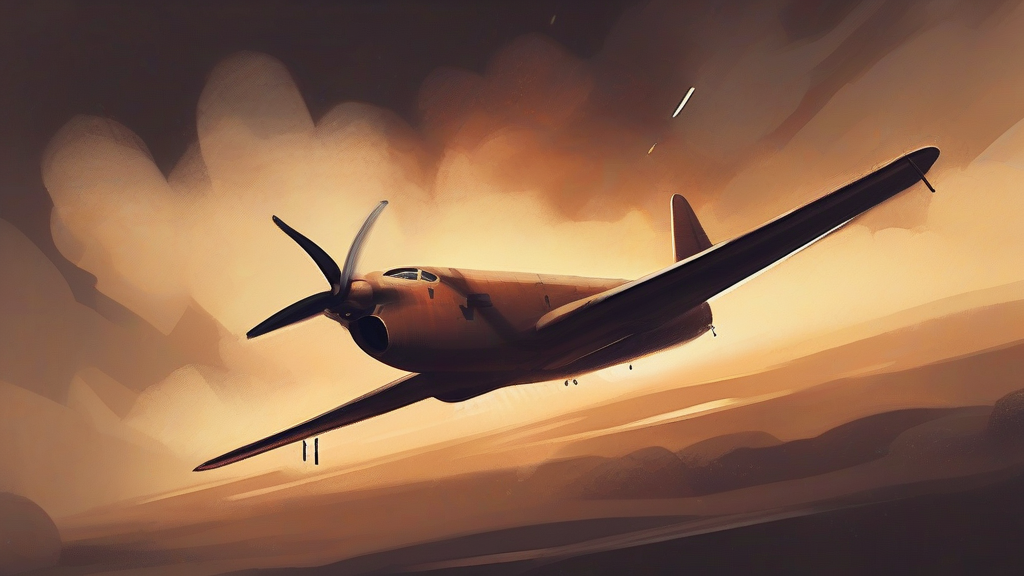
An aircraft designed to drop bombs on ground or sea targets.
"The stealth bomber slipped across the border undetected by radar."
Often modified by type: heavy bomber, light bomber, dive bomber, strategic bomber.
A person who plants or detonates a bomb, especially in an attack on people or property.
"The authorities launched a manhunt to find the bomber responsible for the station attack."
Standard plural; applies equally to the aircraft sense and the person sense.
"A fleet of bombers was stationed at the airbase."
The word 'bomber' was born in the First World War — when planes first started dropping explosives instead of just scouting, English needed a brand-new word almost overnight.
Reviewed by Deb Chak, Editor. AI-assisted content curated by RJS Tech Solutions LLP.
Etymology of bomber
Bomber is formed directly from 'bomb', a word English borrowed via French 'bombe' from Italian 'bomba', which likely traces back to Greek 'bombos', meaning a booming or buzzing sound. As an agent noun formed with the '-er' suffix, 'bomber' emerged in English during the First World War, when aeroplanes were first equipped to drop explosive devices, creating the need for a term for both the aircraft and those who used them. It shares its root with related words such as 'bombard', 'bombardment', and 'bombastic', all ultimately connected to that same onomatopoeic Greek source for a deep, resonant boom.
Related word forms
How bomber is actually used
In everyday news coverage, 'bomber' most often refers to a person responsible for an attack (as in 'suicide bomber' or 'car bomber'), while in military and aviation contexts it refers to the aircraft. The word is neutral in register but carries strongly negative connotations when applied to a person.
Easily confused with bomber
A bombardier is the crew member aboard a military aircraft who aims and releases the bombs, whereas a bomber is the aircraft itself or a person who sets off a bomb.