
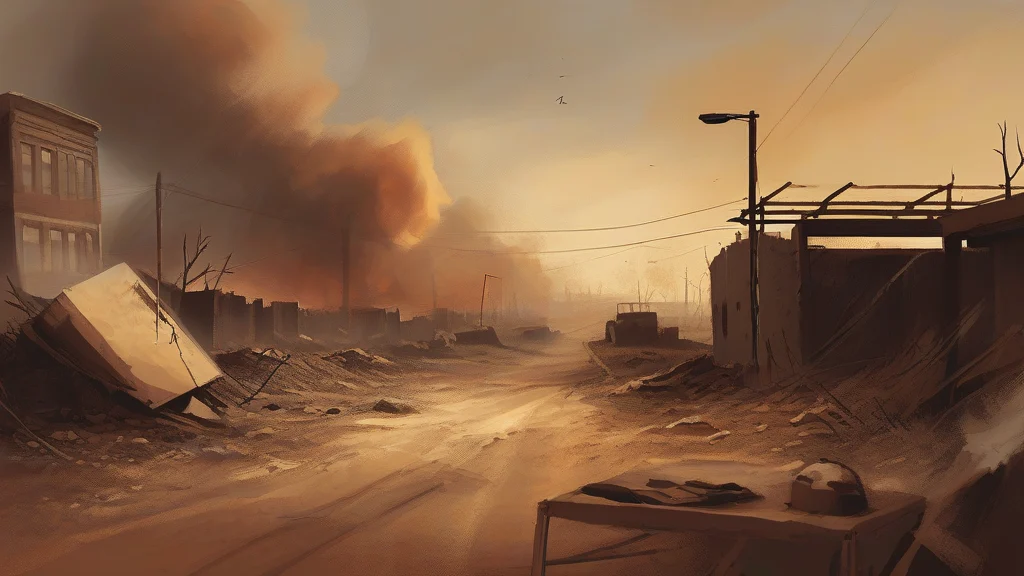
What does bombsite mean?
A bombsite is the place or area where a bomb has exploded or been dropped. The term is especially associated with wartime and bombing damage, although it can describe any location marked by an explosion. In news reports, writers may use “bomb site” as a two-word variant, and figurative uses portray a place or situation as devastated, dangerous, or emotionally wrecked. The word is countable and often appears in expressions such as “former bombsite” or “rebuild the bombsite.” Its force comes from its directness: it combines the specific instrument of destruction, bomb, with the physical place, site. That concrete compound makes an abstract idea easy to visualize. A bombsite is therefore more than a historical label; it can be a site of remembrance, investigation, reconstruction, and public discussion of the consequences of violence.
nounA place or area where a bomb has exploded or has been dropped, especially one showing the physical effects of bombing.
- A physical location where a bomb has exploded or has been dropped.
- A place or situation portrayed figuratively as devastated, dangerous, or chaotic.
"The old factory was long abandoned after the bombing, and part of the site remained a protected bombsite."
"Archaeologists examined the bombsite and recovered several objects damaged in the blast."
"After the disastrous reorganization, the department was described as a political bombsite."
Bombsite is a countable noun; the standard plural is bombsites.
"The city has several former bombsites that are now being redeveloped."
“Bombsite” compresses the impact of modern warfare into one place: the physical mark where a bomb fell.
Reviewed by Deb Chak, Editor. AI-assisted content curated by RJS Tech Solutions LLP.
Where does bombsite come from?
The compound was formed in English by joining the established words bomb and site. Bomb entered English through French bombe from Italian bomba, while site comes through French from Latin situs, meaning “position” or “place.” The wider English word-family includes forms such as bombard, bombast, and bombshell, which share the element bomb and preserve its association with explosive or percussive force.
How bombsite is actually used
The word is neutral and factual but can carry a solemn or emotionally charged tone because it refers directly to bombing and its consequences. The one-word form is standard in British and American English, while the two-word variant “bomb site” is also widely used. Figurative uses generally suggest extensive damage, disorder, or a difficult situation requiring reconstruction.
Easily confused with bombsite
A bombsite is a place where a bomb has exploded or been dropped, whereas a bombshell is the explosive device itself.