
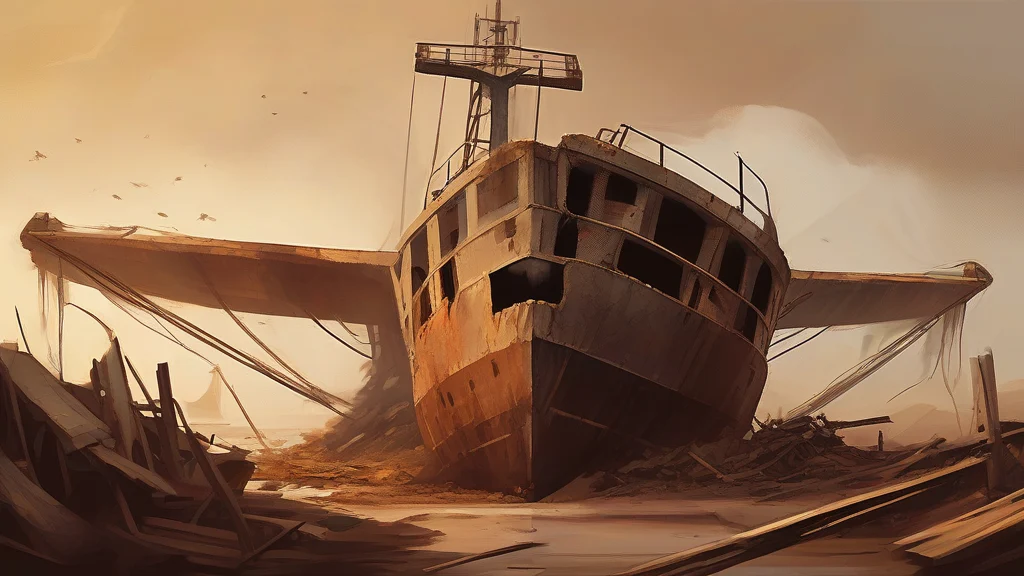
What does wreckage mean?
Wreckage denotes the scattered remains of something destroyed, especially a ship, aircraft, vehicle, or building. It can also refer more broadly to the destruction itself or the damage left behind. In accident reporting and historical accounts, the word is particularly associated with maritime disasters and plane crashes, although it applies across transport and construction contexts. As a mass noun, it usually takes a singular verb: “The wreckage was scattered across the shore.” The plural “wreckages” is possible when separate sites or groups of remains are being counted. The word often evokes the aftermath rather than the destructive event itself: broken components, abandoned objects, and the physical traces that make a catastrophe visible. Its tone is generally factual and serious, with a literary weight that can also suggest finality and loss. Wreckage is therefore especially useful when the focus is on what survives, what can be recovered, or what physical remains reveal about what happened.
nounThe scattered remains of a destroyed ship, vehicle, aircraft, or structure; more broadly, the destruction itself or the damage left behind.
- The scattered or identifiable remains of a destroyed ship, vehicle, aircraft, or structure.
- The state or result of destruction, especially the damage left behind by a crash or disaster.
"Rescue teams searched the wreckage for survivors while investigators began piecing together the cause of the crash."
"The storm scattered the wreckage across several miles of coastline."
"The report concluded that mechanical failure caused the wreckage to strike the mountainside."
The plural is uncommon and is used mainly when distinct sites or groups of remains are being counted.
"The survey mapped three separate wreckages along the coast."
After the disaster ends, the wreckage becomes a silent archive, preserving physical clues about what happened.
Reviewed by Deb Chak, Editor. AI-assisted content curated by RJS Tech Solutions LLP.
Where does wreckage come from?
Wreckage was formed in English with the suffix “-age” from “wreck,” a Middle English word borrowed from Old Norse. “Wreck” comes from Old Norse rekkr, associated with a wrecked ship or shipwrecking, and is related to cognates such as German Wrack and Dutch wrak. The word developed from specifically nautical usage into the broader modern sense of remains or damage left by any major destruction.
How wreckage is actually used
Usually a mass noun taking a singular verb, as in “the wreckage was recovered.” The rare plural “wreckages” is used when distinct sets or sites of remains are being counted. The word is common in journalism, accident reports, historical writing, and narrative descriptions, where it conveys the seriousness and aftermath of destruction.
Easily confused with wreckage
Debris refers broadly to scattered material from a destruction, while wreckage more specifically suggests the remains of a destroyed ship, vehicle, aircraft, or structure.