
What does wrack mean?
Wrack is an uncommon word with two quite different lives. As a noun, it most often refers to seaweed cast ashore, particularly seaweed gathered along a beach after a storm or tide. This maritime sense gives the word a concrete, slightly picturesque quality. As a verb, wrack means to wreck, ruin, or damage severely, and it survives especially in the expression “wrack and ruin,” meaning complete destruction. The related phrase “wrack one's brain” uses the word in the sense of exerting oneself mentally, often to the point of exhaustion or frustration. Although modern speakers are more likely to choose “wreck,” “ruin,” or “destroy,” wrack remains useful because it evokes both the aftermath of destruction and the physical debris of a maritime setting. Its uncommon status can make it memorable in writing, but it is more characteristic of literary, historical, or maritime language than of everyday conversation.
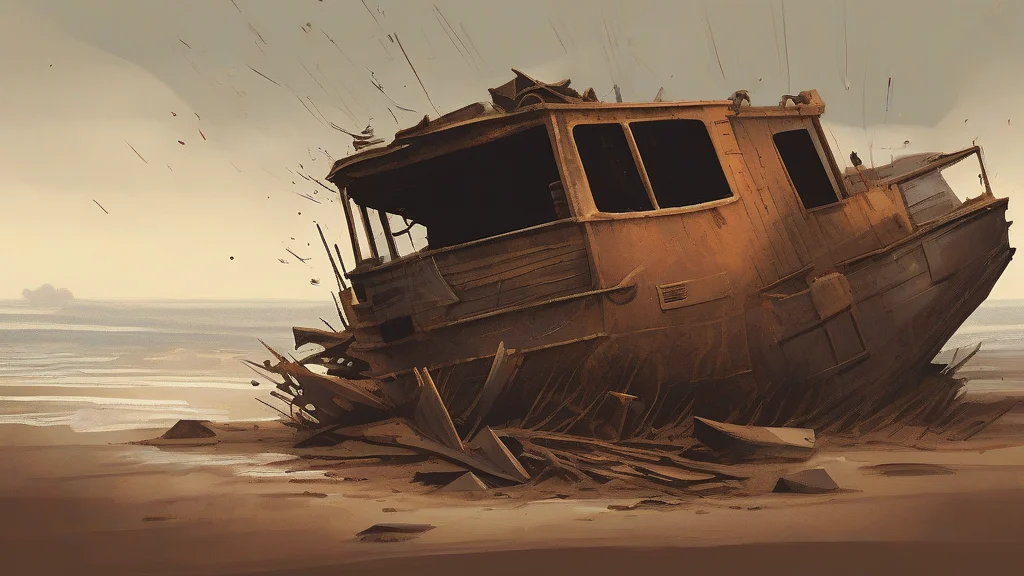
Seaweed cast ashore, especially a mass of seaweed left along a shore. In an older or literary sense, a wrack is wreckage or a wreck.
"The tide left a wrack of seaweed across the sand."
The seaweed sense is normally treated as an uncountable mass noun; “wracks” is used for the rarer countable sense meaning a wreck.
To wreck, ruin, or severely damage something.
"The prolonged dispute wracked the organization."
This verb is chiefly literary or archaic and is especially familiar in the expression “wrack and ruin.”
“Wracks” applies to the rarer countable noun sense meaning a wreck; the common seaweed sense is generally uncountable.
"The novel describes the wracks of ships abandoned along the coast."
Before it meant destruction, wrack had a gentler maritime meaning: the seaweed that survived the sea and came ashore.
Reviewed by Deb Chak, Editor. AI-assisted content curated by RJS Tech Solutions LLP.
Where does wrack come from?
Wrack comes through Middle English from Old English wrac, meaning wreckage or ruin, and ultimately from a Germanic root associated with breaking or destruction. Its separate sense for seaweed cast ashore developed in maritime usage, where material stranded by the sea collects along the shore. The word is closely related to wreck and wreak, which continue the same Germanic root in different ways.
Related word forms
How wrack is actually used
The noun sense for seaweed is still recognized but is less common in modern English. The verb is literary, archaic, or strongly marked by the expression “wrack and ruin”; “wrack one's brain” and “wrack one's brains” are also established idioms.
Easily confused with wrack
Wreck can mean a destroyed ship or the act of ruining something, while wrack more commonly means seaweed cast ashore and, as a verb, means to wreck or ruin.