
What does ruin mean?
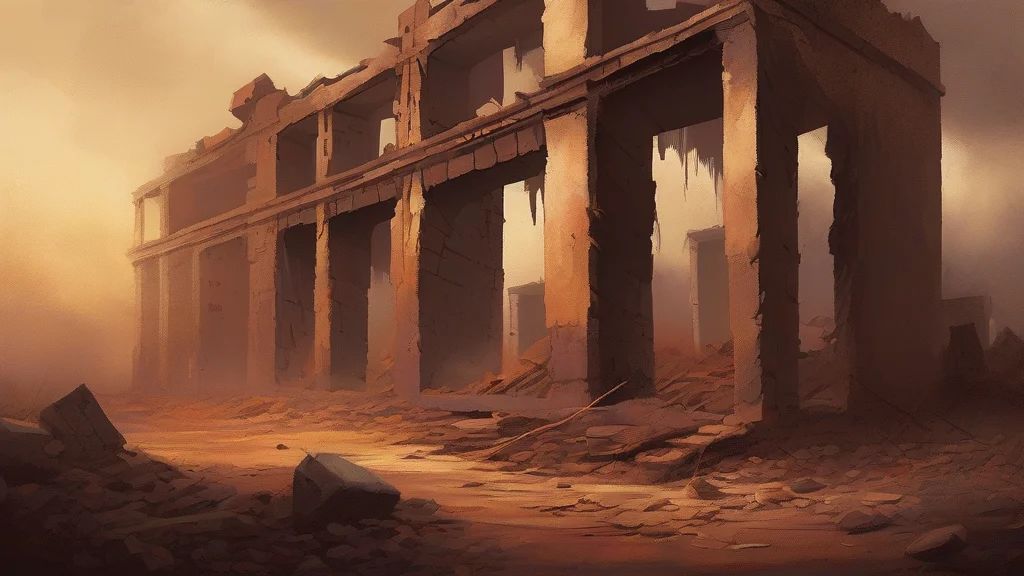
Ruin is both a noun and a verb describing severe destruction, collapse, or loss. As a verb, it means to damage something beyond repair, spoil it, or ruin someone's prospects, as in a mistake that ruined a career or damage that ruined a building. As a noun, ruin can denote the ruined state itself, often expressed by the phrase in ruins, or severe financial hardship, as in a family brought to ruin. The word is typically formal or serious in tone, although it appears naturally in everyday speech, journalism, literature, and historical writing. It can also refer to the surviving remains of a destroyed building or monument. Although often associated with the total collapse of something physical, ruin is equally common in figurative contexts involving money, careers, reputations, relationships, and personal hopes.
Complete destruction, collapse, or decay; the state of being ruined. It also means severe financial hardship or the remains of a destroyed structure.
"The abandoned mill had fallen into complete ruin."
The condition is commonly uncountable, as in in ruins. The plural ruins may refer to the remains of a damaged building or place.
To destroy or damage something so severely that it cannot be repaired or used, or to cause someone serious personal, professional, or financial loss.
"The storm ruined several fields and destroyed the road."
This is a strong verb. Figurative uses commonly concern money, careers, reputations, relationships, or chances.
Usually plural when referring to the remains of a destroyed building or structure; the abstract condition is generally uncountable.
"Tourists photographed the ruins of the ancient abbey."
Ruin began as a falling: the Latin ruina originally meant a fall before it came to mean the destruction left behind.
Reviewed by Deb Chak, Editor. AI-assisted content curated by RJS Tech Solutions LLP.
Where does ruin come from?
The word entered Middle English from Old French ruine, a borrowing of Latin ruina, meaning a fall or ruin. Latin ruina is traditionally connected with ruere, the verb meaning to rush or fall, and the English word developed its familiar sense of destruction or collapse. The related forms ruinous, ruination, and ruinate continue to reflect the same Latin root.
Related word forms
How ruin is actually used
The word is strong and generally serious. In its literal sense it describes total destruction or collapse; in figurative use it commonly refers to severe financial or personal damage. As a noun, ruin is often uncountable when describing a condition, while the plural ruins can refer to the remains of a damaged building or structure.