
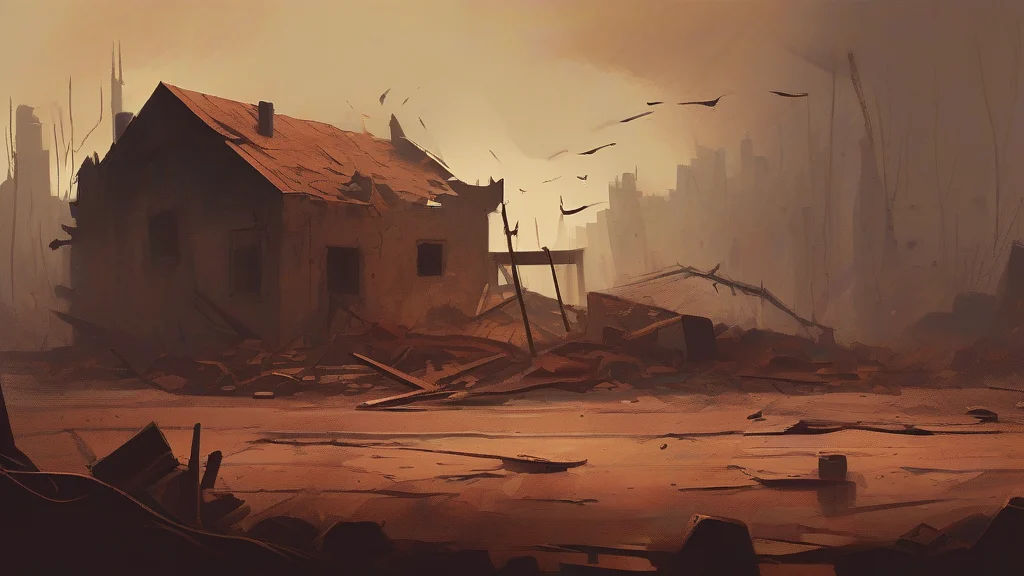
What does ruination mean?
Ruination is a formal noun meaning ruin, destruction, or the process by which something is brought to collapse. It commonly describes severe physical damage, as in the ruination of a building or landscape, but it also applies to financial disaster, institutional decline, and the deterioration of a person's reputation or character. Phrases such as “economic ruination” and “financial ruination” emphasize lasting damage rather than a minor setback. The word often carries a literary or elevated tone and conveys consequences that are severe, irreversible, or nearly so. Although “ruination” is usually treated as an uncountable noun, it can be pluralized in formal or literary contexts. Compared with the broader word “ruin,” “ruination” tends to focus more explicitly on the destructive process or the devastated condition that results. Etymologically, it derives from a Latin vocabulary associated with falling and collapse, giving the word a vivid history of physical destruction.
nounThe state or condition of being ruined, or the act or process of destruction that leaves someone or something devastated. It can refer to physical damage, financial collapse, moral decline, or the destruction of an institution or landscape.
- The state or condition of being destroyed, devastated, or rendered ineffective.
- The act or process of ruining or destroying someone or something.
"Years of neglect had led to the slow ruination of the once-grand building."
"The drought contributed to the economic ruination of farming communities across the region."
"The novel describes the ruination of an aristocratic family through scandal and debt."
The plural is grammatically possible but uncommon; “ruination” is normally used as an uncountable noun.
"The archive documented successive wars, fires, and other ruinations of the city."
From Latin ruere, “to fall,” ruination preserves the old image of a structure tumbling down.
Reviewed by Deb Chak, Editor. AI-assisted content curated by RJS Tech Solutions LLP.
Where does ruination come from?
“Ruination” entered English in the early 17th century from French ruination, which was derived from Latin ruinationem. This Latin noun came from ruina, meaning “ruin” or “downfall,” and ultimately from ruere, “to fall” or “collapse.” The development reflects the word's long association with structures, fortunes, and institutions falling into ruin.
How ruination is actually used
The word has a strongly negative and often literary or formal tone. It is frequently used for financial collapse, institutional decline, environmental destruction, or the moral deterioration of a person or society. It is generally uncountable, although the plural “ruinations” is possible.
Easily confused with ruination
“Ruin” can be a noun or verb and may denote the ruined state, the act of ruining, or a ruined person or thing, whereas “ruination” is specifically a noun emphasizing destruction, collapse, or the condition of being ruined.